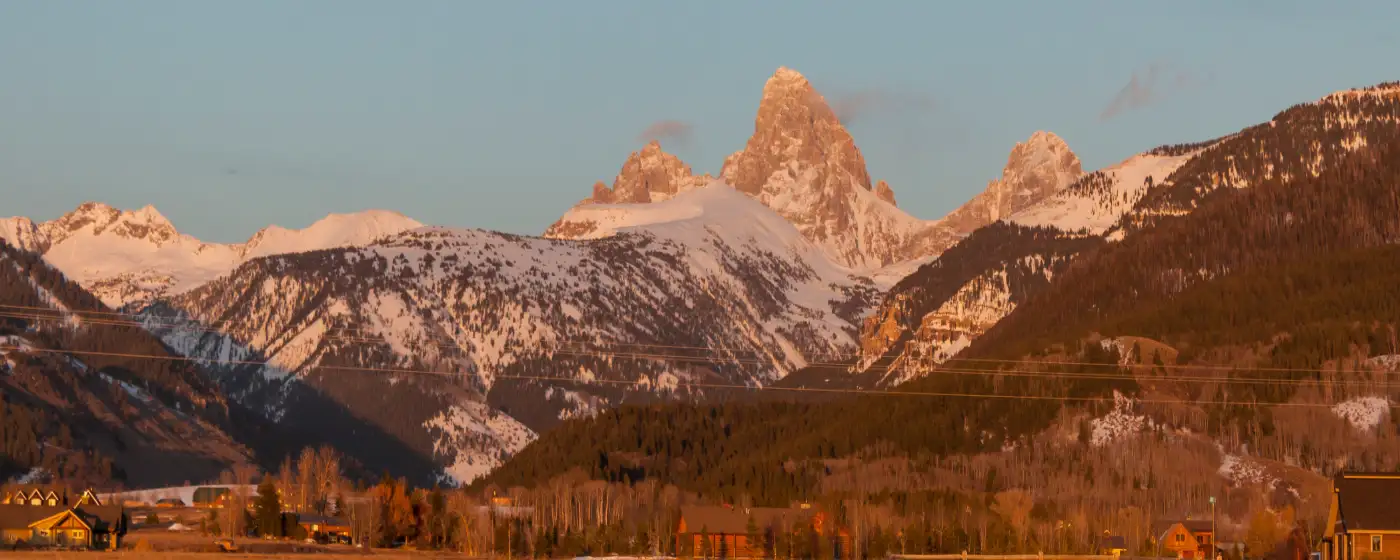
If you've been pricing homes in Jackson and quietly doing math on Driggs, you already know the central calculation: the Tetons are identical from both sides of the state line, but the price tags are not. Driggs sits roughly 45 minutes west of Jackson on the Idaho side of Teton Pass, connected by WY-22 and ID-33 in a valley that trades Jackson's resort polish for wide-open agricultural land, a genuine small-town grid, and a housing market that — while still expensive by most Idaho standards — is noticeably more accessible than its Wyoming neighbor. That relative value is real, and it's the reason most first-time buyers end up here rather than across the pass.
The valley's economy is more complex than it looks from the outside. Grand Targhee Resort on the Ski Hill Road corridor is a major employer and the reason the area draws year-round hospitality workers. Teton County government and local public institutions anchor a stable public-sector base. But the figure that matters most for the housing market is this: a significant share of Teton County, Idaho residents work in Jackson — and those Jackson wages competing for Driggs inventory are a big reason entry-level supply stays tight. Understanding that dynamic before you start touring is more important than any list of neighborhoods. For a broader look at who Driggs tends to suit and what daily life here looks like, see the living in Driggs page.
Cost of living here is meaningfully below Jackson — but it is not cheap relative to the rest of Idaho. The Zillow Home Value Index for Driggs sits at $781,920 (2026), and the practical entry point for a first-timer shopping single-family homes is higher still once you factor in condition and location. Condos and townhomes averaged around $502,233 across Teton Valley in Q1 2025, making attached housing the realistic foot-in-the-door for buyers without large cash reserves. Idaho's effective property tax rate of approximately 0.35% is one of the lightest in the West, which helps on the monthly carrying cost side. The full cost-of-living breakdown covers taxes and daily expenses in detail.
This guide is written specifically for first-time buyers in Driggs: what your budget actually buys here, how the local purchase process works step by step, a plain-language affordability snapshot, and the mistakes that catch first-timers off guard most often in this market.
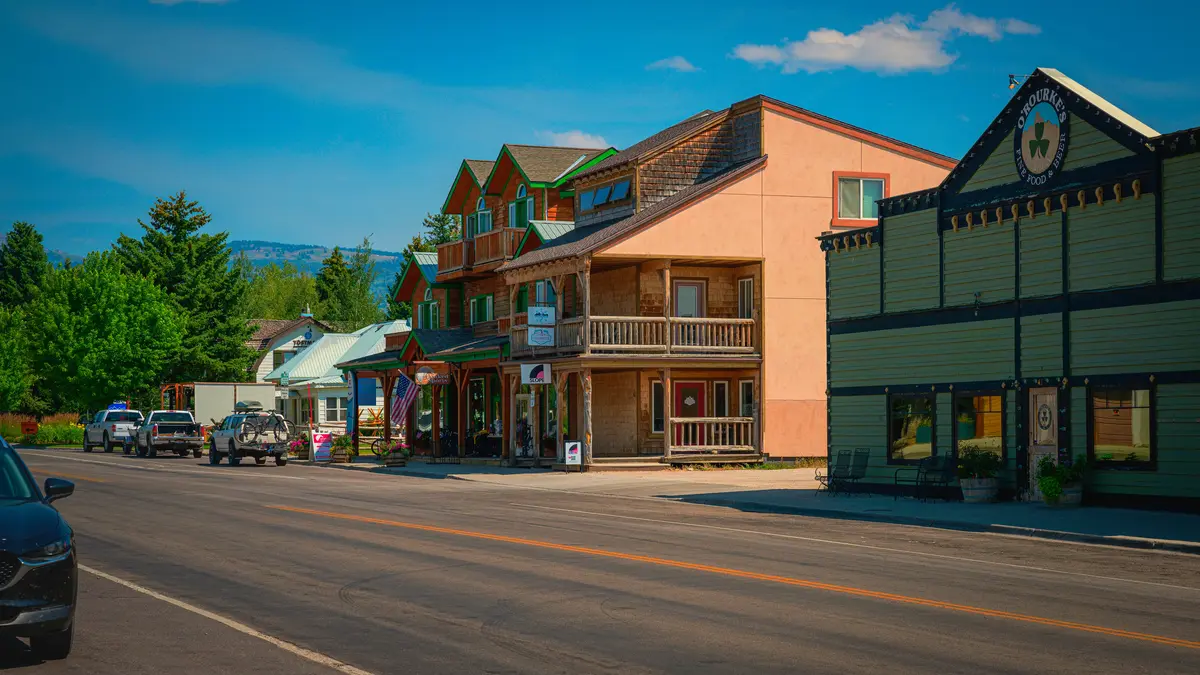
The Driggs First-Time Buyer Reality
The Zillow Home Value Index for Driggs stands at $781,920 (2026) — and that figure deserves a moment of honest context before you build a budget around it. It reflects the full market, including luxury sales that have surged dramatically in recent years: Teton Valley recorded 31 transactions at $3 million or above in 2025, up from just 11 the prior year. Those high-end sales pull the overall index upward, which means the median can overstate what a first-timer's dollar actually competes for. The practical entry point for a move-in-ready single-family home in Driggs is typically well above $600,000; below that, expect deferred maintenance, a rural lot requiring work, or a longer search.
The most realistic path for buyers without significant cash reserves is attached housing. Condos and townhomes across Teton Valley averaged approximately $502,233 in Q1 2025 — a meaningful step below the single-family median, and the category where first-timers most often find their first foothold. Neighborhoods like Stoneridge and Powder Valley have seen attached product; Aspen Pointe and Falcon Creek tend toward single-family lots. If you're flexible on structure type, that flexibility is worth real money here.
The market pace is more deliberate than you might expect given the prices. Homes in Driggs spent a median of 88 days on market as of June 2026 — unchanged from the prior year — which means you're not always racing a bidding war the way you would in Boise or the Salt Lake suburbs. That said, well-priced, move-in-ready homes in sought-after corridors like Ski Hill Road or Targhee Ranch can move faster. The 88-day figure is a valley-wide signal, not a guarantee of time to think. Come in pre-approved and ready to move when the right property appears.
The Homebuying Process in Driggs, Step by Step
Step 1: Get Pre-Approved Before You Tour Anything
This is not optional in Driggs. Sellers here heavily favor offers backed by pre-approvals from lenders they recognize — and in a small market, a pre-approval letter from a regionally rooted lender carries more weight than one from a national online platform. InterWest Mortgage, headquartered in Idaho Falls, has operated in Teton Valley since 1986 and is one example of a lender local sellers' agents know by name. Shop rates broadly, but consider the signal your letter sends alongside the rate you're being quoted.
Pre-approval is also your reality check on purchase price. At these price points, the gap between what you qualify for on paper and what you're comfortable carrying monthly can be significant. Do this math before you fall in love with a Targhee Ranch lot.
Step 2: Find a Local Buyer's Agent
The Teton Valley market is small enough that most listing agents know each other — and know which buyer's agents show up prepared. Work with someone who covers Driggs, Victor, and Tetonia regularly, not an agent who mostly works Boise and dabbles here. Your agent should be able to tell you, off the top of their head, which subdivisions carry HOA restrictions and which roads present challenges in a heavy snow year.
Step 3: Tour With a Clear Criteria List
With 88 days median time on market, you have some breathing room — but use it strategically. Touring without a ranked list of must-haves leads to scope creep and offer fatigue. Decide before you start whether you're open to attached housing, how you feel about a property further from Driggs City Center, and whether a Felt or Tetonia address works for your daily life.
Step 4: Make a Clean, Pre-Approved Offer
Driggs is not a routine multiple-offer market, but desirable properties do generate competition. Your offer should include your pre-approval letter, an earnest money deposit that signals seriousness (typically 1–2% of purchase price in this range), and contingencies you genuinely intend to honor. The biggest mistake first-timers make at this stage is waiving the inspection contingency to compete — more on that below.
Step 5: Inspection, Appraisal, and Closing
Schedule your home inspection immediately after mutual acceptance. In a rural Idaho market, the inspector should check the well, septic system, and roof condition — three items that can generate five-figure surprises. If the property relies on a private well, ask for a water quality test as a separate line item.
Appraisals in Teton Valley can be slower than in metro markets; the pool of appraisers familiar with this valley's comps is small. Budget 30–45 days for the appraisal step, and don't schedule moving trucks until you have a cleared appraisal in hand. Closing in Idaho typically runs 30–45 days from mutual acceptance for a financed purchase, with the closing itself handled through a title company — in Driggs, the Teton County Courthouse area is where most of the related paperwork flows.
How Much Home Can You Afford in Driggs
The table below shows estimated cash needed at closing for several realistic purchase scenarios in Driggs. Closing costs are estimated at 2–3% of the purchase price for a buyer-side estimate, which is typical in Idaho. These are illustrative ranges — your actual costs will vary based on lender fees, title insurance, and any seller concessions negotiated. The interactive calculator below will let you model specific monthly payment scenarios.
| Scenario | Purchase Price | Down Payment | Est. Closing Costs | Cash Needed at Table |
|---|---|---|---|---|
| FHA minimum (3.5%) — condo/townhome entry | ~$502,000 | ~$17,570 (3.5%) | ~$10,000–$15,000 | ~$27,500–$32,500 |
| Conventional (3%) — condo/townhome entry | ~$502,000 | ~$15,060 (3%) | ~$10,000–$15,000 | ~$25,000–$30,000 |
| FHA minimum (3.5%) — valley median | ~$782,000 | ~$27,370 (3.5%) | ~$15,600–$23,460 | ~$43,000–$51,000 |
| Conventional (3%) — valley median | ~$782,000 | ~$23,460 (3%) | ~$15,600–$23,460 | ~$39,000–$47,000 |
| Conventional (10%) — move-in-ready single-family | ~$850,000 | ~$85,000 (10%) | ~$17,000–$25,500 | ~$102,000–$110,500 |
| Conventional (20%) — avoids mortgage insurance | ~$782,000 | ~$156,400 (20%) | ~$15,600–$23,460 | ~$172,000–$180,000 |
FHA loans require as little as 3.5% down and carry more lenient credit requirements than conventional financing, making them a common starting point for first-timers in this price range. Conventional loans at 3% down are also available through certain programs but typically require stronger credit scores and will carry private mortgage insurance until you reach 20% equity.
One scenario worth modeling: vacant land in Teton Valley had a median price of approximately $222,000 in Q1 2025, with 175 active listings in spring 2025. For buyers open to custom construction, that land entry point is lower — but construction financing works differently than a standard purchase mortgage, carries higher complexity, and is not a shortcut around the cash requirements above.
A note on the median: The Teton Valley market reports used here cover Victor, Driggs, and Tetonia together — this is standard practice in a valley this size. Driggs-only figures for specific neighborhoods are not reliably published in isolation, which is why these estimates use valley-wide benchmarks. Your agent can pull neighborhood-level sold comps to sharpen these numbers before you make an offer.
Looking to buy in Driggs? Estimate your payment.
Enter your numbers to see an estimated monthly mortgage payment.
Estimate only. Excludes HOA fees and mortgage insurance. The interest rate above is a starting point, not a quoted rate — replace it with your own to see real numbers. Insurance is a flat placeholder, not a Driggs quote.
Common First-Time Buyer Mistakes in Driggs
Waiving the Inspection Contingency
In competitive markets, buyers sometimes drop the inspection contingency to strengthen an offer. In Driggs, this is a higher-stakes gamble than in most places. Many homes here are on private wells and septic systems, some in areas like Targhee Ranch or Redtail where rural infrastructure has been in the ground for decades. A failed septic or compromised well isn't a renegotiating footnote — it's a five-figure repair that falls entirely on you if you've waived inspection rights. Keep the contingency. If a seller won't accept any inspection contingency, that itself is a signal worth heeding.
Shopping Without Pre-Approval
Sellers in this market — and their agents — treat an offer without a current pre-approval letter as a placeholder, not a real bid. Beyond the perception issue, many first-timers who skip pre-approval discover mid-search that they qualify for noticeably less than they expected at these price points, or that their debt-to-income ratio needs adjustment before they can close. The pre-approval process takes a few days and costs nothing. Do it before your first showing, not after you've found the home you want.
Underbudgeting the Cash You Need at Closing
The down payment is the number most first-timers focus on — and then closing day arrives and the additional 2–3% in closing costs feels like a surprise. On a $782,000 purchase, that's another $15,000–$23,000 on top of your down payment. Add to that the cost of a home inspection, a well water test if applicable, moving expenses, and the first year of homeowner's insurance paid at closing, and the real cash-to-close figure is routinely $5,000–$10,000 higher than buyers initially model. Build a buffer. Your lender is required to give you a Loan Estimate within three business days of application — use it to model the full picture, not just the down payment line.
Misjudging What a Northern Valley Address Means in Winter
Properties near the northern edge of the valley — in areas like Felt or the Tetonia corridor — offer larger lots and lower price points compared to Driggs proper. What buyers sometimes underestimate is how meaningfully winter conditions change the practical reality of living at that distance from services, schools, and the valley's commercial center. Before you fall in love with acreage far from Driggs City Center, spend time in the area during winter months. The trade-off that looks appealing in August can feel different once the season sets in.
Local Expert Takeaway: Driggs is genuinely more accessible than Jackson — but 'more accessible' still means clearing close to $30,000 in cash for an FHA purchase on a condo, or over $100,000 for a conventional single-family buy. The buyers who succeed here come in pre-approved through a lender with Idaho roots, stay flexible on attached versus detached housing, and resist the pressure to waive inspection rights just to compete. After a morning looking at listings, stop into one of the independent cafés along S Main Street — both locals and agents tend to gather there, and a real conversation will tell you more about the current market than an afternoon of online browsing.
Quick Takeaways & FAQs
✅ Homes in Driggs sat a median of 88 days on market as of June 2026 — giving first-timers more time to act thoughtfully than in faster Idaho markets, without the urgency pressure of a hot-bid environment.
⚠️ The valley-wide Zillow Home Value Index of $781,920 is pulled upward by a surge in luxury sales; the realistic first-timer entry point skews lower through attached housing, but budget cash reserves carefully — closing costs add $15,000–$23,000 on a typical purchase.
📍 Properties near Felt or Tetonia offer lower price points and more land, but spend time there in winter before committing — the distance from Driggs City Center and valley services feels different once the season changes.
What credit score do I need to buy a home in Driggs, Idaho?
How long does it take to buy a home in Driggs from offer to close?
Is an FHA loan a good option for buying in Driggs?
Do I need a local lender to buy in Driggs, or can I use an online lender?
What is the cheapest way to buy a home in Driggs?
Moving to Idaho?
Tell us what you need help with and we'll connect you with local resources.
