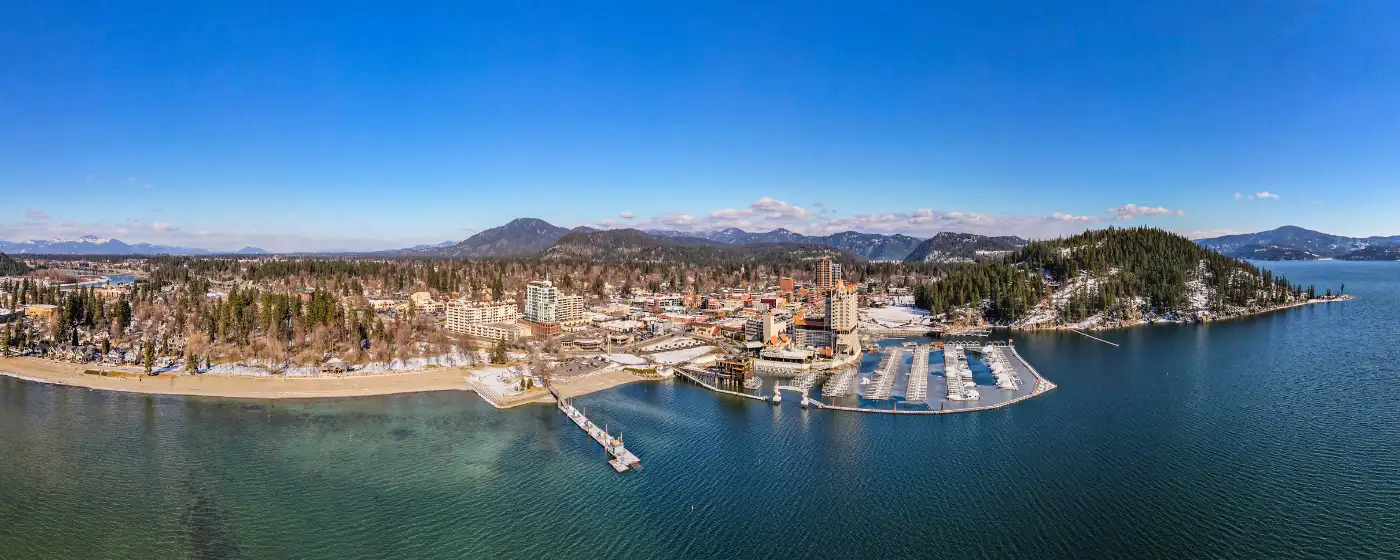
Most people who move to Coeur d'Alene will tell you the lake is the reason — and then six months later they'll tell you it's actually Tubbs Hill, or the Centennial Trail at six in the morning, or the way City Park smells like pine and sunscreen from Memorial Day through Labor Day. The lake is the anchor, but it's the layered system of parks and trails wrapping around it that makes daily life here genuinely different from other mid-size Idaho cities. You can walk out of a downtown coffee shop, hit a paved trail, and be standing on a forested bluff above open water inside twenty minutes — without ever getting in a car.
That accessibility is not accidental. Coeur d'Alene's parks system reflects decades of intentional public investment, most visibly the $20 million overhaul of McEuen Park completed in 2014 and the ongoing cooperative maintenance of the North Idaho Centennial Trail by the city, Kootenai County, and the Idaho Department of Parks and Recreation. The lake itself — more than 100 miles of shoreline — is the region's primary recreation engine, drawing swimmers, paddlers, boaters, and anglers from across the Inland Northwest. Hagadone Hospitality's Resort Golf Course adds a legitimate marquee attraction in the world's only floating island golf green, which has been repositioned daily on the lake since 1991.
What surprises people who move here from drier or more urban places is how consistently they use all of it. The Centennial Trail becomes a commute route. Tubbs Hill becomes a Tuesday-evening habit. The beach at City Park becomes the default answer to 'what are we doing this weekend?' in July. The trail system and the lake together compress the gap between wanting outdoor recreation and actually getting it — the infrastructure is too close and too good to skip. For families researching schools and youth sports, the schools page covers youth athletics and district programming in detail.
Whether you're already under contract or still deciding whether North Idaho makes sense for your life, the sections below break down Coeur d'Alene's signature parks, the Centennial Trail, lake and water recreation, and the seasonal rhythms that shape what outdoor life actually looks like here month to month.
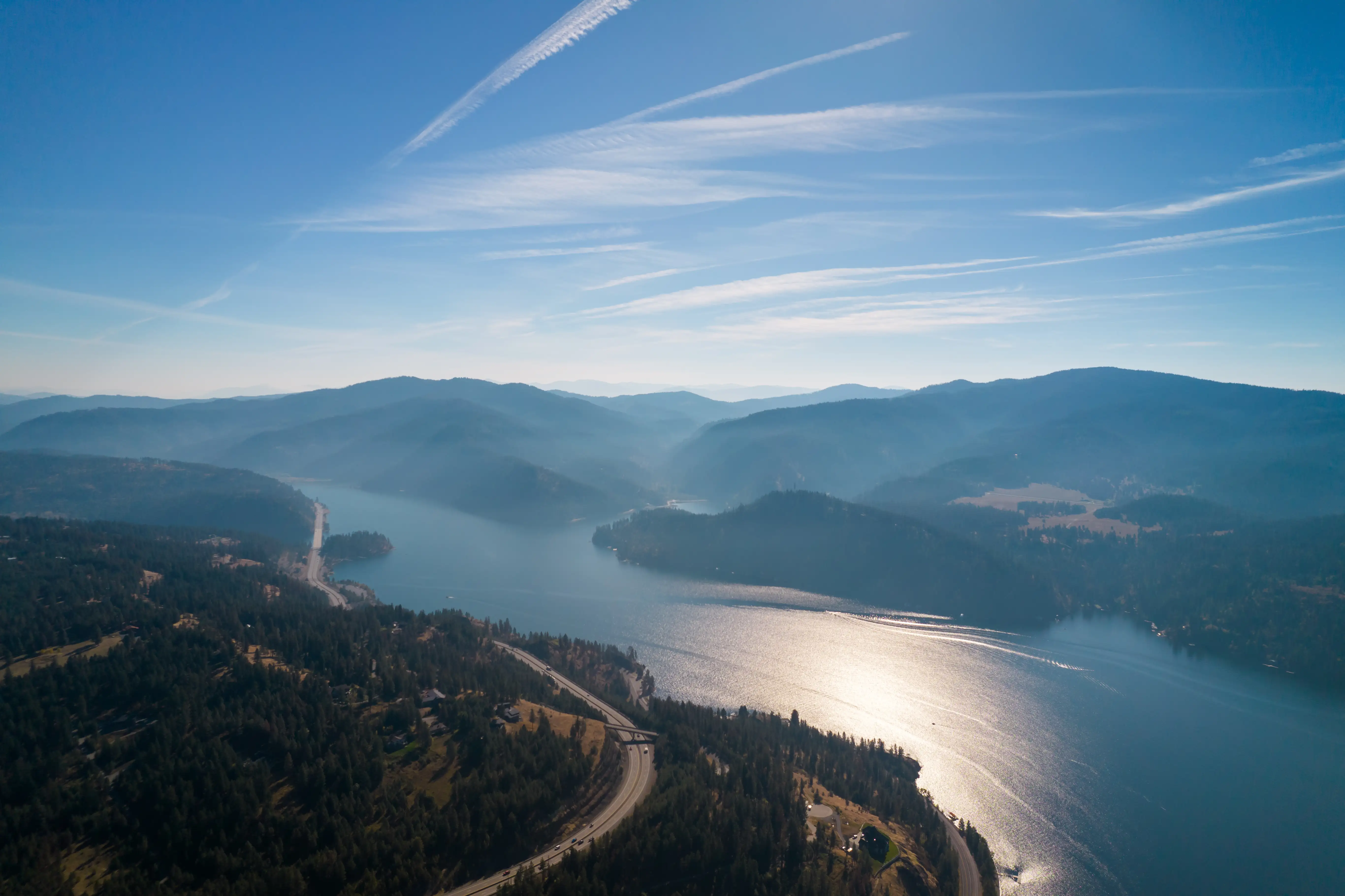
The Signature Parks: Tubbs Hill, McEuen, and City Park
Three parks sit at the functional center of Coeur d'Alene's outdoor life, and understanding what each one does — and doesn't do — tells you a lot about how the city works.
Tubbs Hill Natural Area
The 165-acre peninsula at 210 South 3rd Street is the park locals are most likely to defend in a city-council meeting. Three sides of it are bordered by Lake Coeur d'Alene, bicycles and motor vehicles are prohibited, and the 2.2-mile perimeter loop stays wild enough that you'll share it with ospreys and the occasional cliff jumper heading for the rocks on the south face. The trailhead is a five-minute walk from Sherman Avenue, which means Tubbs Hill functions as a pressure valve for the entire downtown — go at 7 a.m. on a Saturday and you'll understand why it draws approximately 150,000 visitors annually.
The interpretive trail is genuinely easy — families with young children do it regularly — but the terrain gets steep in spots on the lake-facing sections, and the cliff-jumping areas are unsupervised. The park is open year-round, 5 a.m. to 11 p.m., so it serves both the sunrise crowd and the people who want a post-dinner walk without streetlights crowding the view.
McEuen Park
At 520 E. Front Ave., McEuen Park is the park that does the most things for the most people simultaneously. The 20-acre footprint includes the city's largest playground, a splash pad running 11 a.m. to 7 p.m. daily from Memorial Day weekend through Labor Day, tennis and pickleball courts, basketball courts, an off-leash dog area, a waterfront concession stand, and a seawall overlook with unobstructed views toward the lake. The Avista Pavilion seats 300; the 4-acre lawn can accommodate events for up to 5,000 people.
The 430-space underground parking garage underneath the park is one of those details that sounds mundane until you've tried to park downtown on the Fourth of July. It's genuinely useful. McEuen also serves as the trailhead connecting to Tubbs Hill and the point where the North Idaho Centennial Trail passes through — so it's less a standalone park than a hub where multiple recreation systems intersect.
City Park and Beach
The roughly 17-acre lakefront park at the foot of Northwest Boulevard has been a community anchor since 1889. The guarded swim beach has shallow water that works well for younger swimmers, which is why the picnic shelter fills by 10 a.m. on any July weekend. Sand volleyball courts, basketball, and a picnic shelter with capacity for 180 round out the amenities. All city parks operate 5 a.m. to 11 p.m. daily; restrooms are open mid-April through mid-October.
| Park | Size | Standout Feature | Best For |
|---|---|---|---|
| Tubbs Hill Natural Area | 165 acres | 2.2-mile lakeside loop, cliff access, wildlife | Nature Quiet |
| McEuen Park | 20 acres | Splash pad, pavilion, dog park, Centennial Trail access | Families Walkable |
| City Park & Beach | ~17 acres | Guarded swim beach, sand volleyball, community since 1889 | Families Renters |
All three parks sit within a walkable corridor along the waterfront — you can move between them on foot without touching a car or a traffic light.
The North Idaho Centennial Trail: Coeur d'Alene's Backbone Trail
The 23-mile paved multi-use path is the kind of infrastructure that changes how a city feels to live in. It runs from the Idaho/Washington state line — where it connects directly with the Spokane River Centennial Trail — east to Higgins Point at the end of Coeur d'Alene Lake Drive, six miles beyond the city's eastern edge.
What the Trail Actually Connects
The path passes through Post Falls, threads through McEuen Park in downtown Coeur d'Alene, and traces the lakeshore east. That routing matters: you can ride a bicycle from a neighborhood in Post Falls to a waterfront restaurant in downtown Coeur d'Alene without touching a car. The trail is classified as both Class I and Class II in different segments, which in practice means the surface is consistently paved and wide enough for cyclists and pedestrians moving in opposite directions without drama.
Maintenance is a cooperative effort among the City of Coeur d'Alene, the City of Post Falls, Kootenai County, the Idaho Department of Parks and Recreation, and the North Idaho Centennial Trail Foundation — which is why the surface quality holds up better than most municipal trails of this length. After six months here, most residents who live within a mile of the trail start treating it as a genuine transportation route, not just a weekend amenity.
What Locals Know About Timing and Conditions
The section through Riverstone and along the lakeshore east of downtown is the most trafficked on summer weekend mornings — expect a genuine crowd between 8 and 10 a.m. on Saturdays in July. The Post Falls segments are noticeably quieter and shaded in spots, which makes them the better choice for midday summer rides. The trail is usable year-round by the determined, but icy stretches between McEuen and the state line in January are real — locals tend to shift to the gym or ski hill rather than fight the frost.
The eastern terminus at Higgins Point is worth knowing about. Most visitors turn around at downtown or the resort area; the stretch beyond the marina gets you into quieter forested lakeshore terrain that the summer tourist traffic never reaches.
Lake Coeur d'Alene: Water Recreation and the Floating Green
The lake has more than 100 miles of shoreline, and the version of it that most residents interact with daily is only a fraction of what's out there. The public beaches at City Park and McEuen get the most foot traffic. Getting further out — into the southern bays, the quieter coves on the eastern arm, the narrow channels near the lake's southern reaches — requires a boat or a kayak, and that's where the lake genuinely opens up.
Swimming, Paddling, and Boating
The guarded beach at City Park is the practical answer for families who want shallow, calm water with lifeguards present. Paddleboarders and kayakers tend to launch from McEuen's boat ramp early — by mid-morning on summer weekends, motorboat traffic on the main body of the lake makes the open water choppy enough to be unpleasant on a paddle craft. The workaround most residents figure out is launching before 8 a.m. or heading toward the quieter coves on the lake's eastern arm.
Fishing on the lake yields kokanee salmon, cutthroat trout, and largemouth bass, and the dock access near the resort area means you don't need a boat to cast. The lake also hosts open-water swimmers who train in marked areas off City Park — something you don't see at every Idaho lake.
The Resort Golf Course and the Floating Green
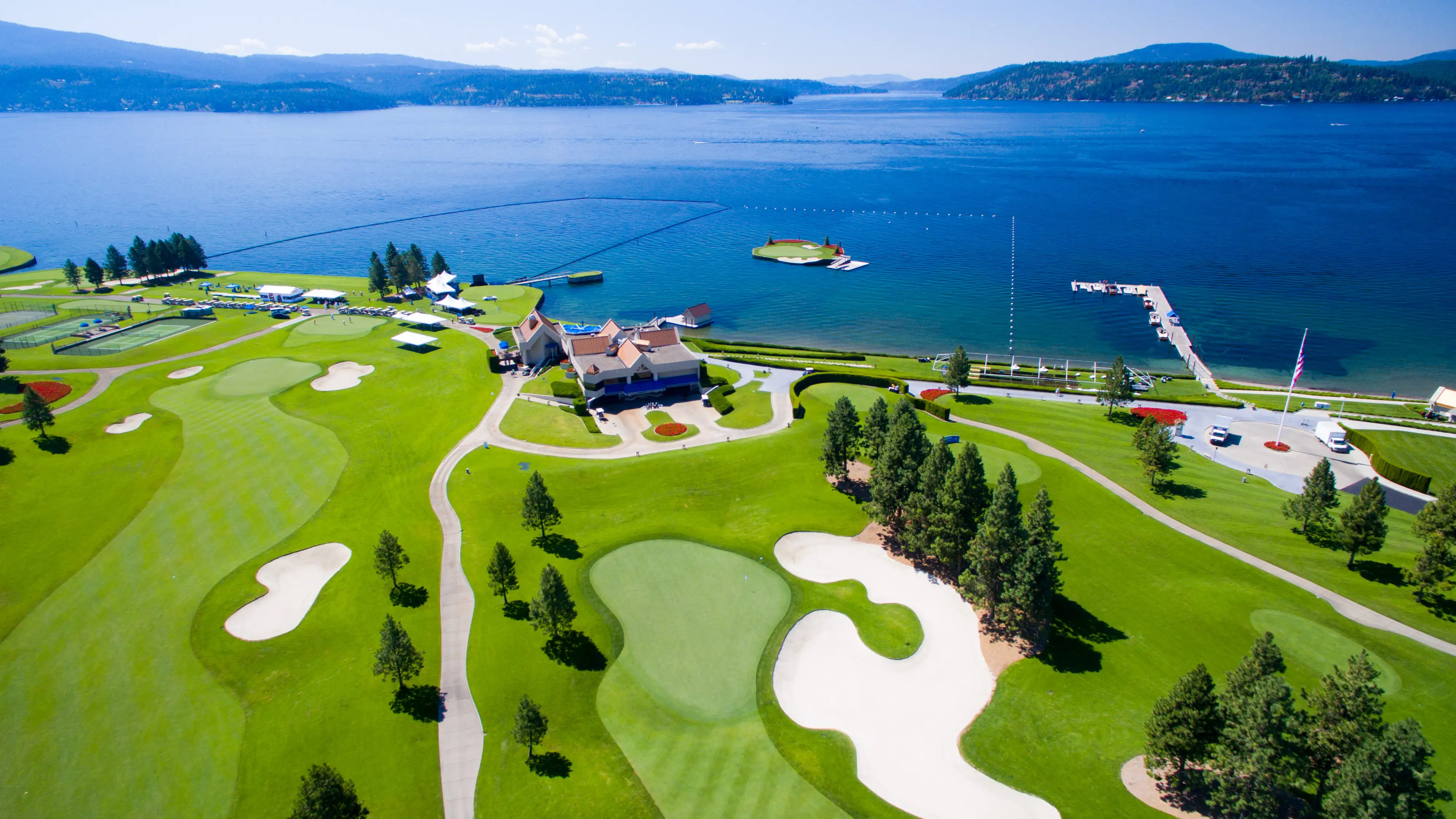
The Coeur d'Alene Resort Golf Course is a 6,803-yard, par-71 layout built around four terrain types: an expansive lakeshore, a forested ridge, rolling woodlands, and Fernan Creek. Views of the lake appear from nearly every hole. But the 14th hole is the reason golf publications write about this course at all.
Since 1991, the par-3 14th has featured the world's first and only floating, movable island green — a 2,200-ton structure repositioned daily via an underwater cable system. The distance from tee to green varies: 90 yards from the ladies' tee, up to 220 yards from the championship tee. Golfers reach it by electric shuttle boat. It is, in the most literal sense, a tee shot over open lake water with no margin for error on either side.
The course is not a municipal facility — it operates as part of the Coeur d'Alene Resort and is priced accordingly. If you're moving here and golf is part of your recreational identity, it's worth playing once for the experience. If you're a serious golfer looking for a regular game at accessible rates, the area's other public courses are a more practical option.
| Activity | Best Access Point | Peak Season | Key Detail |
|---|---|---|---|
| Guarded swimming | City Park Beach | June – August | Lifeguards on duty; shallow water |
| Kayak / paddleboard | McEuen Park boat ramp | May – September | Launch before 8 a.m. to avoid motorboat chop |
| Power boating | McEuen marina / resort marina | June – September | 100+ miles of navigable shoreline |
| Fishing | Resort-area docks / lake access | Year-round (peak spring) | Kokanee, cutthroat trout, bass |
| Open-water swimming | City Park marked zone | July – August | Organized training swims in season |
| Resort golf (floating green) | Coeur d'Alene Resort Golf Course | April – October | Par-3 14th; shuttle boat required; since 1991 |
The lake is legitimately four-season for anglers and cold-water swimmers; for everyone else, the effective season runs late May through early October.
Looking to buy in Coeur d'Alene? Estimate your payment.
Enter your numbers to see an estimated monthly mortgage payment.
Estimate only. Excludes HOA fees and mortgage insurance. The interest rate above is a starting point, not a quoted rate — replace it with your own to see real numbers. Insurance is a flat placeholder, not a Coeur d'Alene quote.
Seasonal Recreation and What Daily Outdoor Life Actually Looks Like
The honest version of outdoor life in Coeur d'Alene includes some friction that the summer photos don't capture. Here's what the calendar actually looks like.
Summer (June – August): Peak Everything
City Park beach is at capacity by noon on any Saturday with temperatures above 80°F. Parking near McEuen fills before 10 a.m. — the 430-space underground garage helps, but it still fills on peak weekends. The Centennial Trail between the resort and downtown is genuinely crowded between 8 and 11 a.m. Saturdays. None of this is a dealbreaker, but if you move here expecting uncrowded public access in midsummer, the reality will reset your expectations fast.
The local workaround is simple: go earlier, go east. The Higgins Point stretch of the Centennial Trail, the eastern lake bays by kayak, and Tubbs Hill before 7 a.m. are all dramatically quieter than the downtown corridor. Locals learn this within one summer.
Fall (September – November): The Sweet Spot
September is quietly the best month to be outdoors here. Crowds drop sharply after Labor Day. The lake stays warm enough for swimming into mid-September. The larch trees in the surrounding mountains — particularly in the Silver Valley and Cabinet Wilderness to the east — turn gold in late September and early October in a display that draws people from Spokane specifically to hike the North Idaho backcountry.
The Centennial Trail is at its best in October: cool air, low traffic, foliage. Restrooms in city parks close mid-October, so plan accordingly on longer rides.
Winter (December – March): Ski Hill Access
Schweitzer Mountain Resort, roughly 45 miles north near Sandpoint, is the primary winter draw for Coeur d'Alene residents — a longer drive than the lake is, but manageable as a day trip or weekend. Silver Mountain Resort in Kellogg is about 50 miles east on I-90. Neither is out the back door, which is the honest trade-off for living on the lake rather than at altitude.
In town, the Centennial Trail stays usable for cold-weather walkers and runners through most of the winter. Ice fishing appears on the smaller surrounding lakes, though Lake Coeur d'Alene itself rarely freezes solid enough for it.
Spring (April – May): The Transition
The lake is cold and often choppy through April. The Centennial Trail dries out before the parks do — grassy areas at McEuen and City Park can stay muddy into May after a wet spring. Tubbs Hill's trail surface holds up well year-round because of its rock and packed-earth composition. Spring is when the birding community shows up in force on the lake's shallower bays; the wetlands near Fernan Lake, just east of the city, draw migratory waterfowl through April.
Parks officially reopen restrooms mid-April, which is the unofficial signal that the outdoor season is back in motion.
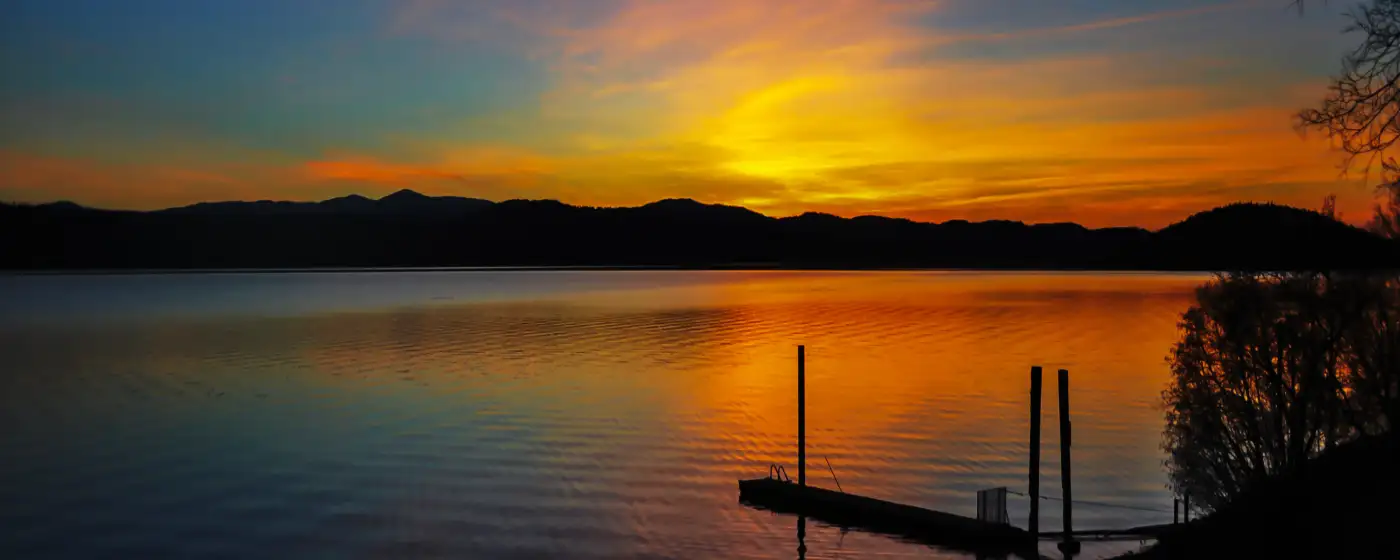
Local Expert Takeaway: Most people who move to Coeur d'Alene plan to use the lake. What they don't anticipate is that Tubbs Hill becomes the daily habit — a 2.2-mile loop walkable from downtown, no car required, no fee, no crowds before 7 a.m. Pair that with the Centennial Trail's McEuen Park segment as a commute route and City Park beach as the summer weekend anchor, and you end up with a recreation system that's genuinely woven into daily life rather than saved for special occasions. The one thing to calibrate: summer weekends on the main waterfront are busy. Go early, go east, or go on a Tuesday — and the version of Coeur d'Alene that made you want to move here is right there waiting.
Quick Takeaways & FAQs
✅ The 2.2-mile Tubbs Hill loop is free, car-free, open year-round, and walkable from downtown — approximately 150,000 people use it annually for good reason.
⚠️ Summer crowds at City Park and McEuen are real: downtown parking fills before 10 a.m. on peak July weekends, and the Centennial Trail through the resort corridor gets genuinely congested on Saturday mornings.
📍 The North Idaho Centennial Trail's eastern terminus at Higgins Point — six miles past the resort area — is where locals escape summer tourist traffic; most visitors never reach it.
Is Tubbs Hill suitable for young children?
Can you swim in Lake Coeur d'Alene at City Park without a lifeguard present?
How long does it take to bike the full North Idaho Centennial Trail?
When is the Coeur d'Alene Resort Golf Course floating green open to the public?
Are there winter outdoor recreation options in Coeur d'Alene itself, or do you have to drive?
Moving to Idaho?
Tell us what you need help with and we'll connect you with local resources.
