
Most people researching Blackfoot, Idaho spend about ten minutes on a crime-mapping site and walk away confused. The city-level numbers look moderate, the neighborhood-level heat maps show concentrated dots downtown, and none of it quite explains whether the quiet street near Jensen Grove is actually quiet. The honest answer is that Blackfoot is a small Eastern Idaho city of roughly 13,566 people, bisected by I-15 and U.S. 91, where the overwhelming majority of residents go years without experiencing a serious crime — but where the property crime rate in particular deserves a clear-eyed read before you settle on a neighborhood.
Bingham County's economy anchors Blackfoot through a mix of manufacturing, agriculture, public-sector work, and regional services that attract working families, long-term residents, and people willing to make the drive up I-15 for work. That employment base creates a stable residential population, and demographic stability matters for safety: high owner-occupancy neighborhoods, particularly on the northeastern and outer edges of the city, tend to show the lowest crime activity across the board.
On cost of living, Blackfoot sits well below what most transplants paid in their previous market — see the full cost picture on the cost of living page — and that affordability means the city draws residents who put down roots rather than treating it as a temporary stop. That dynamic tends to reinforce neighborhood stability over time. What you give up relative to Idaho Falls is some commercial density; what you gain in many residential pockets is a quieter, more predictable street-level environment.
The sections below break down Blackfoot's violent and property crime numbers in national and state context, explain the meaningful differences between the city's safest and most active zones, address the property crime picture honestly, cover law enforcement staffing, and give you a practical framework for evaluating specific neighborhoods before you decide where to live.
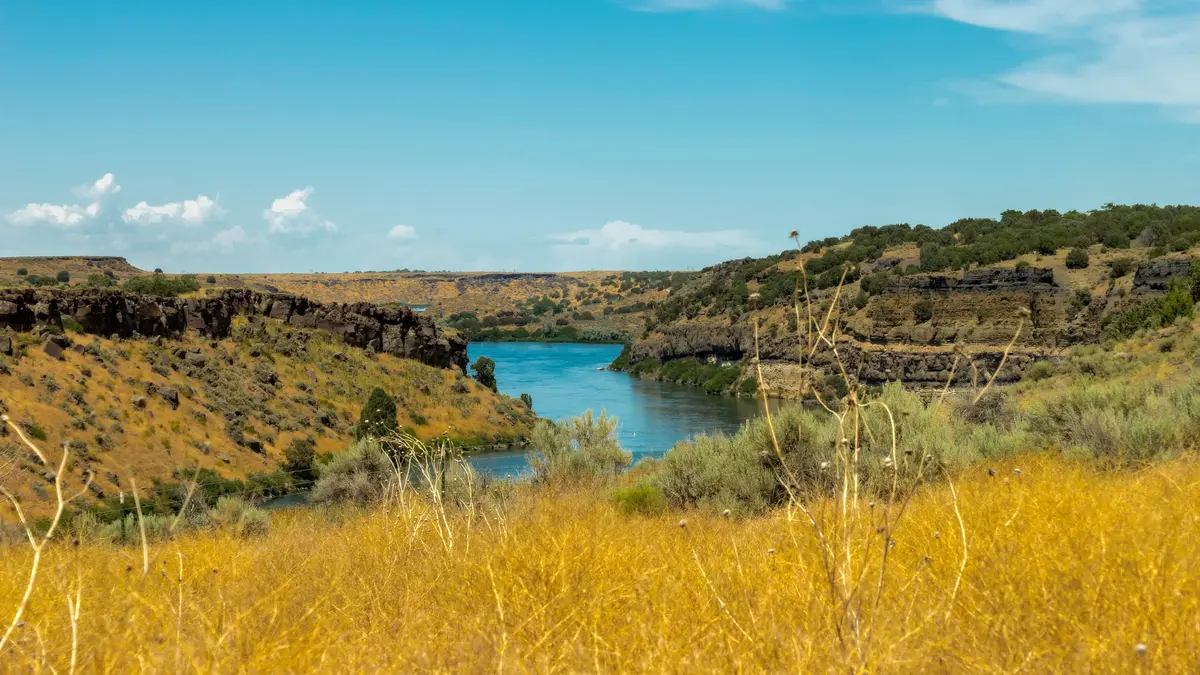
Blackfoot's Crime Numbers in Context
Blackfoot's violent crime rate is 3.5 per $1,000 residents. That single figure sitting alone doesn't tell you much — context is everything with crime statistics.
The U.S. national violent crime rate for 2024 came in at approximately 3.59 per $1,000 residents (359 per 100,000), meaning Blackfoot's rate sits just below the national average. Idaho as a whole runs noticeably lower, with a statewide violent crime rate of approximately 2.34 per $1,000 residents based on FBI 2023 data — roughly a third below the national figure. So Blackfoot is above its own state's average but below where most of the country lands.
| Geography | Violent Crime Rate (per $1,000) | Context |
|---|---|---|
| Blackfoot, ID | 3.5 | City figure (authoritative) |
| U.S. National Average | ~3.59 | FBI / USAFacts 2024 |
| Idaho Statewide | ~2.34 | FBI UCR 2023 |
| Blackfoot vs. National | Slightly below | Favorable for residents |
| Blackfoot vs. Idaho | Above state avg. | Worth understanding |
| Idaho vs. National | Noticeably lower | One of the safer states |
The state context matters because Blackfoot operates within Idaho's broader safety environment — one of the more favorable in the country for violent offenses.
Trend direction is also working in Blackfoot's favor. The city's overall crime rate fell 29% in 2023 compared to 2022, part of a multi-year decline in both violent and property incidents. Nationally, violent crime dropped an estimated 3.0% in 2023 compared to 2022, with murder recording its largest single-year decrease on record. Idaho's overall crime rate fell 8.7% between 2023 and 2024, slightly outpacing the national decrease of 8.4%. Blackfoot isn't moving against the tide — it's moving with a genuinely positive regional and national trend.
Where Violent Crime Actually Happens Inside Blackfoot
City-wide averages mask a pattern that matters a great deal if you're choosing between the northeast residential corridors and the downtown core. Blackfoot is not uniformly one thing — it has meaningful intra-city variation.
CrimeGrade's analysis of FBI data identifies the northeast part of the city as the safest zone, with a violent crime victimization chance of approximately 1 in 399. In the central neighborhoods, that chance rises to roughly 1 in 148 — a difference that's large enough to factor into a neighborhood decision.
That central-city concentration isn't simply a reflection of resident behavior. The downtown and commercial corridor areas near U.S. 91 have more retail establishments, service businesses, and foot traffic — all of which expose those blocks to a wider transient population. Crime-mapping tools register incidents at the location where they occur, not where the people involved live, which means a commercial stretch naturally accumulates more dots than a quiet cul-de-sac even when the surrounding residential streets are calm.
The Northeast and Outer Neighborhoods
The Jensen Grove and Lewis and Clark areas, along with the northeastern residential streets, consistently draw residents who describe their blocks as low-drama and stable. Neighbors know each other. There's regular foot traffic at Jensen Grove Park — families with kids, weekend joggers, people using the lake — which keeps those public spaces active and well-observed. High activity in a park is not the same as high crime; in fact, the presence of families using a space regularly is one of the more reliable informal safety signals in any small city.
Old Town and the Central District
Old Town Blackfoot, along NW Main Street near the Idaho Potato Museum, carries more of the city's commercial character. The surrounding small businesses bring daytime foot traffic, which means the area feels alive during business hours. After dark, it's quieter, and it's worth walking the specific blocks you're considering at different times of day before committing to a neighborhood near the commercial core.
This is also where the crime-map heat tends to concentrate — not necessarily because residents are at higher risk in their homes, but because businesses in this zone are the most likely targets for the low-level property offenses that make up the bulk of Blackfoot's crime picture.

The Property Crime Picture: Where Blackfoot Deserves Honest Scrutiny
Violent crime in Blackfoot compares favorably to national norms. Property crime is the category that deserves a harder look.
Blackfoot's property crime rate is 22.1 per $1,000 residents. Idaho's statewide property crime rate sits at roughly 8.09 per $1,000 (FBI 2023 data). That's a substantial gap — Blackfoot runs notably higher than the state average on this measure, and it's the main reason the city lands in a mixed position on overall safety rankings despite its manageable violent crime rate.
| Crime Type | Blackfoot Rate (per $1,000) | Idaho State Rate (per $1,000) | Reading |
|---|---|---|---|
| Violent Crime | 3.5 | ~2.34 | Above state, below national |
| Property Crime | 22.1 | ~8.09 | Meaningfully above state avg. |
| Larceny-Theft | Majority of property offenses | Same pattern statewide | Most common category |
Larceny-theft — unlocked vehicles, items left in yards, packages on porches — accounts for the bulk of property offenses statewide, and Blackfoot's pattern follows the same breakdown. These are crimes of opportunity rather than targeted intrusion. That distinction matters for how you respond to the number: the practical countermeasure is habit change, not a different city.
People who move to Blackfoot from larger metros often find that locking their car is something they have to re-learn as a habit. Many residents here grew up leaving vehicles unlocked without incident — and then get caught off guard when they stop doing it. Unlocked cars left overnight near the commercial core or in areas with high foot traffic are the single most common property crime vector in towns like this. The solution is straightforward; the statistic just doesn't explain itself without this context.
Rural Outskirts Run Lower
The Groveland and Moreland areas on Blackfoot's outskirts are lower-density, primarily owner-occupied, with medium-to-large family homes spread across larger lots. Lower density, lower foot traffic, and higher owner-occupancy all correlate with lower property crime exposure. If the city's property crime rate is a deciding factor for you, the outer residential neighborhoods are where the practical risk drops significantly compared to the city-wide figure.
Looking to buy in Blackfoot? Estimate your payment.
Enter your numbers to see an estimated monthly mortgage payment.
Estimate only. Excludes HOA fees and mortgage insurance. The interest rate above is a starting point, not a quoted rate — replace it with your own to see real numbers. Insurance is a flat placeholder, not a Blackfoot quote.
Law Enforcement and What It Means Day to Day
Blackfoot operates with 32 full-time law enforcement employees, including 29 sworn officers — a ratio of roughly 2.1 officers per $1,000 residents based on the city's population of 13,566 (FBI 2023 data). For reference, the national median for cities of similar size runs around 2.0 to 2.5 officers per $1,000 residents, putting Blackfoot close to the middle of that range.
What that staffing level means in practice: response times in a city this size are generally faster than in a comparable department spread across a geographically larger jurisdiction. Blackfoot is compact — patrol units can reach most neighborhoods quickly — which is a structural advantage that aggregate staffing ratios don't fully capture.
What Locals Actually Notice
Residents who've been here five or more years consistently describe the police presence as visible without being heavy-handed. Officers tend to know regulars and neighborhood rhythms in a city this size, which changes the dynamic compared to an anonymous urban environment. The Bingham County Sheriff's Department provides an additional layer of coverage for the surrounding rural areas, including the Groveland-Moreland corridor.
One thing people notice after their first winter here: the quiet is real. Blackfoot doesn't have the late-night restaurant row or bar district of Idaho Falls, which means the late-night disturbance calls that spike in more commercial cities simply don't materialize at the same frequency. The city quiets down early, and that structural reality keeps certain categories of incident — disorderly conduct, alcohol-related — lower than raw population comparison would suggest. After a few months, it's one of those things that's hard to articulate but impossible to miss: the city just doesn't hum at night the way larger places do.
If you want to track local activity before deciding on a neighborhood, the Bingham County Sheriff's Office and Blackfoot Police Department both maintain public-facing incident reports. Pulling a few months of logs for the specific blocks you're considering is one of the more reliable ways to calibrate what the city-wide averages mean at street level.
Practical Framework: Evaluating Specific Neighborhoods
No city-wide crime rate tells you whether the specific street you're considering is calm. Here's how to read Blackfoot's neighborhoods with the data in mind.
The Safest Zones by Pattern
The northeast residential areas — including the Lewis and Clark neighborhood and streets feeding toward the Jensen Grove corridor — show the lowest violent crime activity. These blocks are predominantly owner-occupied, have a longer-established resident base, and sit away from the commercial corridors that attract opportunistic activity. The full neighborhood breakdown covers character and fit in more detail.
Riverside and West Bridge
The Riverside area near the Snake River and the West Bridge corridor carry a quieter residential character. These neighborhoods aren't as far removed from downtown as Groveland-Moreland, but they have enough distance from the Main Street commercial zone to avoid the crime concentration patterns of the central district. Families settling into these areas describe them as genuinely neighborhood-feeling — street-level familiarity, kids outside, that kind of thing.
Groveland-Moreland: The Lowest-Density Option
Groveland and Moreland represent Blackfoot's rural fringe — medium-to-large homes, agricultural character, neighbors spread across acreage rather than standard lots. Lower density and higher owner-occupancy are the two strongest structural predictors of lower property crime in any market. If protecting against opportunistic theft is a priority, these outskirts offer the most favorable conditions in the city.
Alameda and Central Areas: Know What You're Getting
The Alameda neighborhood and blocks closer to the commercial core are convenient — close to the Blackfoot Performing Arts Center and the Eastern Idaho State Fairgrounds zone, with shorter errand runs. That convenience comes with higher exposure to the property crime activity concentrated downtown. This isn't a reason to avoid these areas outright, but it is a reason to lock your car, install a doorbell camera, and not leave items visible in a vehicle overnight — habits that reduce your actual risk substantially regardless of what the rate says.
| Neighborhood | Safety Pattern | Primary Risk Type | Best For |
|---|---|---|---|
| Lewis and Clark / Northeast | Among the lowest intra-city | Minimal documented activity | Families Quiet |
| Jensen Grove Area | Low residential; park traffic | Park-adjacent foot traffic | Families Nature |
| Groveland / Moreland | Low (rural, owner-occupied) | Very low property exposure | Privacy Quiet |
| Riverside / West Bridge | Moderate-low | Occasional property incidents | Families Value |
| Old Town / Downtown Core | Most active zone | Property crime, larceny-theft | Walkable |
| Alameda | Moderate | Property crime near commercial | Commuter |
The practical step that surprises most people: pull three months of publicly available police call logs for the specific addresses on your short list. It takes about 20 minutes and gives you far more signal than any composite score from a crime-mapping site.
Local Expert Takeaway: Blackfoot is not a city you should feel anxious about — but property crime in the commercial core is a real pattern, not a statistical blip. The northeast residential corridors, the Jensen Grove area, and the Groveland-Moreland outskirts run meaningfully quieter than the downtown zone near NW Main Street. Violent crime sits below the national average and has been trending down. If you're narrowing between two neighborhoods and safety is the deciding factor, go northeast or go rural. And wherever you land, lock your car — that single habit addresses the majority of property crime risk in a city like this.
Quick Takeaways & FAQs
✅ Blackfoot's violent crime rate of 3.5 per $1,000 residents sits below the national average of approximately 3.59 per $1,000, and the city recorded a 29% drop in overall crime in 2023 compared to 2022.
⚠️ Property crime at 22.1 per $1,000 runs noticeably above Idaho's statewide rate of roughly 8.09 per $1,000 — the honest tradeoff of living near a small-city commercial core, particularly in and around the downtown NW Main Street corridor.
📍 The northeast neighborhoods and the Groveland-Moreland rural fringe show the lowest crime activity within the city; CrimeGrade data puts the violent crime victimization chance in the northeast at roughly 1 in 399, compared to 1 in 148 in the central zone.
Is Blackfoot, Idaho a safe place to live?
Which neighborhoods in Blackfoot have the lowest crime?
How does Blackfoot's crime rate compare to Idaho Falls?
What type of crime is most common in Blackfoot?
How many police officers does Blackfoot have?
Moving to Idaho?
Tell us what you need help with and we'll connect you with local resources.
