Home ›
Blog ›
Best for Remote Workers in Mid-Cities, Texas: Every City Ranked
Remote work changed the calculus for where to live in DFW — but choosing a city in the Mid-Cities corridor still involves real trade-offs that no single ranking captures. The cities between Fort Worth and Dallas share one enormous advantage: DFW International Airport sits at the geographic center of this corridor, putting most of these communities within a short drive of one of the country's busiest hubs. That matters if your remote job still requires quarterly travel or client visits. What varies dramatically from one city to the next is the price you pay to live near that airport, the property tax burden you carry every year, and how much city — restaurants, parks, entertainment — actually surrounds your home office.
The spread across these cities reflects a real tension in suburban Texas: the places with the most amenities and the easiest airport access tend to carry the heaviest price tags, while the more affordable options ask you to accept a quieter, leaner local scene. A large city brings more provider competition and a better chance of finding the connectivity a serious remote worker needs, while smaller towns operate more like a home-office-and-drive setup where you plan around what the city lacks. The sections below walk through each city on the four factors that actually shape remote-work life here — connectivity, tax burden, airport access, and what daily life looks like when you close the laptop.
How This Ranking Was Built
Each city is scored 1-10 on every dimension below against a fixed statewide scale — never against the other cities in this region — then combined into one weighted Composite score out of 10.
Internet Speed — 25%Weighted contribution to the composite score, graded 1-10 against a fixed statewide scale.
Tax Burden — 20%Weighted contribution to the composite score, graded 1-10 against a fixed statewide scale.
Airport Access — 20%Weighted contribution to the composite score, graded 1-10 against a fixed statewide scale.
Affordability — 20%Weighted contribution to the composite score, graded 1-10 against a fixed statewide scale.
Quality of Life — 15%Weighted contribution to the composite score, graded 1-10 against a fixed statewide scale.
Top 14 Cities: Best for Remote Workers Snapshot
Ranked by overall composite score. Click any city to jump to the full breakdown.
| # | City | Composite | Internet | Property Tax | Median Price |
|---|
| 1 | Arlington
Tarrant County | 8.0/10 | 10 | 6.6 | $312,255 |
| 2 | Irving
Dallas County | 7.8/10 | 10 | 5.5 | $343,364 |
| 3 | Grand Prairie
Dallas County | 7.7/10 | 10 | 5.5 | $317,295 |
| 4 | North Richland Hills
Tarrant County | 7.2/10 | 7.1 | 6.6 | $370,431 |
| 5 | Bedford
Tarrant County | 6.9/10 | 6.4 | 8.9 | $376,909 |
| 6 | Grapevine
Tarrant County | 6.8/10 | 6.5 | 6.6 | $554,188 |
| 7 | Haltom City
Tarrant County | 6.8/10 | 6.3 | 6.6 | $244,636 |
| 8 | Euless
Tarrant County | 6.6/10 | 6.8 | 6.6 | $357,356 |
| 9 | Watauga
Tarrant County | 6.1/10 | 4.9 | 4.5 | $276,575 |
| 10 | Keller
Tarrant County | 6.1/10 | 6.3 | 6.6 | $654,648 |
| 11 | Southlake
Tarrant County | 5.8/10 | 5.7 | 6.6 | $1,321,458 |
| 12 | Coppell
Dallas County | 5.8/10 | 6.2 | 4.8 | $621,362 |
| 13 | Colleyville
Tarrant County | 5.7/10 | 5.2 | 6.6 | $919,474 |
| 14 | Trophy Club
Denton County | 5.1/10 | 4.0 | 5.6 | $698,655 |
Property Tax
6.6/10
out of 10
Airport Access
9.6/10
out of 10
Affordability
6.0/10
out of 10
Quality of Life
7.3/10
out of 10
Median Price
$312,255
2026 market price
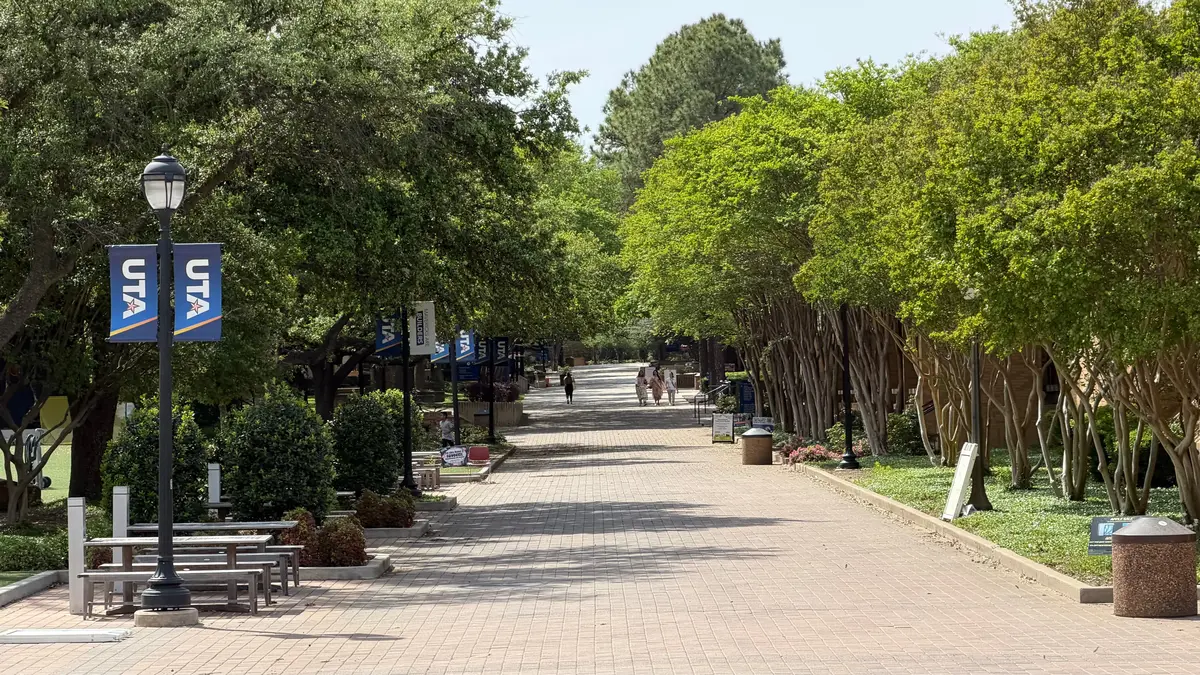
Arlington is the 7th-largest incorporated city in Texas, and that scale shows up in ways that matter for remote workers. A city of this size supports genuine provider competition and the kind of broadband infrastructure that a video-call-heavy workday demands. The typical home price of $312,255 sits in a range that gives buyers real options across different neighborhoods. The property tax rate here is on the heavier side for the area — worth pricing carefully into your monthly budget before closing — but what Arlington gives you in return is the entertainment infrastructure of a city: major stadiums, Six Flags, a parks system, and a dining scene that does not require a drive to feel complete.
Arlington suits remote workers who want a full-size city's energy without paying luxury-market prices for it. The trade-off compared to quieter neighbors is noise, traffic, and a carrying cost that rewards buyers who do the tax math at the outset. Families who want a lot to do on evenings and weekends will find the most to work with here.
Property Tax
5.5/10
out of 10
Airport Access
10/10
out of 10
Affordability
5.3/10
out of 10
Quality of Life
7.3/10
out of 10
Median Price
$343,364
2026 market price
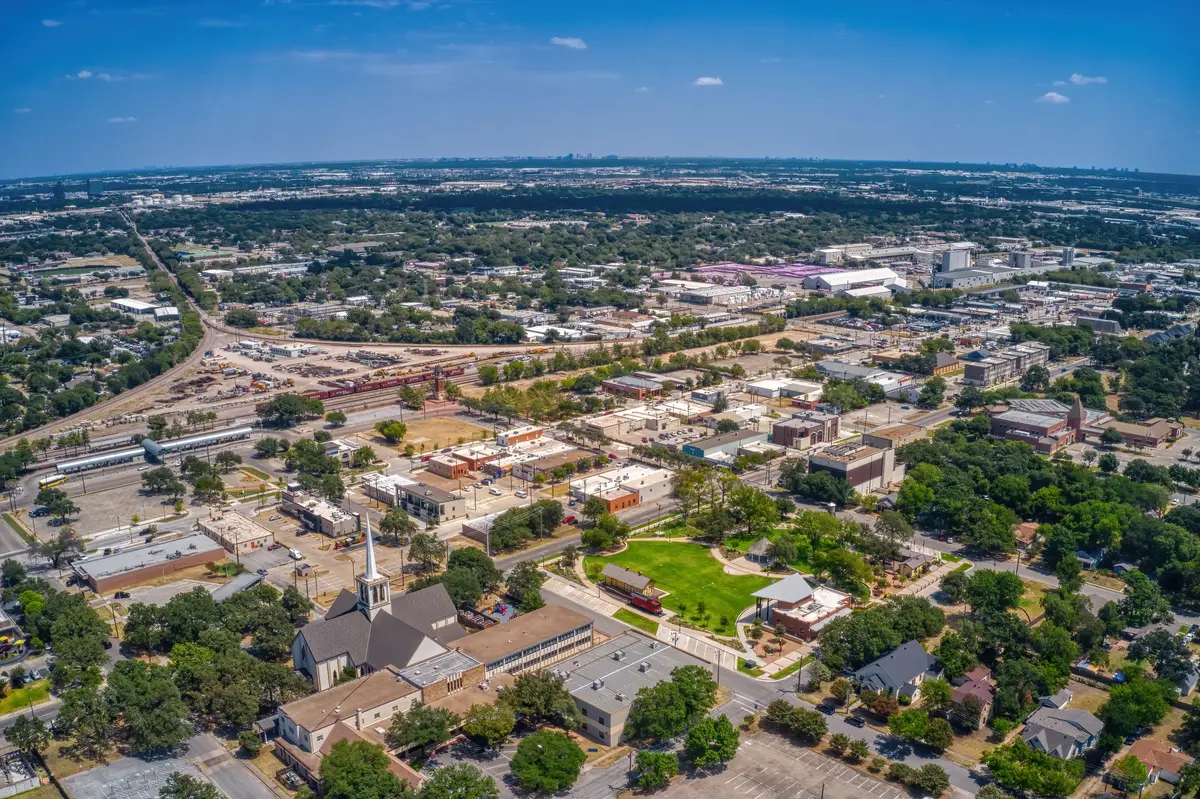
Irving's position for remote workers is defined by one geographic fact: DFW International Airport sits very close to most of the city — as close as any suburb in this corridor gets. If your remote role still involves regular travel — client sites, quarterly offsites, industry conferences — that proximity is a genuine competitive advantage. The typical home price of $343,364 reflects a city that has become a corporate address in its own right, with the Las Colinas district giving the city a denser, more walkable feel than most DFW suburbs. Irving is the 12th-largest incorporated city in Texas, which means provider competition and broadband infrastructure are well-developed. The property tax rate here carries a heavier load than some neighbors, so confirm the overlapping district rates for any specific address with the Dallas County appraisal district.
Irving works best for remote workers who travel often enough that airport proximity shapes their quality of life in a real way, and who want a more urban daily experience than a traditional suburb offers. The home price is above the mid-range for this corridor, but buyers get a city with genuine density and variety in exchange.

Property Tax
5.5/10
out of 10
Airport Access
9.2/10
out of 10
Affordability
5.8/10
out of 10
Quality of Life
7.3/10
out of 10
Median Price
$317,295
2026 market price
Grand Prairie stretches across parts of both Dallas and Tarrant counties, and at the 16th-largest incorporated city in Texas it has the population base to support strong broadband infrastructure — the kind of scale where provider options are real rather than theoretical. The typical home price of $317,295 keeps it competitive among larger cities in this corridor. Joe Pool Lake, Epic Waters, and Lone Star Park give the city a recreational identity that sets it apart from pure bedroom suburbs. The property tax rate sits on the heavier side of mid-range — not punishing, but worth confirming at the county appraisal district for the exact parcel before you close.
Grand Prairie suits remote workers who want a larger-city footprint and genuine outdoor recreation without paying the premium that Grapevine or Irving commands. The dual-county position can complicate tax district research, so budget time to verify the specific overlapping districts for any address you seriously consider.
Property Tax
6.6/10
out of 10
Airport Access
9.5/10
out of 10
Affordability
4.7/10
out of 10
Quality of Life
8.7/10
out of 10
Median Price
$370,431
2026 market price
North Richland Hills punches above its size when it comes to daily quality of life — the city has built out parks, dining, and local attractions at a level that feels more complete than many comparably sized DFW suburbs. The typical home price of $370,431 is above the mid-range for this corridor, which reflects real demand from families who prize the amenity density here. At the 58th-largest incorporated city in Texas, the broadband picture is solid for a mid-size suburb, though buyers should confirm specific provider availability at their address before assuming a work-from-home setup will come together without a call to the provider. The property tax rate is on the heavier side for this area and adds meaningful carrying cost — worth working through carefully before making an offer.
North Richland Hills is the best fit for remote workers with families who want a well-rounded suburb with genuine things to do, and who are willing to pay a premium for that liveability. DFW Airport is a short drive, which covers the occasional in-person commitment without making travel feel like a project.
Property Tax
8.9/10
out of 10
Airport Access
10/10
out of 10
Affordability
4.5/10
out of 10
Quality of Life
4/10
out of 10
Median Price
$376,909
2026 market price
Bedford sits very close to DFW International Airport — as convenient a location as any city in this corridor for remote workers whose jobs still involve regular travel. The typical home price of $376,909 is on the pricier side for this corridor, but the property tax rate here is on the lighter side for the area — one of the more favorable rates in this comparison, which meaningfully offsets the monthly carrying cost on a home in this range. At the 79th-largest incorporated city in Texas, Bedford's broadband landscape is solid for a suburb of its size, though it is worth confirming what serves a specific address. The local amenity scene is modest — enough for everyday errands and a decent dinner out, but not a destination.
Bedford suits remote workers who prioritize airport proximity and a manageable tax burden over a vibrant local scene, and who are comfortable building their social and recreational life around the wider Mid-Cities corridor. It is a practical choice rather than an inspiring one — which is exactly what some buyers are looking for.
Property Tax
6.6/10
out of 10
Airport Access
10/10
out of 10
Affordability
1.9/10
out of 10
Quality of Life
10/10
out of 10
Median Price
$554,188
2026 market price
Grapevine is the city in this corridor where quality of life is not a box to check but the whole point. The historic Main Street, the wine trail, the lakefront, and a concentration of restaurants and local character give it an identity no other city on this list can replicate. That identity has a price: a typical home of $554,188 puts Grapevine firmly in premium territory, and the property tax rate — moderate by Texas standards but applied to a high base — adds a real monthly cost. At the 75th-largest incorporated city in Texas, broadband infrastructure is serviceable for remote work, but buyers at this price point should confirm provider options at their specific address. DFW Airport is practically on Grapevine's doorstep, which is as close as any suburb in this corridor gets.
Grapevine suits remote workers for whom daily environment matters as much as logistics — people who want to live somewhere that feels like a place, not just a suburb. The trade-off is straightforward: you pay significantly more per square foot for that character, and the local tax burden reflects a city that funds its amenities.
Property Tax
6.6/10
out of 10
Airport Access
8.9/10
out of 10
Affordability
8.0/10
out of 10
Quality of Life
3.5/10
out of 10
Median Price
$244,636
2026 market price
Haltom City offers something genuinely rare in the DFW metro: a typical home price of $244,636 in a city with reasonable airport access and a manageable commute to Fort Worth. For remote workers whose primary concern is keeping housing costs low and monthly flexibility high, that number opens doors that most of this corridor closes. The property tax rate is moderate — not the lightest in this group, but not the heaviest either — and at the 86th-largest incorporated city in Texas the broadband infrastructure supports everyday remote-work use, though verifying provider availability at a specific address is always the right move. The local amenity scene is honest: dining and outdoor options exist, but daily life here is quieter and leaner than in the larger cities nearby.
Haltom City is the right fit for remote workers who have made peace with building their own routine — who work from home, spend weekends outdoors, and do not need a bustling local scene to feel settled. Buyers who want both low prices and a rich amenity environment will find that combination does not exist in this corridor at this price point.
Property Tax
6.6/10
out of 10
Airport Access
10/10
out of 10
Affordability
5.0/10
out of 10
Quality of Life
4/10
out of 10
Median Price
$357,356
2026 market price
Euless sits at the geographic heart of the Mid-Cities corridor, and its proximity to DFW International is among the best of any city on this list — a short drive that makes any work trip feel manageable. The typical home price of $357,356 reflects a city that has absorbed demand from buyers priced out of Grapevine and Southlake without fully closing that gap. The 67th-largest incorporated city in Texas, Euless has a broadband landscape typical of a well-connected mid-size suburb — functional for remote work, with the usual caveat that specific address availability should be confirmed before closing. Parks are the highlight of the local scene; dining and cultural options are limited compared to larger neighbors. The property tax rate sits in the mid-range for this area.
Euless suits remote workers who travel regularly and want to minimize the airport run without paying the Grapevine or Colleyville premium. The daily environment is quiet and residential — a home-office-and-drive setup rather than a walkable local scene — which works well for buyers who are self-sufficient about entertainment.
Property Tax
4.5/10
out of 10
Airport Access
9.2/10
out of 10
Affordability
7.0/10
out of 10
Quality of Life
5/10
out of 10
Median Price
$276,575
2026 market price
Watauga is a small city in the north Tarrant County fabric, and its typical home price of $276,575 reflects that scale. For remote workers focused on keeping housing costs well below what much of the DFW corridor demands, Watauga delivers — and the drive to DFW Airport is short enough that the occasional work trip does not feel like a production. The 143rd-largest incorporated city in Texas, Watauga sits in a population tier where broadband infrastructure is more limited than in the larger cities on this list; buyers should treat provider confirmation at a specific address as a non-negotiable step before signing anything. The property tax rate here is on the heavier side for this corridor and adds real cost to homeownership — worth running the numbers carefully against the lower purchase price.
Watauga suits remote workers who are genuinely price-sensitive and comfortable with a quieter, more residential daily environment. The combination of a heavier tax rate and smaller-city infrastructure means the savings on purchase price are partly offset in other ways, so buyers should model the full carrying cost before assuming this is the best long-term value choice.
Property Tax
6.6/10
out of 10
Airport Access
9.5/10
out of 10
Affordability
1/10
out of 10
Quality of Life
7.3/10
out of 10
Median Price
$654,648
2026 market price
Keller is a mid-size suburb built around family life, with a parks system and a local dining scene that reflects the income level of its residents. The typical home price of $654,648 places it firmly at the premium end of this corridor, and the property tax rate — above average for Texas — means the carrying cost on that price is substantial. At the 82nd-largest incorporated city in Texas, the broadband infrastructure is solid for a suburb of its size, consistent with what a mid-tier population base typically supports. DFW Airport is a short and convenient drive away, which covers the frequent-traveler use case without being the closest option on this list.
Keller tends to suit remote workers with families who are willing to pay for a well-maintained, amenity-rich suburb and who are not primarily driven by minimizing housing costs. Buyers who want Keller's quality of life at a lower price point will generally find that trade-off does not exist in this corner of Tarrant County.
Property Tax
6.6/10
out of 10
Airport Access
10/10
out of 10
Affordability
1/10
out of 10
Quality of Life
6/10
out of 10
Median Price
$1,321,458
2026 market price
Southlake is a luxury suburb in a way that is hard to overstate: a typical home price of $1,321,458 signals a market built around high-income households, and the property tax rate — moderate by Texas standards but applied to a very high base — produces a carrying cost that deserves serious attention before any offer. At the 115th-largest incorporated city in Texas, the broadband infrastructure is more limited than in the larger cities on this list, which matters for remote workers who depend on consistent connectivity. DFW Airport is a very short drive away, a genuine convenience for buyers who travel often.
Southlake suits a narrow buyer profile: remote workers in high-income households who want a prestige address, strong schools, and immediate airport access, and for whom the price is the point rather than the obstacle. Buyers comparing Southlake to Colleyville will find similar luxury positioning but different character — Southlake carries a more curated, destination feel.
Property Tax
4.8/10
out of 10
Airport Access
10/10
out of 10
Affordability
1/10
out of 10
Quality of Life
7.3/10
out of 10
Median Price
$621,362
2026 market price
Coppell's identity is built around its schools and its location — practically at DFW Airport's doorstep, with a planned, maintained suburban character that attracts families willing to pay for it. The typical home price of $621,362 puts it at the premium end of this corridor, and the property tax rate here is on the heavier side for Texas, which adds meaningful cost to an already-high purchase price. At the 91st-largest incorporated city in Texas, the broadband infrastructure is in a mid-tier range — functional for remote work, but worth verifying at a specific address, particularly in newer subdivisions on the city's edge. The local scene — parks, dining, outdoor options — is well-rounded for a city of this size.
Coppell tends to suit remote workers with school-age children who treat the school district as a primary driver and for whom the price is a feature rather than a drawback. Buyers who want the same airport proximity at lower cost will find Grand Prairie or Arlington closer to that combination.
Property Tax
6.6/10
out of 10
Airport Access
10/10
out of 10
Affordability
1/10
out of 10
Quality of Life
6/10
out of 10
Median Price
$919,474
2026 market price
Colleyville is a quiet, established enclave where the housing stock reflects genuine wealth and the pace of daily life reflects the priorities of its residents. A typical home price of $919,474 reflects resort-level residential demand in a low-density setting, and that price level makes the property tax rate — moderate by Texas standards — a significant absolute dollar figure worth modeling carefully. At the 127th-largest incorporated city in Texas, Colleyville sits in a population tier where broadband infrastructure is more constrained than in the larger cities nearby; remote workers who depend on consistent, high-capacity connectivity should confirm provider options at any specific address before proceeding. DFW Airport is a comfortable, short drive away.
Colleyville suits remote workers who are drawn to a low-density, high-income residential environment and who are less dependent on a rich local amenity scene than on space, quiet, and proximity to the airport. Buyers comparing it to Southlake will find Colleyville is the less marketed of the two — quieter in feel, similarly positioned on price.
Property Tax
5.6/10
out of 10
Airport Access
9.7/10
out of 10
Affordability
2/10
out of 10
Quality of Life
4/10
out of 10
Median Price
$698,655
2026 market price
Trophy Club is a small, planned community in Denton County with a typical home price of $698,655 and a character built around its golf courses, trails, and residential calm. At the 206th-largest incorporated city in Texas, it sits in a smaller-city population tier where broadband infrastructure is more constrained than in larger communities — a real consideration for remote workers who need consistent, high-capacity connectivity day in and day out. The property tax rate is moderate in absolute terms but sits at a level that adds meaningful cost to an already-high purchase price; buyers should confirm the overlapping district rates for any specific address with the Denton County appraisal district. DFW Airport is a convenient drive, which covers the travel use case well.
Trophy Club suits remote workers who genuinely value a quiet, close-knit residential environment and whose connectivity needs can be met by the infrastructure a smaller city supports — confirmed before signing. Buyers who need the most robust broadband options or the widest daily amenity scene will find the city's scale works against them on both fronts.
No single city in this corridor is perfect for every remote worker. The ones closest to DFW Airport tend to cost more to own; the ones with the most breathing room on price ask you to build your own daily routine rather than stumble into one. Confirm internet service at a specific address before you make an offer — provider availability in Texas varies block by block, not just city by city.
Want to see what's for sale in these neighborhoods?
Sign up for listing alerts — get notified when homes hit the market.
Get Listing Alerts →
Frequently Asked Questions
Which Mid-Cities city gives remote workers the best combination of internet infrastructure and affordability?
Arlington and Grand Prairie both offer large-city broadband infrastructure at home prices that remain below the corridor's luxury tier. Arlington's scale as the 7th-largest city in Texas means real provider competition, and its typical home price leaves more budget for the monthly carrying costs that come with Texas property taxes. Grand Prairie offers a similar size advantage with the added draw of Joe Pool Lake and genuine outdoor recreation. In both cases, confirm provider availability at a specific address before you commit — infrastructure at the city level does not guarantee service at every street.
Which cities are best for remote workers who still travel frequently for work?
Irving, Bedford, Euless, Southlake, and Colleyville all sit very close to DFW International Airport, making any of them a practical base for a remote worker who travels regularly. Irving and Euless offer that proximity at home prices well below what Southlake or Colleyville commands. Grapevine is practically on the airport's doorstep and adds a walkable historic district that few suburbs in Texas can match, though at a significantly higher home price. Bedford's lighter property tax rate is worth factoring in if you are comparing it to Irving or Euless at similar price levels.
Where should a remote worker look in Mid-Cities if keeping monthly costs low is the top priority?
Haltom City has the lowest typical home price in this corridor and a property tax rate that, while not the lightest, is manageable. Watauga's home prices are also well below what most of this corridor demands, though its property tax rate is on the heavier side — buyers should model the full carrying cost rather than focusing only on the purchase price. Arlington and Grand Prairie offer a middle path: larger-city infrastructure and more amenities than Haltom City or Watauga, at prices that remain below the corridor's premium tier.
How important is property tax in choosing a Mid-Cities city for remote work, and where is the burden lightest?
In Texas there is no state income tax, so property tax is the primary recurring cost of owning a home — and it funds the schools, roads, and services the city provides. The rate a specific home carries depends on the overlapping districts the parcel sits inside: county, city, school district, and sometimes a municipal utility district. Bedford has one of the lighter rates in this corridor, which is a meaningful offset to its home prices. Southlake and Keller are also in a moderate range, but applied to very high home prices the absolute cost is still substantial. Always confirm the exact rate for a specific address with the county appraisal district before making an offer.
Are there any Mid-Cities cities that suit remote workers without school-age children who just want a quiet, low-maintenance lifestyle?
Colleyville and Trophy Club both offer residential calm, low density, and a pace of daily life that suits remote workers who do not need a city's entertainment infrastructure. Colleyville's established character and proximity to DFW Airport make it a practical choice for high-income buyers who travel occasionally. Trophy Club's smaller scale and golf-community roots give it a distinct feel — quieter even than Colleyville — but buyers should confirm internet provider availability at a specific address, since smaller cities in this tier can have more limited options than their larger neighbors. Bedford also fits this profile for buyers who want airport access and a lighter tax rate without paying luxury-market prices.
Moving to Texas?
Tell us what you need help with and we'll connect you with local resources.

Todd Davidson
About the Author
Todd Davidson is the founder of The Move Genie, a premier digital resource offering in-depth city guides, neighborhood profiles, and localized market insights for communities nationwide. Drawing on an extensive background in home financing and real estate, he established the platform to streamline the relocation process, helping families make confident, data-driven decisions when comparing new areas.