
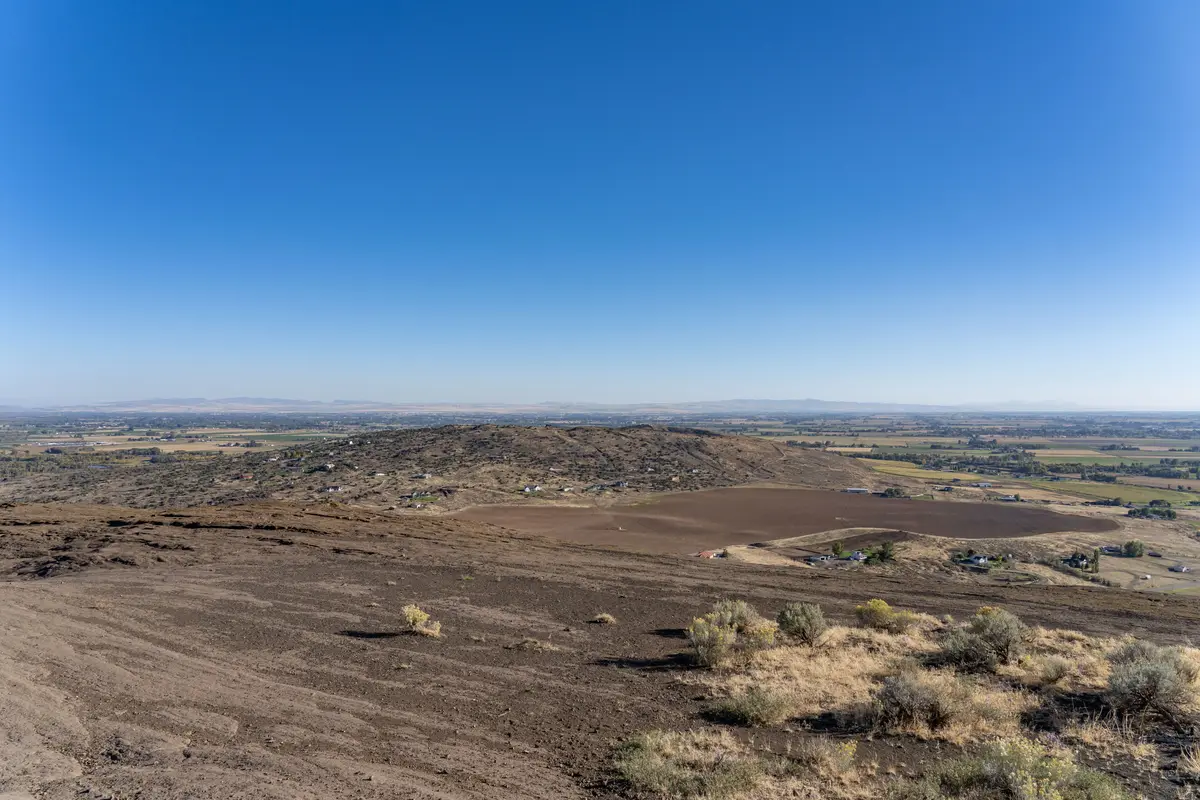
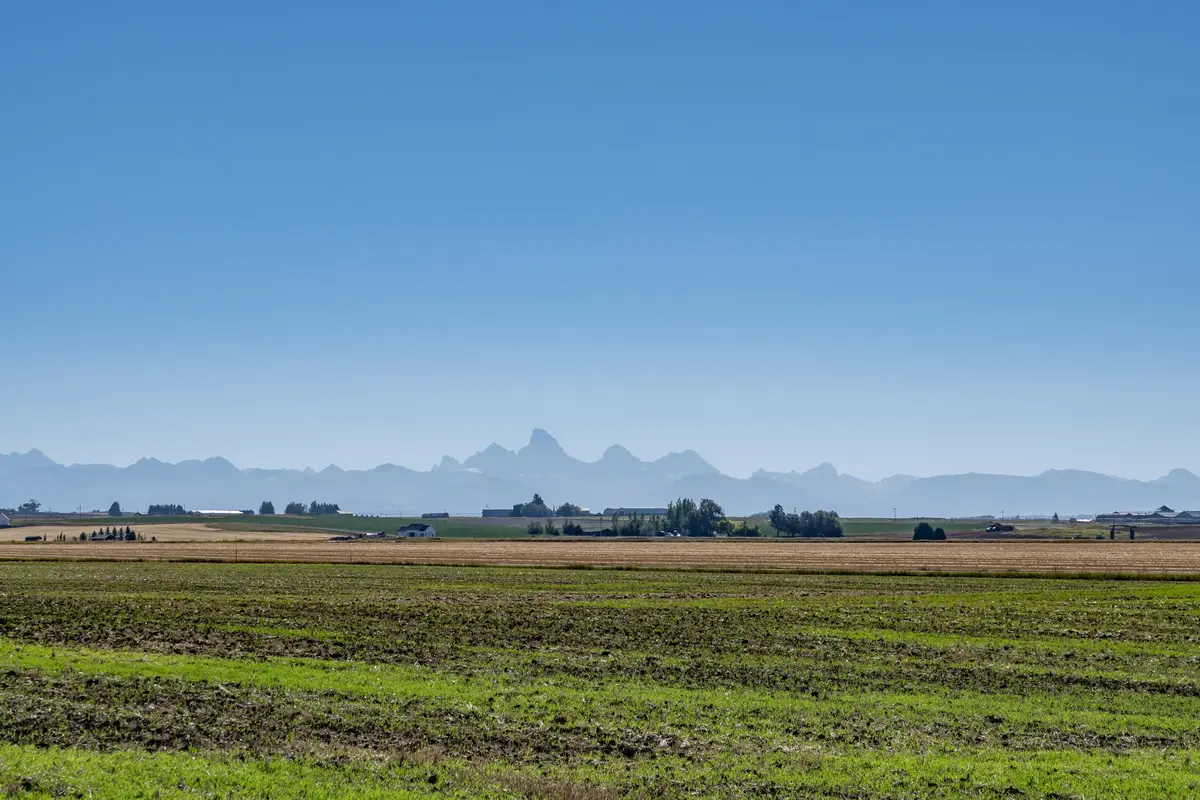
You've probably heard that eastern Idaho is affordable. What fewer people tell you is exactly what that affordability buys you — and what it doesn't. Rigby sits at the intersection of US-20 and Highway 48 in Jefferson County, roughly 20 minutes north of Idaho Falls on a fast, flat drive. The Snake River Plain stretches in every direction, the Teton Range anchors the eastern horizon, and the pace of daily life reflects a county of farmers, teachers, and federal workers rather than retirees from coastal metros. That matters when you're deciding whether to spend your next chapter here.
The people who retire here successfully tend to share a profile: they want to own a real home outright or close to it, they're comfortable driving to appointments, they value quiet over walkable density, and they have a connection — family nearby, a faith community, a love of the outdoors — that pulls them specifically to eastern Idaho rather than just somewhere cheap. The typical Rigby home price is $481,313 (Zillow listing data, July 2026), which for retirees arriving from higher-cost markets often means buying without a mortgage, or close to it. For the full cost picture, see the Rigby cost-of-living page.
Idaho's tax structure is genuinely favorable for retirees, particularly those whose income skews toward Social Security. The state exempts Social Security entirely, the effective property tax rate in Jefferson County sits at approximately 0.38%, and Idaho has no estate or inheritance tax. Cost of living overall runs slightly below the U.S. average. On the lifestyle side, Rigby Lake draws anglers and walkers year-round, the Snake River is minutes away, and the nearby Henry's Fork is a destination for fly-fishing retirees across the Mountain West.
This guide covers the six things that matter most when evaluating Rigby for retirement: who it genuinely suits, healthcare access and its honest limitations, the retiree tax picture, daily life and staying active, downsizing options and inventory reality, and how Rigby stacks up against nearby towns where retirees are also landing.
Why Retirees Are Choosing Rigby
Rigby doesn't market itself to retirees. There's no master-planned active-adult community anchoring the highway, no golf-cart culture, no snowbird infrastructure. What it has is something more durable: low taxes, a stable small-city feel, and proximity to Idaho Falls without the Idaho Falls price tag.
The retirees who plant roots here tend to be people with existing ties to eastern Idaho — adult children working at Idaho National Laboratory contractors or at local employers, siblings already in Rexburg, or parents who farmed Jefferson County land themselves. They return or stay because the math works and the community feels familiar. A home purchased outright at the typical price leaves significant monthly cash flow on a fixed income, particularly when property taxes are as low as they are here.
Who should look elsewhere? If specialist medical care, walkable errands, or a dense cultural calendar are non-negotiables, Rigby will disappoint. The winters are genuinely cold — temperatures regularly dip well below freezing from November through February — and an icy parking lot between you and the grocery store is a real consideration as mobility changes with age. Retirees who need frequent specialist visits and don't want to drive will find Idaho Falls a more practical base. Those priorities are worth being honest with yourself about before you fall in love with the price.
Healthcare & Medical Access in Rigby
What You Have In Town
Rigby now has two solid primary-care anchors, both opened or expanded within the last few years. Rigby Medical Center, operated by MadisonHealth (formerly Madison Memorial Hospital of Rexburg), opened in late 2023 on the east side of town and offers family practice, orthopedics, podiatry, OB/GYN, and walk-in urgent care — no appointment required. For retirees managing a sprained ankle or an acute respiratory infection, having walk-in orthopedic and urgent care in town is a meaningful convenience.
Community Family Clinic (CFC), a federally qualified health center operating on a sliding-fee scale regardless of income, handles routine checkups, chronic-disease management for conditions like diabetes and heart disease, mental health services, and includes an on-site drive-through pharmacy. For retirees on Medicare or fixed incomes who want cost predictability, a federally qualified health center with sliding-scale fees and an in-house pharmacy is a genuine asset — one many towns twice Rigby's size don't have.
The Honest Distance Reality
Rigby has no inpatient hospital. For anything requiring hospitalization, imaging beyond basic X-ray, cardiology, oncology, or neurology, you are looking at a 20-minute drive to Idaho Falls.
Idaho Falls carries two full-service hospitals: Eastern Idaho Regional Medical Center, recognized by Healthgrades for Patient Safety Excellence, and Idaho Falls Community Hospital, recognized for Outstanding Patient Experience. Both operate emergency departments, cardiac catheterization labs, and cancer care. For the majority of retirement health needs, that 20-minute drive is manageable. Where it becomes a stress point is in a cardiac emergency, in winter road conditions, or when a spouse can no longer drive and the patient needs ongoing specialist visits three times a week.
Specialty care beyond what Idaho Falls offers — major cancer centers, Level I trauma, transplant programs — requires travel to Salt Lake City or Boise. That's roughly three hours south on I-15. It's not a dealbreaker for most healthy retirees, but it's the distance reality to carry into your planning.
The Retiree Budget in Rigby
Social Security and Income Taxes
Idaho fully exempts Social Security income from state income tax at all income levels. If Social Security is your primary or only income stream, you owe Idaho nothing on it — full stop.
Other retirement income is a different story. Withdrawals from 401(k) accounts, IRA distributions, and most private pensions are taxed at Idaho's flat rate of approximately 5.8% (2024–2025 tax years). A narrow Retirement Benefits Deduction applies only to certain federal pension programs — qualifying military pensions and Idaho public-safety pensions — so most private-sector retirees won't qualify for that deduction.
For tax year 2025, Idaho conformed to the federal senior deduction under the One Big Beautiful Bill Act, giving residents 65 and older up to $6,000 per person — $12,000 for qualifying couples — applied against both federal and Idaho state taxable income. That effectively means qualifying seniors get the deduction twice, once at the federal level and once on their Idaho return. Run the numbers with a tax professional, because the interaction with Social Security phase-in rules and IRA distributions can be meaningful.
Property Taxes and the Circuit Breaker
Jefferson County's effective property tax rate is approximately 0.38% — less than half the national median effective rate. For retirees on fixed incomes who own their home, that's one of the more favorable property-tax environments in the Mountain West.
Idaho's Property Tax Reduction program, known as the Circuit Breaker, reduces the property tax bill on a primary residence by $250 to $1,500 for homeowners 65 and older whose 2025 income (after allowable medical deductions) is $39,130 or less. Applications go to the Jefferson County Assessor between January 1 and April 15 each year. It's not automatic — you have to file — but for retirees whose income falls in that range, it's worth every minute of the paperwork.
Idaho has no estate tax, inheritance tax, or gift tax. Assets passed to heirs at death face no Idaho-level death tax, with the federal estate exemption at $15 million for 2026.
Day-to-Day Cost of Living
Rigby's overall cost of living runs about 1.3% below the U.S. average on the BestPlaces index — effectively at par with the country, but in a housing market that prices noticeably below most Idaho metro areas. Groceries, utilities, and services track close to national norms; the real savings are in housing and property taxes. For a retiree whose mortgage is paid off or nearly so, the monthly burn rate here is genuinely lower than almost anywhere in the region.
Looking to buy in Rigby? Estimate your payment.
Enter your numbers to see an estimated monthly mortgage payment.
Estimate only. Excludes HOA fees and mortgage insurance. The interest rate above is a starting point, not a quoted rate — replace it with your own to see real numbers. Insurance is a flat placeholder, not a Rigby quote.
Walkability, Community & Staying Active in Rigby
The Walkability Reality
Rigby is flat — genuinely, entirely flat. The terrain poses no physical challenge whatsoever. The infrastructure is a different matter. Downtown Rigby, centered on Main Street and the area around the Jefferson County Courthouse, has sidewalks, short blocks, and enough commercial density that a morning walk with errands is possible. Outside that core, the city spreads into auto-oriented residential streets where walking to a grocery run isn't practical.
If car-free retirement is the goal, Rigby isn't there yet. A car remains essential for most retirees, particularly for medical appointments, the big-box shopping that anchors Idaho Falls, and anything on the weekend. That said, for retirees who can still drive or have a partner who does, the flat streets and light traffic make Rigby far less stressful to navigate than a larger city.
Where Retirees Actually Connect
The Jefferson County Historical Society Museum and the Farnsworth TV & Pioneer Museum — honoring Philo Farnsworth, whose birthplace marker sits just outside town — give history-minded retirees volunteer opportunities with real local meaning. These aren't passive exhibits; both organizations depend on community involvement and offer a way in for newcomers who want to build connections.
Faith communities are the connective tissue of social life in Rigby. Religious congregations — particularly those affiliated with the predominant faith tradition of eastern Idaho — have a strong presence throughout Jefferson County, and retirees who are members often find their social calendar fills immediately on arrival. Retirees who are not part of those congregations should know that organized religion is the dominant social structure here, which shapes the rhythms of the week in ways worth understanding before moving.
Rigby Lake — Jefferson County Lake — is the weekend gathering point for anglers, walkers, and picnickers, drawing residents of all ages on warm evenings. The Snake River corridor and Henry's Fork are within easy reach for fly-fishing, a pastime with a devoted retiree following in eastern Idaho. Hunting and snowmobiling fill the winter calendar for outdoor-oriented residents.
One thing retirees notice by month six: if you don't have a pre-existing anchor — family, faith, or a specific outdoor pursuit — building a social life from scratch takes more intentional effort here than it would in a city with an active-adult center or a denser downtown scene. It's solvable, but it's real.
Right-Sizing: Downsizing in Rigby
The Market Climate for Downsizers
Rigby's housing market in mid-2026 is patient. Homes spent a median of 83 days on market in June 2026, unchanged year-over-year. For downsizers, that's actually good news — you have time to be selective without competing against five offers by Tuesday evening.
The catch is inventory variety. Rigby's housing stock skews toward three-bedroom and four-bedroom single-family homes built in the last 20 years, many with full basements — the opposite of what a downsizer typically wants. True single-level living, patio homes, and maintenance-free attached housing exist but are not abundant. You may need to wait for the right listing or look at new construction on the edges of town.
Senior Living Options
Rigby does have dedicated senior living, and the cost picture here is one of the strongest arguments for the city. Assisted living in Rigby averages approximately $3,838 per month — well below the Idaho state average of $5,310 per month and meaningfully below the national average of $5,900 per month. Verified communities operating in Rigby include Sage Grove, The Wildflower of Rigby, and Rigby Lake Assisted Living, giving families at least three options to tour without leaving city limits.
There is no large nationally branded independent-living or active-adult campus in Rigby. Retirees who want the amenity package — fitness center, pool, scheduled activities, restaurant-style dining — will find more options 20 minutes south in Idaho Falls or 30 minutes north in Rexburg. For retirees who want a private home with low ongoing costs and the option to age in place, Rigby's assisted-living pricing and Circuit Breaker program combine into a genuinely competitive long-term budget.
What to Look for in a Downsizing Search
The Rigby Lake area and South Rigby have seen some newer construction, and single-level homes do appear there with reasonable frequency. The Main Street district and Courthouse Way area offer older, smaller homes that can work for downsizers willing to take on some updating. North Rigby tends toward larger family homes on bigger lots — less practical for someone who has left the lawn-mowing chapter behind.
If you're moving from out of state and want a quick first look before committing, Rigby's slower market pace means you won't be forced into a rushed decision. Budget time to understand the difference between the established neighborhoods near the center of town and the newer residential streets on the perimeter — they feel and function quite differently day to day.
Rigby vs Nearby Retirement Destinations
| City | Cost vs Rigby | Primary Hospital | Walkability | Senior Living Depth | Overall Retirement Fit |
|---|---|---|---|---|---|
| Rigby | Anchor | Rigby Medical Center (MadisonHealth); Idaho Falls hospitals 20 min | Limited — flat but car-dependent outside core | Moderate; Sage Grove, Wildflower, Rigby Lake AL | Best for: low-cost ownership, outdoor retirees, those with family ties |
| Idaho Falls | Noticeably pricier | Eastern Idaho Regional Medical Center & Idaho Falls Community Hospital — full inpatient | Better — a walkable downtown core, more services | Strong; multiple independent, assisted, and memory-care communities | Best for: retirees who want specialist access and more urban amenities |
| Rexburg | Slightly pricier | Madison Memorial Hospital (MadisonHealth) — full inpatient, 30 min north | Moderate — compact downtown, university campus adds energy | Growing; several assisted-living options, skews younger due to university | Best for: retirees who want a college-town feel with lower density |
| Menan | About the same | No local hospital; relies on Rigby and Idaho Falls | Very limited — rural community, minimal commercial core | Minimal; essentially no senior-living infrastructure | Best for: retirees who want extreme quiet and own land; otherwise Rigby is better |
| Ririe | About the same or slightly cheaper | No local hospital; Idaho Falls is nearest care | Very limited — small, rural, no walkable core | Minimal | Best for: fishing and outdoor retirees who want maximum quiet; not for aging-in-place planning |
| Roberts | About the same | No local hospital; relies on Idaho Falls | Very limited — small agricultural community | Minimal | Best for: retirees with deep agricultural ties; limited services otherwise |
Idaho Falls is the clear winner on healthcare depth and walkability — both full-service hospitals and a denser commercial core make daily life easier as mobility changes over time.
Rigby's advantage over Idaho Falls is straightforward: lower home prices, a dramatically lower property tax rate, and a quieter pace that some retirees actively prefer. Rexburg is a reasonable middle ground if you want a hospital in town and don't mind a university-influenced social landscape. Menan, Ririe, and Roberts offer even more rural quiet but come with essentially no senior-living infrastructure or local medical care, making them realistic only for the very healthy retiree who is comfortable being more than 25 minutes from any specialist. If walkability and immediate medical access top your list, Idaho Falls is the more practical choice; if home affordability and a small-town pace are the priority and you're comfortable with the 20-minute drive, Rigby makes a strong case.

Local Expert Takeaway: Rigby's retirement case is strongest for people who enter with realistic expectations: you'll own a home at a price well below most Idaho metros, pay property taxes that are among the lowest in the region, keep Social Security income fully out of Idaho's hands, and live 20 minutes from two solid hospitals in Idaho Falls. What you won't get is a walkable town where you can age in place without a car, a rich specialist network nearby, or a built-out active-adult campus. The retirees who thrive here have an anchor — family, a faith community, a fishing river — and treat Idaho Falls as an extension of their home base rather than an inconvenient drive.
Quick Takeaways & FAQs
✅ Idaho fully exempts Social Security from state income tax, and Jefferson County's 0.38% property tax rate is less than half the national median — a genuinely strong combination for fixed-income retirees.
⚠️ Rigby has no inpatient hospital; hospital-level care, specialist visits, and emergency services all require a 20-minute drive to Idaho Falls, which becomes a real planning consideration as health needs change.
📍 Assisted living in Rigby averages approximately $3,838 per month — notably below Idaho and national averages — with verified communities including Sage Grove, The Wildflower of Rigby, and Rigby Lake Assisted Living operating in town.
Is Rigby, Idaho a good place to retire?
Does Idaho tax retirement income?
What healthcare is available in Rigby, Idaho?
Are there 55+ or active-adult communities in Rigby?
What is the property tax rate in Rigby, Idaho for retirees?
Moving to Idaho?
Tell us what you need help with and we'll connect you with local resources.
