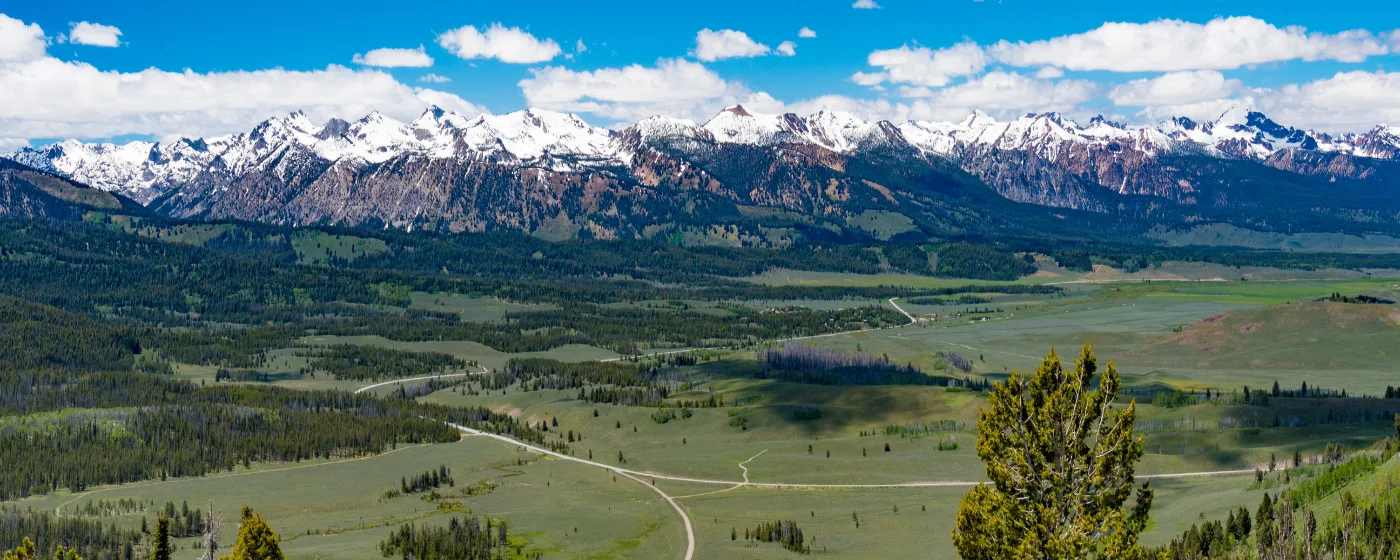
You've done the spreadsheet. Salmon, Idaho checks the boxes on paper — home prices a fraction of what you paid (or almost paid) in California, a flat state income tax well below what Sacramento takes, and a crime rate that makes most Bay Area neighborhoods look like a different planet. But the spreadsheet doesn't tell you about the two-hour drive to a Target, the winters that arrive hard in November and don't apologize until April, or the fact that the median household income here is $42,844 — which means the local economy is structured around government jobs, the school district, the U.S. Forest Service, and outfitters running whitewater trips on the Salmon River. This is not a suburb of anywhere. It's a working mountain town of about 3,300 people sitting at the confluence of the Salmon and Lemhi Rivers in central Idaho, ringed by wilderness on every side.
The employers that keep Salmon running are the Lemhi County School District, the U.S. Forest Service, Lemhi County Government, and the recreation and guiding outfits that operate on the river. If you're relocating for remote work or a specific federal position, those institutions frame what local life looks like — who your neighbors are, what the school district prioritizes, and how the town's calendar runs. The Salmon School District 291 carries a C+ rating, which California families accustomed to chasing GreatSchools numbers will want to research before finalizing a move; see the full schools breakdown for district context and what IHSAA athletics look like here.
The cost of living in Salmon runs approximately 9–10% below the U.S. national average, with housing as the sharpest line item. The typical home value sits at $329,001 (Zillow Home Value Index, February 2026) — noticeably below even inland California markets, and a dramatic step down from coastal metros. Daily life here means short drives — the average commute is about 8 minutes — independent restaurants along Main Street like Junkyard Bistro at 405 Main and Bertram's Salmon Valley Brewery at 535 Main, espresso at Rise And Shine Espresso on Shoup Street, and a backdoor to the Frank Church–River of No Return Wilderness, the largest contiguous wilderness in the contiguous U.S.
Whether you're being priced out of California entirely or choosing to cash out equity and reset your overhead, this guide breaks down the real financial delta between life there and life here — home prices, taxes, the cost structure you should expect — alongside what the move actually feels like on the ground, what you'll gain, and what you'll genuinely miss.

The Home Price Reality: California Equity Meets Salmon Math
The single most powerful number in the California-to-Salmon conversation is $329,001 — the typical home value in Salmon per the Zillow Home Value Index as of February 2026. If you're selling a California home and arriving with substantial equity, that figure reframes what's financially possible: a purchase with little or no mortgage, or a down payment large enough to make monthly carrying costs feel almost implausible compared to what you left behind.
Most of what sells in Salmon is single-family — ranch homes, older craftsman builds, and some newer construction on the edges of town. For a block-by-block look at which parts of town carry different character, see the neighborhoods guide; this page focuses on the dollar gap and the tax structure, not the street-level breakdown.
What California Buyers Actually Gain
The property tax math alone reshapes monthly budgets. Salmon's effective property tax rate on owner-occupied housing is approximately 0.45%. California's effective rate averages around 0.75% — already suppressed by Proposition 13 limits that reset to market value on sale. When a California buyer sells and triggers that reset, the property tax burden they leave behind is often multiples of what Salmon will charge.
If you're moving from a coastal California market, the comparison is even sharper. Annual property tax bills on median-priced homes in San Francisco, Los Angeles, or San Diego regularly run several thousand dollars higher than what you'd pay in Salmon — even before accounting for the purchase-price difference itself.
| Factor | California (Typical) | Salmon, Idaho |
|---|---|---|
| Typical home value | $800,000–$1.2M+ (coastal metros) | $329,001 (ZHVI, Feb 2026) |
| Effective property tax rate | ~0.75% (Prop 13-suppressed) | ~0.45% |
| Annual property tax on local median | $6,000–$9,000+ (coastal, at reset) | ~$1,481 |
| State income tax | 1%–13.3% (graduated brackets) | 5.3% flat (as of Jan 1, 2025) |
| Statewide sales tax base | 7.25% (plus local add-ons to 10%+) | 6.0% (combined avg 6.03%) |
| Estate / inheritance tax | None (state), federal applies | None |
* ZHVI = Zillow Home Value Index.
These are the structural numbers. But the move also has a human side — equity that California's price run-up built for you, arriving as a cash position in a market where it goes much further.
Idaho vs. California Taxes: The Full Picture
California runs one of the most progressive income tax structures in the country, with rates climbing from 1% at the bottom to 13.3% at the top bracket. Idaho replaced its own graduated system with a flat 5.3% rate effective January 1, 2025, when Governor Brad Little signed HB 40. If you're a W-2 earner who was paying California's upper brackets, the income tax drop alone can be substantial.
Who This Helps Most — and Who Should Do the Math Carefully
High earners in California's upper brackets see the largest swing. Someone paying 9.3%, 10.3%, or 13.3% in California moves to a flat 5.3% in Idaho — a meaningful annual difference on the same gross income. For middle-income earners who were in California's 4%–6% bracket range, the gap narrows considerably, and the more important factors shift to housing cost and property tax.
Remote workers who can carry their California salary into an Idaho address get the clearest benefit: same income, lower tax, lower housing cost. The catch is that Idaho taxes all income earned while living in the state — you can't maintain a California address for tax purposes while physically living in Salmon. California's state tax authority is known for scrutinizing exactly this kind of transition, so the residency change needs to be complete and documented.
Sales Tax and the Grocery Credit
Idaho's statewide sales tax is 6.0%, with an average combined rate of 6.03% once local additions are factored in. California's statewide base is 7.25%, but most California residents pay above 10% once county and city add-ons stack. The day-to-day difference is modest per transaction, but it compounds across a year of purchases. Idaho also offers a grocery tax credit — $155 per person as of 2025 — that partially offsets sales tax paid on food, a benefit California does not have.
Idaho has no estate tax and no inheritance tax. For California families with property or business assets that trigger estate planning conversations, that difference matters in longer-range financial planning — though it's a factor that varies enough by individual circumstance that it warrants a conversation with a tax advisor rather than a line item in a general comparison.
The One Honest Caveat
Lower taxes don't automatically mean lower total cost of household living. Some goods cost more in Salmon simply because the supply chain is longer — this is a remote mountain town, not a suburb with warehouse retail nearby. The cost of living breakdown lives on the cost-of-living page, but the short version is: groceries and utilities are competitive, and the categories where Californians feel the most relief are housing, property tax, and state income tax.
What the Culture Shift Actually Feels Like
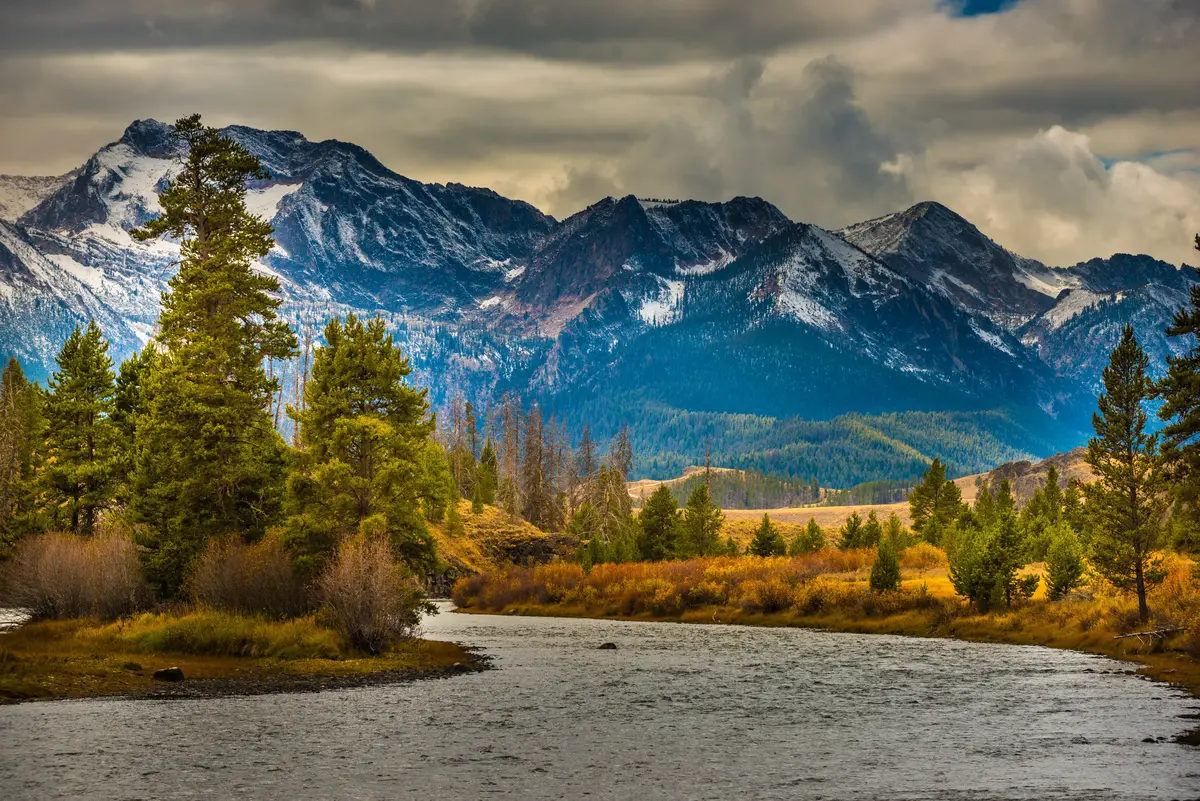
Almost every Californian who moves to Salmon says the same thing around month four: they didn't expect how quiet it would be. Not quiet in a pejorative sense — quiet as in genuinely few cars, genuinely dark skies, and a social life that organizes itself around the river, the mountains, and a small cluster of Main Street anchors rather than restaurants you need a reservation for three weeks out.
The Social Geography of a Town of 3,300
Salmon's social life is compact and visible. A Friday evening at Bertram's Salmon Valley Brewery on Main Street will put you in a room with Forest Service employees, local guides, teachers from the school district, and a handful of people you'll recognize within a month. That intimacy is the feature for some people and the drawback for others — there is no anonymity here, and there's also no replacing the social infrastructure you leave behind in a California metro.
The Sacajawea Interpretive Cultural and Educational Center on the north end of town anchors the community's sense of history and draws visitors who become part of the local economic fabric every summer. The Lemhi County Historical Museum on Main Street keeps locals connected to the region's mining and ranching past. These aren't tourist amenities bolted onto the town — they're part of how residents understand where they live.
The Seasonal Reality Nobody Warns You About
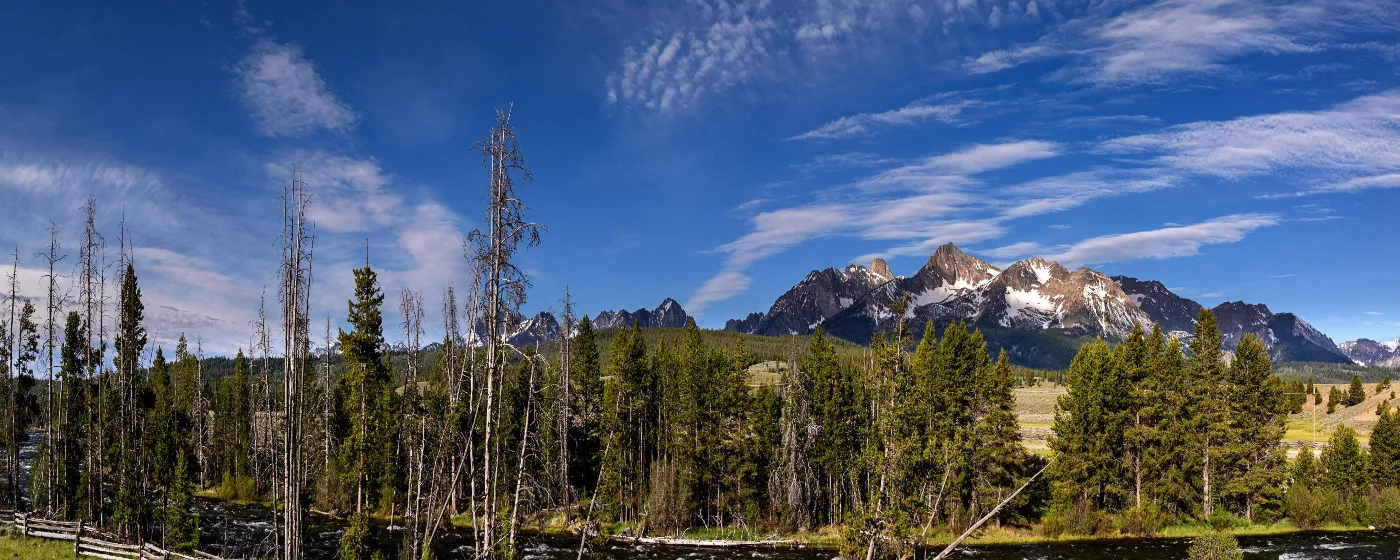
Southern California and Bay Area transplants consistently underestimate the winter. Salmon sits at roughly 3,940 feet in a valley that channels cold air from the surrounding mountains. November through March can bring sustained cold, road conditions that require real winter tires (not all-season), and a psychological adjustment that takes at least one full cycle to calibrate. The summer payoff is legitimate — clear high-altitude days, the river at full run, and access to the Frank Church–River of No Return Wilderness in every direction — but you earn it.
Summer also brings river traffic. The Salmon River is a destination for whitewater enthusiasts from across the Pacific Northwest and beyond, and from June through August the town's character shifts as outfitters load rafts and kayakers pass through. Locals have a mix of pride and mild exhaustion about it by late August — it's worth understanding that the quiet mountain town of October is a different place than the launch-point town of July.
What You Will Miss
Be honest with yourself before you move: there is no Trader Joe's. The nearest one is a substantial drive away. Major retail, specialty medical services, a wide restaurant selection, live music venues, and same-day delivery infrastructure all require a trip to a larger city. For some Californians, that trade-off is exactly the point — they're done with the noise and the consumption. For others, it surfaces as genuine friction within the first year, and it's a real reason some people move back.
Looking to buy in Salmon? Estimate your payment.
Enter your numbers to see an estimated monthly mortgage payment.
Estimate only. Excludes HOA fees and mortgage insurance. The interest rate above is a starting point, not a quoted rate — replace it with your own to see real numbers. Insurance is a flat placeholder, not a Salmon quote.
Safety, Space, and the Things California Money Buys Here
Safety is one of the most frequently cited reasons Californians end up researching Salmon. The violent crime rate is notably low — well below the rates in virtually every California metro area of comparable or larger size. For the specific figures and how they compare within Idaho, see the safety page, but the directional takeaway is clear: this is a town where many people leave doors unlocked, where kids bike to the Salmon Hockey Rink and the park without parental coordination, and where the ambient stress level around personal security runs at a different frequency than in most of California.
What California Equity Buys Beyond a House
The gap between what your California property sold for and what a Salmon home costs isn't just a line item — it's a lifestyle restructuring. A buyer who arrives with $400,000 or $600,000 in equity from a California sale isn't just buying a house. They're buying the option to work part-time, to pursue a career in guiding or conservation, to build or renovate rather than compromise, or to run a small business in a community that has genuine gaps in its retail and service economy.
The outfitter and guide economy along the Salmon River is real, and it employs people with a range of skills — logistics, marketing, hospitality, and boat handling. The U.S. Forest Service and Lemhi County Government hire across administrative, land management, and field positions. Remote workers with California-scale salaries who land in Salmon with low housing overhead find themselves in an unusual position: high relative purchasing power in a low-price market, which plays out differently than anywhere on the California coast.
The Space Itself
Lemhi County covers roughly 4,570 square miles. Salmon is the county seat, and outside the town limits the density drops to almost nothing. The Lewis and Clark Back Country Byway runs north along the Salmon River into country that looks largely the same as it did two centuries ago. For Californians used to traffic-gated access to nature — the weekend crush on Highway 1, permit lotteries for popular trails, parking lots that fill at 6 a.m. — the access here is disorienting in the best way. You can be in genuine backcountry within 20 minutes of Main Street.
Making the Move: Practical Steps for California Relocators
The mechanics of buying in Salmon are straightforward compared to California's compressed, over-bid market — but they're different enough to warrant preparation. Idaho is a deed-of-trust state, closing timelines run 30–45 days typically, and the market moves more slowly than what California buyers are used to. That slowness is a feature: you can actually inspect a home, negotiate terms, and make decisions without waiving contingencies in a panic.
Establishing Residency — Do It Right
California's state tax authority actively monitors high-income departures. If you're leaving a California address behind, the residency change needs to be complete: Idaho driver's license, Idaho voter registration, your vehicles registered in Idaho, bank statements showing an Idaho address, and your physical presence documented. This is not an area to be casual about. The safest approach is to complete the change fully within the same tax year you intend to file as an Idaho resident, and to consult a tax professional who handles interstate relocations before the move, not after.
The Employment Question
If you are not a remote worker or retiree with portable income, the employment picture in Salmon requires a realistic assessment before you arrive. The local economy supports government, education, and recreation employment — it does not support a wide range of private-sector professional roles. The median household income of $42,844 reflects that reality. People who move here assuming they'll find local work at California-equivalent compensation often find themselves disappointed within the first year. Arriving with a job in hand, a remote arrangement, or a clear business plan is the right framing.
The Buying Process in Idaho
For details on Idaho's specific buying process — down payment norms, loan program options, and what a first purchase in this market typically looks like — the first-time homebuyer guide covers it in full. The short version for California buyers: the negotiating environment here is less brutal, inspection contingencies are the norm, and you won't need to compete with 18 other offers on a Tuesday morning to get a house.
Six Months In — What Changes
Most California transplants report the same arc: the first three months are a honeymoon with the quiet, the dark skies, the access to the river, and the lower cost of living. By month six, the things they didn't plan for start to surface — the drive to a specialist appointment, the absence of certain foods they didn't realize they'd miss, the social adjustment of building a community from scratch in a small town where everyone already knows everyone. Those aren't reasons not to move. They're reasons to go in with eyes open rather than a fantasy of simplicity.
Local Expert Takeaway: The California-to-Salmon move makes the most financial sense when you're arriving with equity to deploy and either portable income or a clear local opportunity lined up. The tax shift is real — Idaho's 5.3% flat rate versus California's top brackets, plus a property tax bill roughly a third of what a coastal reset would cost you — but those numbers only work if the employment side is solved. Grab coffee at Rise And Shine Espresso on Shoup Street on your first visit, walk Main Street from Junkyard Bistro down to Bertram's Salmon Valley Brewery, and spend one evening on the river. Then honestly ask whether the trade-off of remote access, a smaller social world, and genuine winters matches where you are in life. For the right person at the right stage, the answer is usually yes — and the math makes it easy.
Quick Takeaways & FAQs
✅ Salmon's $329,001 typical home value (Zillow Home Value Index, February 2026) combined with Idaho's 0.45% effective property tax rate creates one of the most dramatic cost resets available to California equity sellers.
⚠️ The employment base — government, education, and the Forest Service — does not support California-equivalent private-sector salaries, and buyers who arrive without remote or portable income often face a harder adjustment than they expected.
📍 California's state tax authority scrutinizes high-income departures closely; completing your Idaho residency change fully — license, registration, voter rolls, and physical presence — in the same tax year you file as an Idaho resident is the non-negotiable step most people underestimate.
How much cheaper is it to buy a home in Salmon, Idaho compared to California?
Does Idaho have a lower income tax than California?
What is the property tax rate in Salmon, Idaho?
Can I keep my California job remotely and move to Salmon?
What should I know about daily life in Salmon before moving from California?
Moving to Idaho?
Tell us what you need help with and we'll connect you with local resources.
