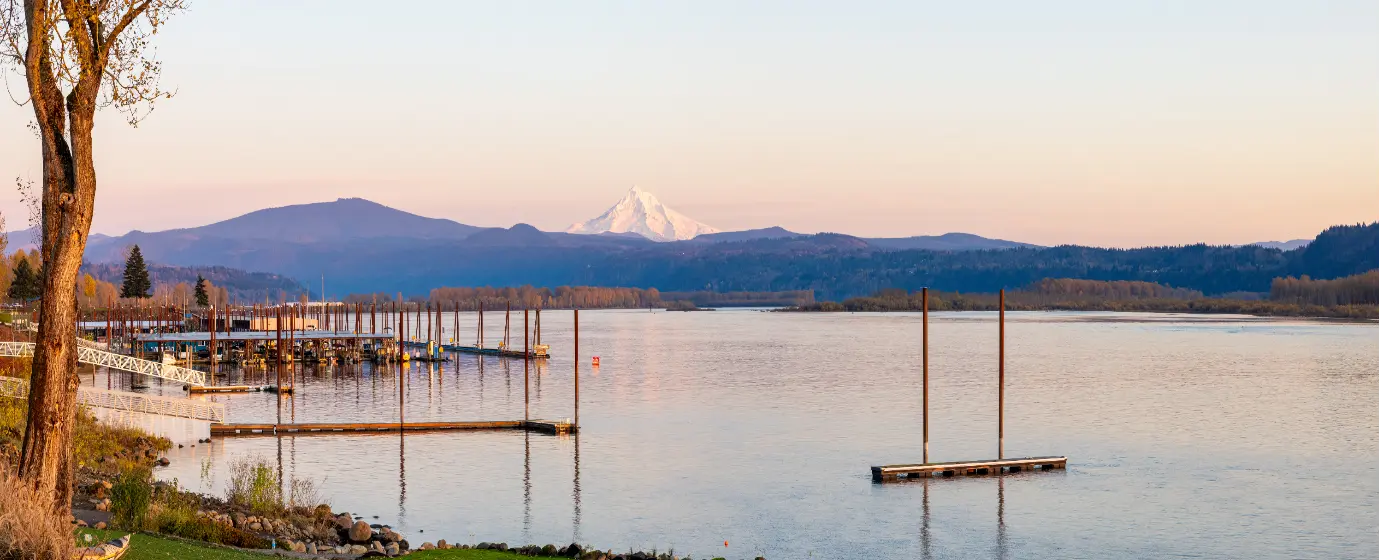
Most people moving to Washougal know they're getting a smaller-town feel within commuting distance of Portland. What surprises them after six months is how much of daily life actually revolves around the water — the Washougal River for summer swimming, the Columbia River corridor for morning walks, and Steigerwald Lake National Wildlife Refuge for the kind of quiet that's genuinely hard to find this close to a metro area. Recreation here isn't a weekend supplement; it's woven into why people stay.
The city's park program traces back to 1901, when the Hathaway family donated land along the Washougal River. That founding impulse — keep the riverfront public — still shapes how the system works today. Washougal now operates 14 parks, a community garden, and several acres of undeveloped open space, all within a city of roughly 18,000 people. The ratio of green space to residents is one of the more compelling arguments for choosing Washougal over its neighbors to the west.
The outdoor calendar here has a clear rhythm. Spring brings birding tours at Steigerwald and the first kayakers on the Washougal River. Summer is entirely dominated by swimming holes, the Washougal National motocross race, and long evenings at Hathaway Park's pickleball courts. Fall is when the refuge's waterfowl season begins and the trail closures follow. Winter is quiet — genuinely, peacefully quiet — though the Columbia River Gorge stays accessible year-round for those willing to layer up.
Whether you're deciding between Washougal and Camas or just figuring out what weekends here actually look like, the sections below cover the signature parks and trails, river recreation, the wildlife refuge in detail, and the signature annual events that make this particular corner of Clark County feel different from the rest.
Hathaway Park and the City Park System
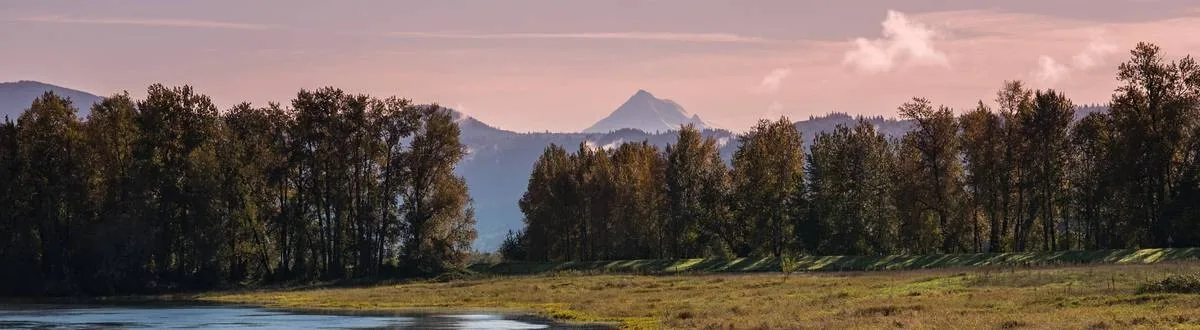
Hathaway Park at 799 25th Street is the anchor of Washougal's public park system — a riverfront property that has been in public hands since the city's very first land donation in 1901. It earned that founding role, and it still earns it on a Tuesday afternoon in July.
The park's most talked-about feature right now is the Wolfe Courts: six dedicated outdoor pickleball courts with permanent lines, permanent nets, and no fee to play. For a city of 18,000, six dedicated courts is a real amenity, and on weekday mornings you'll find a mix of retirees and remote workers who've made it a daily habit. Walking trails, picnic areas, playgrounds, and restrooms round out the facilities.
The broader city system of 14 parks spans everything from neighborhood tot-lots to the open acres along the river corridor. What makes Washougal's system functional rather than merely present is that the key parks are genuinely connected to the places people actually go — the Washougal River Greenway Trail ties into the riverfront, and the proximity to Steigerwald means the city parks feel like a front porch to something much larger.
What Locals Know
Hathaway Park is where families land on summer evenings after the river — picnic tables, shade, and a playground that keeps younger kids occupied while adults decompress. It's one of those parks that's hard to photograph in a way that captures why people keep coming back. You have to show up.
The community garden attached to the city's park system is small but consistently used, and spots turn over occasionally. If gardening matters to you in a new home, it's worth adding to your checklist early — these community plots in smaller cities tend to have modest waitlists that grow quietly.
Steigerwald Lake National Wildlife Refuge: Washougal's Backyard Wilderness
Steigerwald Lake National Wildlife Refuge sits just east of town on the Columbia River and serves as the western gateway to the Columbia River Gorge National Scenic Area. At 1,049 acres of wetlands, cottonwood riparian woodland, and open pasture, it is genuinely one of the most significant natural areas within the city's immediate orbit — and most newcomers underestimate it until they've walked it in May.
The refuge was established in 1987 to offset lowland habitat loss from Bonneville Dam construction, and has grown incrementally since. The Steigerwald Reconnection Project — a major restoration effort — reconfigured the Columbia River levee system to reconnect 965 acres of floodplain, reduce downstream flood risk, and open up additional recreation access. The result is a refuge that functions as both conservation infrastructure and a genuinely walkable public space.
The Gibbons Creek Wildlife Art Trail
The 2.75-mile Gibbons Creek Wildlife Art Trail is the main public access route through the refuge: a level, accessible gravel path with bridges over Gibbons Creek and Red-Tailed Pond. It passes shallow ponds, marshes, open fields, riparian woodlands, and the Columbia River shoreline. The trailhead has a parking lot, interpretive kiosk, and restrooms — this is a well-maintained federal facility, not a muddy social trail.
Over 200 bird species have been recorded here. Volunteer naturalists lead spring and fall birding tours, and the refuge regularly draws serious birders from across the Portland metro. If you move to Washougal and have any interest in birds — or a child who might develop one — this trail will become a recurring part of your life.
The Seasonal Catch
A section of the Gibbons Creek trail closes every year from October 1 through April 30 to protect wintering waterfowl. This surprises newcomers who discover the refuge in September and plan to make it a winter walking habit. The full trail is a May-through-September experience; plan accordingly.
That said, the October closure coincides with when the refuge becomes most ecologically interesting for birding. The edge of the accessible section in fall can be extraordinary — rafts of waterfowl moving through — even from the open portions of the path.
The Washougal River: Swimming, Trails, and On-the-Water Recreation
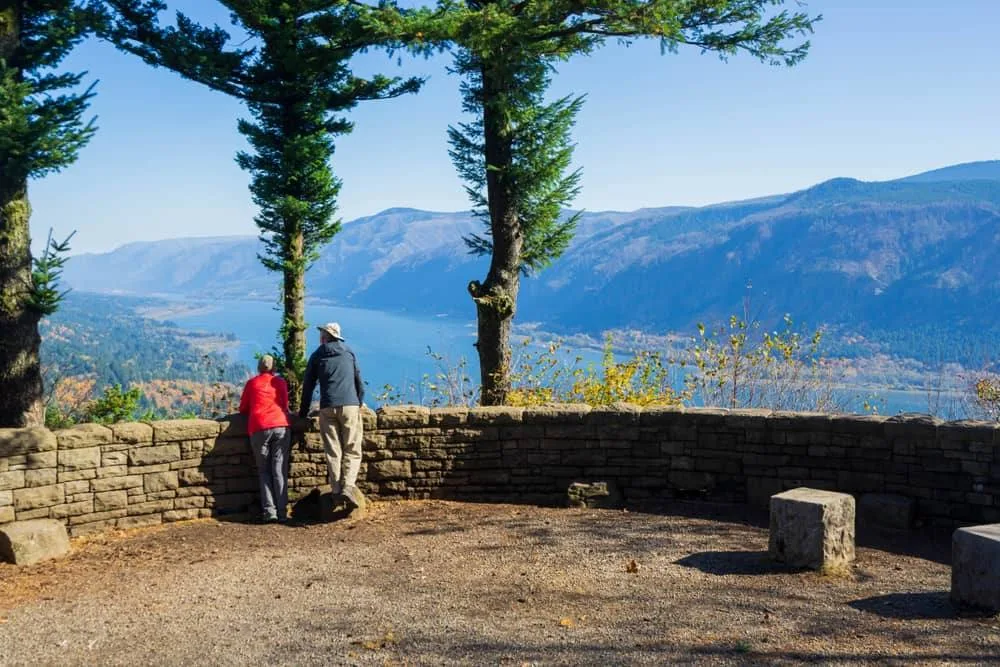
The Washougal River is non-motorized, clear, cold, and central to summer life in this city in a way that's hard to overstate. By mid-July, the river effectively becomes Washougal's community pool — except it's free, it's shaded by old-growth forest canopy, and it runs through some of the prettiest terrain in Clark County.
Sandy Swimming Hole
Sandy Swimming Hole is the default family destination: a sandy-pebbly shoreline with a gently sloped bank, shallow edges that deepen gradually toward the middle, a small grassy picnic area, and shade from tall trees. It's minutes from downtown Washougal, which means you can be in the water within 10 minutes of leaving your front door — a fact that becomes very meaningful in a Pacific Northwest August.
There are no lifeguards at any swimming location on the Washougal River or the Columbia River within city limits. The river is safe for strong swimmers and families with attentive adults; it is not a supervised beach. Know the difference before you bring younger children for the first time.
The Mile-Marker Stretch
Between mile markers 3 and 5 along Washougal River Road, a 2-mile stretch of the river offers rocky outcroppings, small pebbly beaches, and clear cool pools. Water temperature in late summer typically reaches 68–72°F in August — cold enough to be refreshing, warm enough to stay in. A Washington State Parks day pass is required for roadside parking at these access points. If you don't already have one, buying it is one of the first practical moves to make after signing a lease or closing in Washougal.
The Washougal River Greenway Trail
The Washougal River Greenway Trail is a paved, family-friendly path along the river near its confluence with the Columbia. Washington Trails Association has documented 116 bird species recorded along this stretch, which tells you something about the habitat quality. The trail features a large arched footbridge spanning the river, former gravel-quarry ponds now managed as fish and wildlife habitat, and a seasonal wetland boardwalk. The eastern end terminates near a stand of old Oregon white oaks — a tree that, if you're coming from outside the Pacific Northwest, you won't expect to look quite the way it does.
After a long day on the trail or the river, a brewpub on Evergreen Way serves as the local landing spot — a format that fits the outdoor-town vibe without pretense.
Looking to buy in Washougal? Estimate your payment.
Enter your numbers to see an estimated monthly mortgage payment.
Estimate only. Excludes HOA fees and mortgage insurance. The interest rate above is a starting point, not a quoted rate — replace it with your own to see real numbers. Insurance is a flat placeholder, not a Washougal quote.
Washougal MX Park and Seasonal Events
Washougal Motocross Park opened in April 1972 and has hosted a round of the AMA Pro Motocross Championship every year but one since 1980 — the lone exception being the year Mount St. Helens erupted and ash made the region impassable. That kind of track record, in any sport, is exceptional.
The venue sits in the forested foothills near the Washougal River and is built around serious elevation change: the Dunlop Horsepower Hill and the Ski Jump are the signature features that riders and fans talk about in the same breath as any track in the country. The 2026 Washougal National — Round 8 of the 2026 Pro Motocross Championship — ran on July 25, 2026, and sold out. That's not unusual here.
What Race Weekend Actually Looks Like
If you move to Washougal, your first July here will include at least one neighbor mentioning the National. The race draws a regional crowd that fills the park's hillside seating with the kind of engaged, specific fandom that motorsports tends to generate. It's loud, it smells like exhaust and sunscreen, and it's one of the more genuinely distinctive things that happens in this part of Washington all year.
What newcomers don't always anticipate: race weekend traffic is real. The park sits in the forested hills east of downtown, and a single two-lane road carries a lot of that crowd in and out. If you live anywhere near the Washougal River Road corridor, plan your Saturday accordingly in late July.
Seasonal Recreation Beyond the Track
Outside of race season, the outdoor calendar follows the Columbia River Gorge. Spring birding tours at Steigerwald start as early as April, when the waterfowl closure lifts and the refuge comes back to life. Summer is all river — swimming holes, the Greenway Trail, and Hathaway Park pickleball through the long Pacific Northwest evenings. Fall brings the waterfowl back to Steigerwald and a noticeable drop in trail traffic, making September and early October among the most pleasant times to walk the Gibbons Creek trail before the seasonal closure begins on October 1.
Winter recreation here is honest about what it is: not a ski town, not a rain-jacket-optional climate. The Gorge stays accessible and dramatic in all weather, and the proximity to Mount Hood ski areas — roughly an hour via the Historic Columbia River Highway — means serious winter recreation is close without being built into Washougal itself. If on-foot access to snow sports matters to you year-round, that driving distance is worth factoring in before you choose a neighborhood. For year-round neighborhood-level context on what living near these parks and trails actually costs, the neighborhoods guide breaks it down by area.
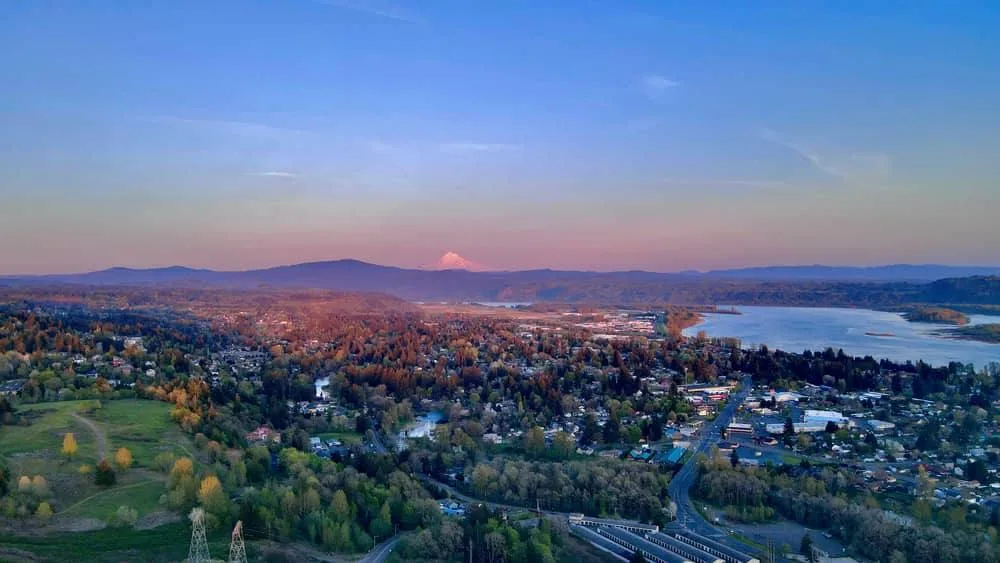
Local Expert Takeaway: Washougal's outdoor scene earns its reputation primarily through three things: the Steigerwald Lake NWR and its Gibbons Creek Wildlife Art Trail (free, accessible, and genuinely wild), the Washougal River corridor from Sandy Swimming Hole up through the mile-marker stretch on Washougal River Road, and Hathaway Park's Wolfe Courts for everyday-use infrastructure. None of these cost much to access, and most are within 10 minutes of any address in the city. The catch that regular visitors miss: Gibbons Creek trail closes October 1 through April 30, a Washington State Parks pass is required for Washougal River Road parking, and late July race weekend at the MX Park means real traffic east of downtown. Learn those three constraints in your first month and you'll spend the rest of your time just enjoying the place.
Quick Takeaways & FAQs
✅ Steigerwald Lake National Wildlife Refuge — a 1,049-acre federal refuge with over 200 recorded bird species — sits immediately east of town and functions as a world-class birding and walking destination at zero cost to residents.
⚠️ The Gibbons Creek Wildlife Art Trail closes every year from October 1 through April 30, which catches newcomers off guard who discover the refuge in fall and expect to walk it all winter.
📍 A Washington State Parks pass is required for roadside parking along Washougal River Road between mile markers 3 and 5 — buy one before your first river day or you'll be turning around.
Is Steigerwald Lake National Wildlife Refuge open year-round?
Are there lifeguards at the Washougal River swimming holes?
Do I need a pass to park at Washougal River swimming spots?
How significant is the Washougal National motocross race, and does it affect traffic?
What are the free outdoor pickleball courts in Washougal like?
Moving to Washington?
Tell us what you need help with and we'll connect you with local resources.
