
Most people who retire to Camas didn't plan on it. They were priced out of Portland, or their adult kids landed jobs at WaferTech or Fisher Investments, or they drove through on a Sunday and noticed the Lacamas Lake trail, the brick storefronts on NE 4th Avenue, and the fact that everyone walking around looked like they actually lived there — not like they were passing through. Whatever brought you here, what keeps retirees is harder to summarize: it's a small city that behaves like a town, with a surprisingly deep support structure underneath.
Camas sits in Clark County in southwest Washington, less than 30 minutes from Portland along the Columbia River. It's not a resort retirement market, and it's not cheap — the Zillow Home Value Index puts the typical home price at $717,897 (June 2026). But Washington's zero personal income tax makes that sticker price land differently than the same number in Oregon or California. Your Social Security, pension, and IRA withdrawals are state-tax-free here, which changes the fixed-income math considerably. The city itself is small — just over 27,000 people — but its proximity to Vancouver means hospital-grade healthcare, big-box services, and cultural amenities are genuinely close.
Day-to-day life in Camas leans outdoor and low-key. The 312-acre Lacamas Park and its roughly 12 miles of trails are the anchor. Downtown is walkable in the literal sense — a few blocks of independently owned shops, Daily Paper Coffee, and Grains of Wrath Brewing on NE 4th Avenue — even if the broader city's Walk Score of 18 makes clear that most errands require a car. Winters are mild by Pacific Northwest standards, rainy rather than snowy, and the growing season surprises newcomers from drier climates.
Whether you're seriously considering a move or just stress-testing the idea, the sections below walk through what healthcare access really looks like for retirees here, how the retiree tax picture shakes out, what downsizing actually costs in this market, and how Camas stacks up against the other towns in this corner of the Pacific Northwest.
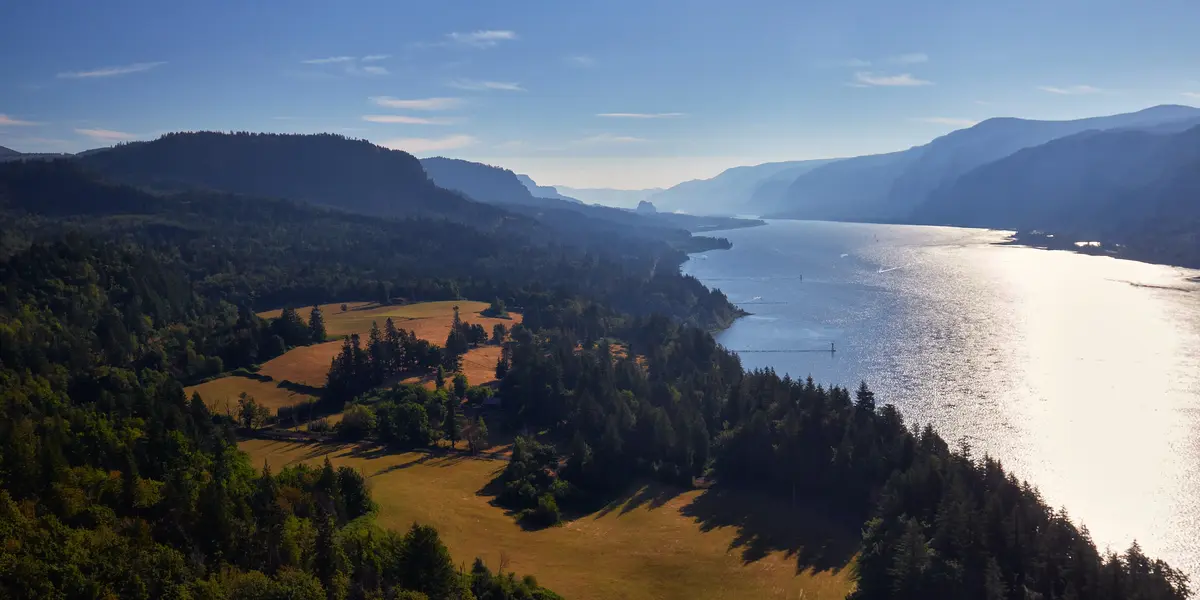
Why Retirees Are Choosing Camas
Camas fits a specific retiree well: someone who wants a genuine small-town feel without sacrificing access to serious healthcare, wants to stay physically active in nature, and can absorb a housing price that reflects the quality of the place. The typical home price of $717,897 (Zillow Home Value Index, June 2026) puts most single-family options above what retirees in many other markets are used to — but many buyers arrive with significant equity from higher-cost markets and find that the mortgage math, combined with zero state income tax on retirement distributions, makes the budget work.
The retiree profile that thrives here tends to be active, self-sufficient, and comfortable driving for most errands. You are not moving to a city where you can give up the car keys. Public transit exists via C-TRAN, but most of the neighborhoods that retirees favor — Prune Hill for the views, Lacamas Shores for the water — require a vehicle. If losing the ability to drive is a near-term concern, that's an honest reason to weight a more urban option like downtown Vancouver more heavily.
Who should look elsewhere? Retirees on genuinely tight fixed incomes may feel the squeeze of Camas having a combined state and local sales tax rate of 8.8%, which partially offsets the income-tax advantage. And if proximity to specialized medical care — oncology, advanced cardiac surgery, major academic research centers — is a top priority, Camas's position a few miles east of Vancouver is good, but it isn't Portland's Oregon Health & Science University. For most retirees, that distance is fine. For someone managing a complex chronic condition who needs frequent specialist visits, it's worth mapping out before you buy.
Healthcare & Medical Access in Camas
No hospital sits within Camas city limits, but that matters less here than it sounds. Two full-service hospitals in Vancouver are the practical answer to medical emergencies for Camas residents, and both are typically reachable in 15 minutes or less from most neighborhoods.
The Two Anchors: PeaceHealth and Legacy Salmon Creek
PeaceHealth Southwest Medical Center in Vancouver handles 24/7 emergency care, inpatient hospitalization, and a broad range of hospital-based specialists. It has served the southwest Washington region for decades and remains one of the primary referral destinations for Clark County residents.
Legacy Salmon Creek Medical Center, also in Vancouver, has earned both the America's 50 Best Hospitals Award and the America's 100 Best Hospitals Award from Healthgrades — recognition that isn't handed to regional community hospitals routinely. For retirees prioritizing hospital quality ratings when choosing where to live, that distinction is concrete and meaningful.
Geriatric Care Depth
US News Health identifies at least 20 hospitals near Camas with affiliated geriatric medicine specialists — including both PeaceHealth Southwest and Legacy Salmon Creek, as well as Adventist Health Portland across the river. Finding a geriatrician is not the challenge it can be in more rural corners of the Pacific Northwest.
The Honest Caveat on Advanced Specialty Care
For highly specialized procedures — transplant programs, certain cancer surgeries, Level I trauma — OHSU (Oregon Health & Science University) in Portland is the regional referral center, roughly 30–40 minutes from Camas depending on bridge traffic. That's a workable distance for most planned specialist appointments. In a true emergency, Legacy Salmon Creek and PeaceHealth are the realistic answer, and both are capable facilities. The gap between Camas and a major academic medical center is real but not unusual for a city of this size — understanding it before you buy is more useful than being surprised by it.
Senior Living Care Continuum
U.S. News lists four continuing care retirement communities (CCRCs) in Camas, evaluated on resident satisfaction across safety, value, caregiving, and dining. That's a meaningful depth of options for a city with a population just above 27,000. Retirees who want to buy a home now but know they may eventually need assisted living or memory care within the same metro have real local options rather than facing a forced relocation.
The Retiree Budget in Camas
Washington's retirement tax posture is one of the strongest in the country for people living off Social Security, pensions, and retirement-account distributions. The state levies no personal income tax — which means those income streams are entirely exempt at the state level. A retiree drawing $60,000 a year from a combination of Social Security and IRA withdrawals owes Washington exactly zero in state income tax on that income.
The Capital-Gains Nuance
One exception worth understanding: Washington imposes a 7% capital-gains tax on long-term gains above an annual threshold (approximately $270,000 in recent years — verify the current figure at dor.wa.gov before relying on it for planning). This applies only to gains in taxable brokerage accounts, not to 401(k) or IRA withdrawals. For most retirees, this never triggers. For those with large non-retirement investment portfolios who plan to sell positions in retirement, it's worth a conversation with a tax advisor.
Property Tax and Senior Relief Programs
Camas's effective property tax rate runs approximately 1.09% — on the moderate side for the Pacific Northwest. Washington also offers property tax relief programs for qualifying seniors based on age and income, including exemptions and deferrals; eligibility requirements and income caps apply, so checking directly with Clark County for current thresholds is the right move. See the full cost-of-living breakdown for how property taxes and other fixed costs stack up across the budget.
The Sales Tax Reality
The honest counterweight to zero income tax is that Camas has a combined state and local sales tax rate of 8.8% — among the higher rates in the region. On a fixed income, this shows up every week at the grocery store, the pharmacy, and the hardware store. Retirees who spend heavily on services and goods will feel this; retirees whose biggest budget line is housing costs will feel it less. It doesn't erase the income-tax advantage, but it does mean the "Washington is tax-friendly" headline requires more nuance than it usually gets.
Daily Cost of Living
Groceries, dining, and services in Camas carry prices consistent with a prosperous suburb of a major metro — comparable to the Vancouver area generally, and noticeably above rural southwest Washington. A casual lunch at Natalia's Cafe on NE Adams Street or Feast@316 on NE Dallas Street runs in the $15–$22 range per person. The broader daily-cost picture is detailed on the cost-of-living page.
Looking to buy in Camas? Estimate your payment.
Enter your numbers to see an estimated monthly mortgage payment.
Estimate only. Excludes HOA fees and mortgage insurance. The interest rate above is a starting point, not a quoted rate — replace it with your own to see real numbers. Insurance is a flat placeholder, not a Camas quote.
Walkability, Community & Staying Active in Camas
The citywide Walk Score of 18 is accurate, and pretending otherwise would be a disservice to anyone trying to plan a car-free or car-light retirement. Most of Camas — Prune Hill, Grass Valley, Green Mountain, Lacamas Shores — requires a car for groceries, medical appointments, and most daily errands. If on-foot access to daily needs is non-negotiable, Downtown Camas is the one area where it genuinely works.
Downtown: Where the Walk Score Doesn't Apply
The historic downtown district along NE 4th Avenue functions as a real small-town main street. The Camas Public Library, Daily Paper Coffee, Grains of Wrath Brewing, independent retail, and the Camas Farmers Market during summer are all reachable on foot from the handful of blocks that make up the core. Monthly First Friday events and the Explore Camas Passport program — launched in October 2024 to encourage residents to discover local shops and eateries — give downtown a community rhythm that retirees who want to feel embedded in a place, not just living near one, tend to appreciate.
Trails and Outdoor Life
Lacamas Park's 312 acres sit minutes from downtown, and the trail system genuinely accommodates a range of physical abilities. The Lacamas Heritage Trail — a 6.7-mile out-and-back rated easy on AllTrails with just 223 feet of elevation gain — runs through forest, marsh, and lakeside scenery on a mix of paved, gravel, and dirt surfaces. It's dog-friendly, year-round, and popular enough on weekday mornings that it functions as an informal social scene for active retirees. Hillier routes exist within the same park for those who want more challenge. See the full trail inventory on the parks and recreation page.
Senior Community and Social Life
Camas doesn't have a dedicated senior center the way larger cities do, but the social infrastructure is real. The library hosts programs, the downtown events calendar runs year-round, and the city's affluent, educated demographic means volunteer boards, civic organizations, and arts groups are active and looking for experienced hands. Several residents who move here from larger metros report that the social calendar fills faster than expected — not because Camas is a party town, but because it's a community where neighbors actually know each other.
One thing that surprises people after six months: winter in Camas is greener and milder than most newcomers from inland markets expect, but it is also persistently gray from November through March. The trails stay open. The downtown stays active. But if sustained overcast skies affect your mood, that's a real factor to weigh — not a dealbreaker, but worth knowing before the first February.
Right-Sizing: Downsizing in Camas
Downsizing in Camas is possible, but the inventory of genuinely low-maintenance options is tighter than in larger metro markets — and the price floor is higher than retirees used to Midwest or Southeast markets typically expect. The city's housing stock skews toward single-family homes, many of them on sloped lots on Prune Hill and Green Mountain, which is worth noting for anyone whose mobility considerations make stairs or steep driveways a long-term concern.
Single-Level Living
Single-story homes exist throughout Camas but require intentional searching. The flattest terrain in the city tends to concentrate around Fisher's Landing East and parts of the lower elevations near the Columbia River corridor — areas where ranch-style and single-level construction is more common. Working with an agent who knows the topography specifically matters here; buying a single-story home on Prune Hill can still mean a steep driveway that becomes difficult in winter or with reduced mobility.
Condos and Patio Homes
The condo market in Camas is limited compared to Vancouver or Portland. There are patio-home and townhome communities that appeal to retirees wanting reduced exterior maintenance, but options are fewer than in the broader Vancouver metro. Many retirees who want lock-and-leave convenience or true single-level living with no yard responsibility find that the Vancouver waterfront district or established neighborhoods closer to downtown Vancouver offer more options at a wider price range, while still keeping Camas-area hospitals and the Lacamas trails within easy reach.
CCRCs and Active-Adult Communities
U.S. News lists four continuing care retirement communities in Camas — a meaningful depth for a city this size. These CCRCs are evaluated on resident satisfaction with safety, value, caregiving, and dining, giving prospective residents a starting point for comparison beyond marketing materials. For retirees who want to buy into a community that offers independent living now with a continuum of care if it's needed later, the local options mean that transition doesn't necessarily require leaving the area.
The honest inventory read: Camas is not a destination that has over-built senior housing in anticipation of boomer demand. What exists is good, but buyers looking for a wide selection of purpose-built active-adult communities will find more depth in the broader Vancouver metro. Camas rewards buyers who are specific about what they need and patient about finding it.
Camas vs Nearby Retirement Destinations
| City | Cost vs Camas | Primary Hospital | Walkability | Senior Living Depth | Overall Retirement Fit |
|---|---|---|---|---|---|
| Camas, WA | Anchor | PeaceHealth Southwest & Legacy Salmon Creek (both ~15 min in Vancouver) | Car-dependent city-wide; walkable downtown core | 4 CCRCs; limited condo/patio inventory | Nature Quiet Strong for active, equity-rich retirees |
| Vancouver, WA | About the same to slightly cheaper | PeaceHealth Southwest & Legacy Salmon Creek (on-site or nearby) | Meaningfully more walkable, especially near downtown waterfront | Considerably deeper — wider condo, assisted-living, and CCRC inventory | Walkable Transit Best if car-free retirement is a goal |
| Washougal, WA | Noticeably cheaper | Same Vancouver hospitals, slightly farther east | Car-dependent; smaller commercial core than Camas | Limited — few dedicated senior communities | Value Nature Good for retirees prioritizing budget and river access over amenities |
| Smaller Clark County towns to the north | Noticeably cheaper | Vancouver hospitals; longer drive, roughly 25–30 min | Car-dependent; small downtowns | Growing — newer active-adult developments have emerged in several communities | Value Quiet Budget-conscious retirees who don't need urban access |
| Ridgefield, WA | Comparable to slightly cheaper | PeaceHealth Southwest (~20 min south) | Car-dependent; limited walkable commercial | Limited; newer master-planned communities with some senior-friendly options | Quiet Families Peaceful, newer construction; less social infrastructure for retirees |
| Troutdale, OR | Noticeably cheaper | Legacy Mount Hood Medical Center (local); OHSU Portland for advanced care | Moderate; small historic downtown is walkable | Moderate — smaller than Vancouver metro but more than rural options | Value Nature Entry point to Columbia River Gorge; Oregon income tax applies, which changes the math for many retirees |
Vancouver is the clearest alternative for retirees who want more walkability, wider senior-housing selection, and the same hospital access — often at a similar or slightly lower price point for certain property types. Washougal and the smaller communities to the north beat Camas on cost but give up the downtown amenities and some proximity to healthcare. Troutdale is worth a look for budget-focused buyers, but Oregon's personal income tax means Social Security and retirement-account withdrawals that are tax-free in Washington become taxable there — a real number to run before comparing home prices in isolation. For retirees who have the equity, want the Pacific Northwest lifestyle, and value a small city that actually functions as a community, Camas earns its price. For those who need more affordability, the Clark County communities north of the city are the most natural next search.

Local Expert Takeaway: Camas works best in retirement if you come in with realistic eyes about two things: you will need a car for most of your life here, and the entry price is real. What you get in return is a city that genuinely functions as a community — a downtown on NE 4th Avenue where First Fridays fill the sidewalks, a Lacamas Heritage Trail you can walk year-round without a drive to the trailhead, two strong hospitals in Vancouver 15 minutes away, and Washington's zero income tax on your Social Security and IRA distributions. Retirees who downsize from larger metros with significant equity often find the budget works. Those stretching financially to get here sometimes find the high sales tax and car-dependent lifestyle add friction they didn't model. The fit is specific — but when it fits, people stay.
Quick Takeaways & FAQs
✅ Washington levies no personal income tax, so Social Security, pension, and IRA withdrawals are entirely state-tax-exempt — a genuine financial advantage for retirees choosing Camas over comparable Oregon cities.
⚠️ Camas's citywide Walk Score of 18 means most retirees will need a car for daily life; anyone planning for a car-free or car-light future should weigh downtown Vancouver's more walkable neighborhoods instead.
📍 Two full-service Vancouver hospitals — PeaceHealth Southwest Medical Center and Healthgrades-awarded Legacy Salmon Creek Medical Center — are typically reachable from Camas in about 15 minutes, with over 20 nearby hospitals offering affiliated geriatric medicine specialists.
Is Social Security taxed in Washington State?
What hospitals are near Camas, WA for retirees?
Are there 55+ or active-adult communities in Camas?
Is Camas, WA walkable for retirees who want to give up their car?
How does Camas compare to Vancouver or other nearby towns for retirement?
Moving to Washington?
Tell us what you need help with and we'll connect you with local resources.
