
Most people driving through Corsicana on I-45 don't realize they're passing a city with three major bodies of water within twenty miles and a municipal park system that punches well above its weight for a city of 25,487. The outdoor picture here isn't what the highway suggests. Lake Halbert sits right inside the city limits, Navarro Mills Lake is a short drive west on SH-31, and Richland-Chambers Reservoir — one of the largest inland reservoirs in Texas — opens up southeast of town along US-287. Water defines recreation here in a way it simply doesn't in most North Texas cities this size.
The city itself manages 19 parks covering 470 acres, which works out to roughly one park for every 1,300 residents. That's not accidental — Corsicana has invested in facilities that serve working families: two public swimming pools, two free spray parks, 5.2 miles of hiking and biking trails, a BMX course, a zip line, a disc golf course, and 12 playgrounds spread across neighborhoods. Organized league play in adult softball, baseball, and soccer runs through the warmer months, and tennis courts appear at three separate park locations. For a city of this size in Navarro County, the depth of that infrastructure is the first thing longtime residents mention when you ask what keeps them here.
The seasonal rhythm matters here, too. With 228 sunny days a year, outdoor seasons run long, but the Texas summer heat is real — July and August push most outdoor activity to early mornings and evenings. Spring is genuinely spectacular, especially around Navarro Mills Lake, where bluebonnets and paintbrushes line the Corps of Engineers campgrounds in April. Fall brings some of the best fishing of the year on both lakes. Residents who move here from larger metros often say month six is when they stop missing the city — right around the time they figure out that a boat launch, a covered pavilion, and an uncrowded fishing pier are fifteen minutes away.
Whether you're weighing a move to Corsicana or already decided and figuring out where you'll spend weekends, this guide covers the city's signature parks, trail network, water recreation across all three lakes, and the seasonal details that shape outdoor life here.
Lake Halbert Park: The City's Outdoor Anchor
Lake Halbert Park is the most direct answer to the question newcomers ask first: what do people actually do on weekends here? The 145-acre city-owned park sits off US-287 and gives residents access to a lake spanning more than 600 acres without leaving Corsicana.
The park is built for variety, not just fishing. You'll find a paved boat ramp, covered pavilions with grills, tent and RV camping sites, and facilities for adult softball, soccer, and volleyball. Boating and fishing draw the biggest crowds — catfish and bass are the primary targets — but swimming is also on offer, which is rare for a city-managed lake facility in a town this size.
What sets Lake Halbert apart from the two larger reservoirs outside town is simple: proximity. You don't need to plan a trip to use it. Plenty of residents run out for an evening on the water after work, or set up at a pavilion on a Saturday morning without a reservation. That kind of low-friction access to water recreation is something most cities this size just don't have.
The adult softball leagues that play at Lake Halbert Park are a genuine community fixture. These aren't pickup games — they're organized, seasonal, and the kind of thing that brings neighbors together across parts of the city that otherwise don't overlap much. If you're moving here and want to get plugged in fast, adult league sports at the park are one of the quickest ways to do it.
One honest trade-off: Lake Halbert is a working municipal park, not a resort. The infrastructure is functional rather than polished. Don't expect a marina restaurant or a developed beach. Expect a boat ramp that works, a pavilion with enough shade, and a lake where the fishing is genuinely good. For many residents, that's exactly the right balance.
City Parks, Trails, and Neighborhood Recreation
Corsicana's 19-park system is the backbone of daily outdoor life for most residents — especially families with kids. The range of what's actually in these parks surprises people who assume small North Texas cities mean a few swings and a ball diamond.
The Trail Network
The city's 5.2 miles of hiking and biking trails are distributed across Bunert Park, Community Park, Fullerton-Garitty Park, and I.O.O.F. Park. These aren't backcountry trails — they're paved or improved paths suited to jogging, casual cycling, and getting kids outside without loading up a car. I.O.O.F. Park also offers fishing and tennis courts, which makes it one of the more versatile single-park destinations in the system.
Pools, Spray Parks, and Summer Swim
Two public swimming pools operate at Jester Park and Bunert Park, running approximately 50 days each summer. Two free spray parks at Bunert Park and Community Park extend the water-play season for younger kids without the need for a pool admission. The Parks & Recreation Department has also built in free community swim days — scheduled at both pools — which have become a summer staple for families across the city.
At the end of each swim season, Jester Park's pool hosts the Pooch Paddle, a partnership with the Humane Society of Navarro County that lets dogs into the pool after regular operations close. It's a small thing, but it's the kind of specifically local event that people remember — and that doesn't exist in most cities.
Jester Park and Pioneer Village
Jester Park carries a bit of history: the 24-acre park was dedicated in 1964 to the memory of Texas Governor Beauford H. Jester and includes access to Pioneer Village of Navarro County, a living history site adjacent to the park. It's worth knowing about if you have school-age children or guests coming through — it's not a typical park amenity.
Athletic Facilities and Organized Play
The Stuart J. Beebe Athletic Complex supports organized baseball and softball, while the I.O.O.F. soccer fields handle league soccer. Tennis courts appear at three different locations across the park system, which means courts are rarely more than a few minutes from any neighborhood. The BMX course, zip line, and disc golf course are the amenities that catch people off guard — they elevate the system beyond what most cities at this population level offer.
| Park | Key Features | Best For |
|---|---|---|
| Lake Halbert Park | Boating, fishing, swimming, camping, softball, volleyball | Families Nature |
| Jester Park | Swimming pool, basketball, Pioneer Village access | Families |
| Bunert Park | Trails, swimming pool, spray park | Families Walkable |
| I.O.O.F. Park | Trails, fishing, tennis courts, soccer fields | Nature |
| Community Park | Trails, spray park | Families |
| Stuart J. Beebe Athletic Complex | Organized baseball and softball leagues | Families |
Water Recreation Beyond City Limits: Two Major Reservoirs
Lake Halbert is convenient, but for serious fishing, extended camping, or simply more water and more space, residents head to two reservoirs that rank among the more notable fishing destinations in North Texas.
Navarro Mills Lake
About 20 miles west of Corsicana off SH-31, Navarro Mills Lake is a U.S. Army Corps of Engineers reservoir covering 5,070 surface acres. The headline fact: it holds the Texas state record for white crappie, at 4 pounds 9 ounces. That record brings crappie anglers from across the state, and rightly so — white crappie, catfish, largemouth bass, and white bass are all consistently productive here.
The Corps operates five campgrounds, multiple boat ramps, a full-service marina, and a fishing pier. For residents who want to camp without driving far, this is the primary destination. The campgrounds offer a range of experiences from primitive tent sites to RV hookups with water and electric service during the camping season.
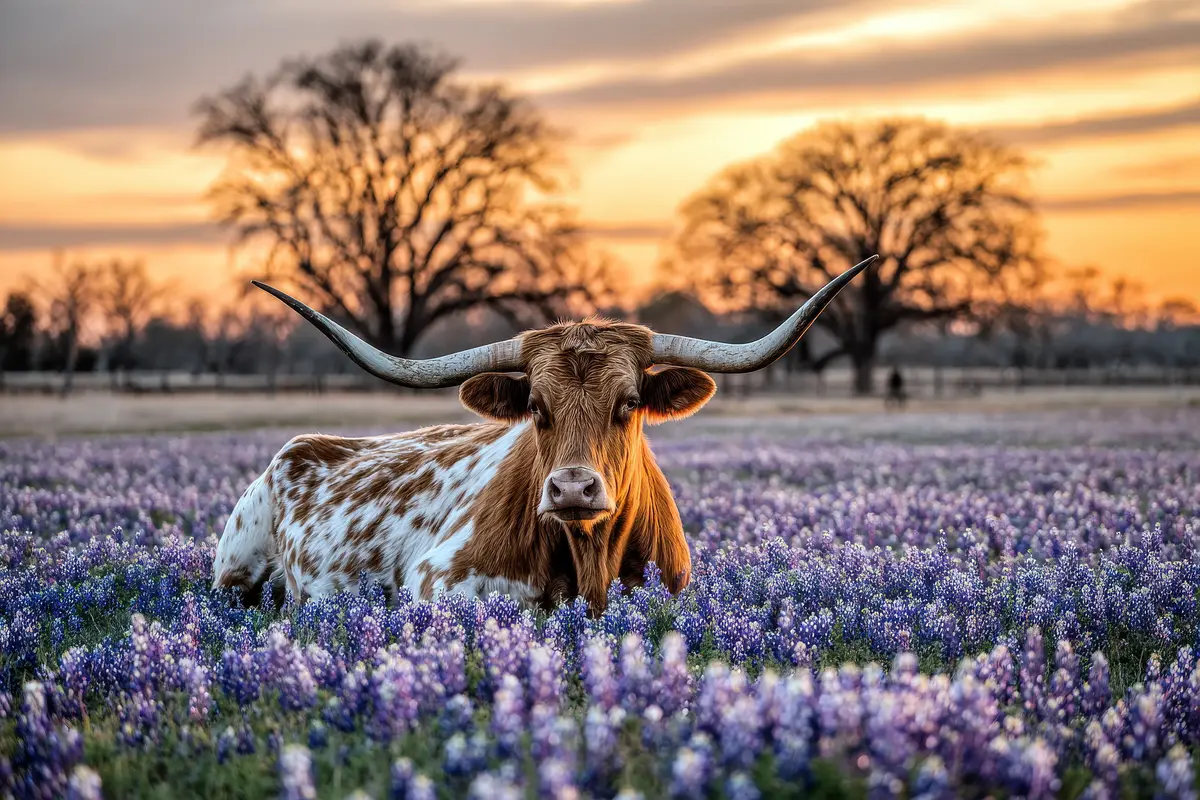
Spring at Navarro Mills Lake is worth planning around. Bluebonnets and paintbrushes bloom along the shoreline and campground edges in April, and the birding during spring migration pulls a dedicated crowd — great blue herons, hawks, geese, ducks, and occasional bald eagles have all been documented here. It's the kind of seasonal combination — wildflowers and birds and crappie — that makes the lake feel like more than just a fishing spot.
Richland-Chambers Reservoir
Richland-Chambers sits roughly 10 to 20 miles southeast of Corsicana off US-287, and its scale puts it in a different category altogether. At roughly 41,000 to 44,000 acres with 330 miles of shoreline, it's the third-largest inland reservoir in Texas by surface area. That's not a regional distinction — that's a statewide one.
Target species include catfish, crappie, white bass, and hybrid striped bass, with hybrids being the draw that brings anglers from the Dallas metro willing to make the drive. Public boat ramps, boating, and swimming are all available. The sheer size of the reservoir means you can almost always find a quiet stretch of water, even on a busy weekend.
The honest note for newcomers: Richland-Chambers doesn't have the developed campground infrastructure of Navarro Mills. If camping is the priority, Navarro Mills is the better choice. If you're chasing big water and hybrid stripers on a weekend run, Richland-Chambers is hard to beat at this distance from a city of Corsicana's size.
Looking to buy in Corsicana? Estimate your payment.
Enter your numbers to see an estimated monthly mortgage payment.
Estimate only. Excludes HOA fees and mortgage insurance. The interest rate above is a starting point, not a quoted rate — replace it with your own to see real numbers. Insurance is a flat placeholder, not a Corsicana quote.
Seasonal Recreation and What Newcomers Get Wrong
The outdoor calendar in Corsicana runs almost year-round, but it doesn't run evenly, and newcomers from cooler climates consistently misjudge it the same ways.
Spring: The Peak Season Most People Miss
March through May is the most underrated stretch of the outdoor year. Temperatures are comfortable, both reservoirs are at their most scenic, and the fishing ramps up across all three water bodies. The wildflower season around Navarro Mills Lake in April is legitimately worth a trip out of town, not just a local curiosity. People who move here from out of state and arrive in fall or winter often spend their first spring genuinely surprised by how good it is.
Summer: Real Heat, Real Management Required
July and August are hot. Not "take a hat" hot — sustained-heat hot, where afternoon outdoor activity becomes genuinely uncomfortable for most people. The city's spray parks and pools exist specifically to address this. Locals who use the trail system and the lakes shift to early morning, especially for anything aerobic. If you move here expecting to run the trails at 3 p.m. in August, you will figure out quickly why the parks are nearly empty at that hour.
The summer pool season is a genuine equalizer: the free community swim days at Jester Park and Bunert Park draw families from across the city who wouldn't otherwise cross paths. It's one of the few places in Corsicana where the city shows up in one place together, and the Pooch Paddle at the end of the season has developed its own loyal following.
Fall and Winter: Underused and Worth It
October through December is the second-best fishing window on both reservoirs, and it's when the lakes are least crowded. Crappie and catfish are active, white bass start their fall runs, and the Corps campgrounds at Navarro Mills thin out considerably. Residents who fish seriously know this, but it takes most newcomers a full year to figure it out.
Winter birding at Navarro Mills Lake draws a quieter crowd — waterfowl move through in significant numbers, and bald eagle sightings, while not common, happen often enough that regulars keep binoculars in their trucks. For residents who want outdoor recreation without crowds, late fall and early winter on the reservoir is genuinely rewarding in a way no promotional material about the city ever mentions.
For a look at how the parks system connects to youth programming and organized activities for kids, see the schools page, which covers youth sports and extracurriculars in more detail.

Local Expert Takeaway: Corsicana's outdoor story is built around water — three of it, at different scales and distances. Lake Halbert Park handles the everyday need: a boat ramp and a fishing spot inside city limits, no planning required. Navarro Mills Lake, about 20 miles out on SH-31, is where serious anglers and campers go, and it holds a genuine Texas fishing record. Richland-Chambers Reservoir, one of the largest in the state, opens up southeast on US-287 for big-water days. The city's 19-park system layers on top of that with trails, pools, a BMX course, and a disc golf course that most cities this size never build. The catch is the summer heat — plan outdoor activity for mornings from July through August, or the city's spray parks and pools become your best options.
Quick Takeaways & FAQs
✅ Corsicana's 19-park system covers 470 acres and includes a BMX course, a zip line, a disc golf course, and two public swimming pools — more recreational infrastructure than most North Texas cities of similar size.
⚠️ The Texas summer heat is real: July and August push afternoon outdoor activity to near-impossible, and newcomers who don't adjust their schedule to early mornings or the city's spray parks and pools will struggle with outdoor life here.
📍 Navarro Mills Lake, about 20 miles west off SH-31, holds the Texas state record for white crappie and offers five Corps-operated campgrounds — making it one of the better fishing and camping destinations within a short drive of any small North Texas city.
Is Lake Halbert Park open for camping?
What kind of fishing does Navarro Mills Lake offer?
Does Corsicana have public swimming pools?
How large is Richland-Chambers Reservoir and how far is it from Corsicana?
Are there trails for hiking or biking inside Corsicana?
Moving to Texas?
Tell us what you need help with and we'll connect you with local resources.
