
Most people who retire to Maynardville weren't looking for it — they were looking at Knoxville, then drove north on TN-33 one afternoon and never fully left. The draw is specific: Norris Lake practically at your doorstep, a small-town pace that isn't performed or packaged for tourists, and a property-tax rate that feels almost anachronistic in the current market. Maynardville is the county seat of Union County, a community of 2,723 residents tucked into the forested ridges north of Knoxville, where the lake is the real center of gravity for daily outdoor life.
The economic and civic backbone here is modest but stable — the school district, county government, lake-related tourism, and Clayton Homes make up the primary employment base, which matters to retirees mainly because it keeps the town functioning without the sprawl and congestion that follow larger employers. About 26% of the Maynardville-area population is already over 55, so the community isn't startled by retirees — it's partly built around them. The question isn't whether Maynardville welcomes older residents; it's whether the trade-offs fit your specific retirement picture.
Tennessee's tax treatment of retirement income is genuinely exceptional, and Maynardville sits inside that advantage while adding one of the lowest property-tax rates in the region. Daily costs run well below what most relocating retirees are used to, though the area's modest commercial footprint means some errands require a drive. McGhee Tyson Airport is roughly 39 miles away — far enough that spontaneous travel takes planning, close enough that it works.
Whether you're seriously weighing a move or still in the research phase, the sections below cover the real retiree picture in Maynardville: healthcare access, the tax and budget reality, what daily life looks like without a car, downsizing options, and how this town stacks up against nearby alternatives.
Why Retirees Are Choosing Maynardville
The case for Maynardville in retirement starts with affordability and ends with the lake. A typical home here was priced at $294,089 (Zillow Home Value Index, August 2026) — well below what comparable lake-adjacent properties command in more marketed Tennessee destinations. For retirees arriving from higher-cost metros, that number often means buying outright or carrying a very manageable note, which dramatically changes what a fixed income can do month to month.
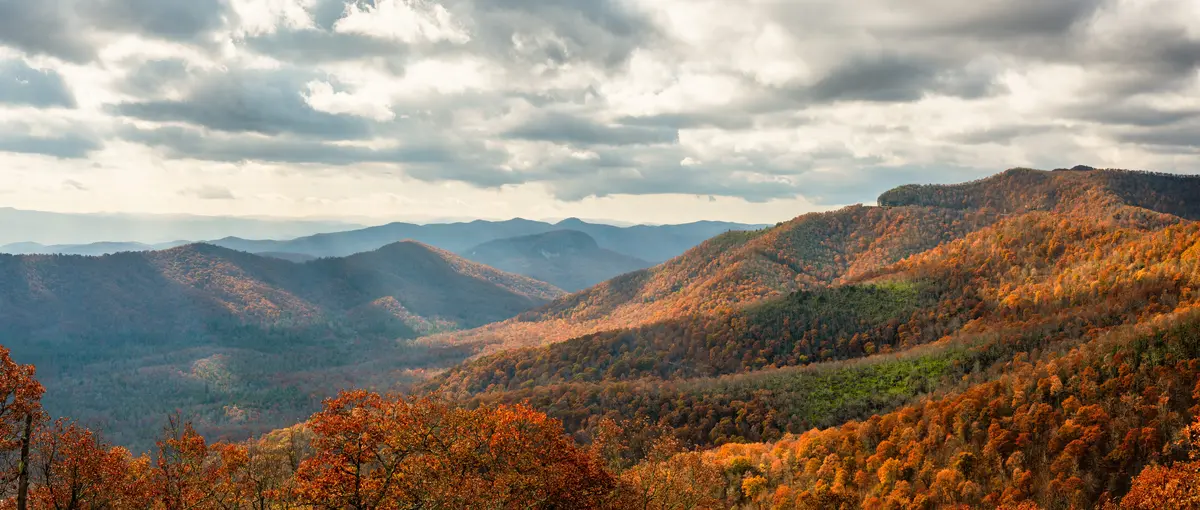
Norris Lake is not a peripheral amenity here — it's the reason many retirees shortlist Maynardville at all. Over 34,000 acres of water, more than 800 miles of shoreline, and a reputation as one of TVA's cleanest lakes means year-round fishing, boating, and shoreline walking that doesn't require a membership or a long drive. Big Ridge State Park adds 3,687 acres of hiking and paddling terrain immediately adjacent. For retirees who define quality of life through access to the outdoors rather than walkable retail, this combination is hard to beat at this price point.
Maynardville is a poor fit for retirees who prioritize walkable urban amenities, a wide healthcare campus within a few miles, or a dense social calendar driven by arts and cultural venues. This is a small town of 2,723 people — the 145th-largest incorporated city in Tennessee — and it presents itself honestly as one. Retirees who have thrived here tend to be self-directed, comfortable with a car-dependent daily routine, and genuinely interested in a slower, lake-centered life rather than a suburban approximation of city living. For the right person, that's the entire appeal.
Healthcare & Medical Access in Maynardville
The closest hospital to Maynardville is a regional medical center about 18 miles away. That distance is real and worth understanding before you commit: a routine ER visit or a scheduled procedure involves a drive, and in a medical emergency, proximity matters in ways that a beautiful lake view does not offset.
What the distance buys you is a facility that has invested meaningfully in its capabilities. That regional hospital completed a $67.5 million expansion that enlarged the emergency room, added 28 intensive care beds and 28 acute care beds, and recruited cardiologists, a neurologist, gastroenterology, vascular surgery, and electrophysiology specialists. For retirees whose primary concerns are cardiac and neurological care — statistically the most common serious-care needs after 65 — that specialist roster is meaningfully better than what a rural county hospital at the same distance would typically offer.
For advanced and tertiary care, the University of Tennessee Medical Center and additional Knoxville-area hospital networks are accessible roughly 35 minutes away, which brings academic medicine and subspecialty depth within reach for non-emergency situations. The practical picture for a Maynardville retiree is this: routine and urgent care at the regional hospital about 18 miles out, serious or complex care in Knoxville. That's a workable arrangement for many people — but retirees managing multiple chronic conditions who need frequent specialist visits should factor that 18-to-35-mile commute into their daily calculus before deciding.
For minor injuries, lab work, or same-day sick visits, a drive toward the regional hospital or into the Powell area is the realistic option. Telehealth has softened this gap considerably for medication management and follow-up care, and many Maynardville retirees use it as a first line before deciding whether an in-person visit is necessary.

The Retiree Budget in Maynardville
Tennessee's tax posture for retirees is about as favorable as any state in the country. Social Security benefits are fully exempt from state income tax. Pension income, IRA and 401(k) withdrawals, annuity payments — all tax-free at the state level. The Hall Income Tax on interest and dividends was fully repealed effective January 1, 2021, which closed the one remaining gap in Tennessee's retirement-income treatment. There is also no state estate or inheritance tax. For retirees drawing from multiple income sources, that combination can mean a noticeably lower annual tax bill compared with states that tax retirement distributions.
Property taxes in Maynardville add to that picture. The effective rate is approximately 0.47% — well below the national average and low even by Tennessee standards. Tennessee's Property Tax Relief Program provides eligible low-income senior homeowners a state-funded reimbursement for a portion of their annual property taxes. The separately administered Property Tax Freeze Program allows qualifying seniors to lock in their tax bill at the level owed in the year they first qualify, shielding them from future assessment increases regardless of how property values move. For retirees on a fixed income, that freeze is a meaningful protection against the slow erosion that rising assessments can create. See the full cost of living breakdown for additional detail on groceries, utilities, and how Maynardville compares to regional benchmarks.
Day-to-day costs run lean. Groceries, dining, and local services reflect a small-town economy rather than a resort market — which is notable given the lake access. Most errands mean a drive, and retirees who budget carefully for that habit typically find the overall cost picture still favorable compared with most mid-sized Tennessee cities. One honest friction point: the median household income in Maynardville is $47,102, which falls below what is needed to carry the typical home here at current prices — a signal that retirees arriving with home-sale proceeds or meaningful savings are better positioned than those relying primarily on income alone.
Looking to buy in Maynardville? Estimate your payment.
Enter your numbers to see an estimated monthly mortgage payment.
Estimate only. Excludes HOA fees and mortgage insurance. The interest rate above is a starting point, not a quoted rate — replace it with your own to see real numbers. Insurance is a flat placeholder, not a Maynardville quote.
Beyond the Monthly Mortgage Payment — What to Factor In
- The property tax rate above — The 0.47% used in the estimate is the median effective rate — tax actually paid as a share of market value — published by Ownwell, 2026. Half of local homes pay more and half pay less: your own bill depends on that property's assessed value and any exemptions it qualifies for, which can differ a lot from its market price. Confirm with the Union County assessor before you budget.
- Total cost of ownership — Your monthly mortgage payment is just the baseline. Depending on the specific city, county, and service district, homeownership costs also include local utility fees, municipal surcharges, and special assessments (such as water, sewer, storm drainage, or local energy taxes) that vary by location.
- Independent due diligence — Because these recurring local costs and municipal fees change depending on the exact property address, buyers must research them independently during their transaction process.
Tax laws, local municipal fees, and utility costs change frequently and individual situations vary. This page is general information, not tax or legal advice — always consult a qualified tax professional, CPA, or local municipal offices for personalized guidance.
Walkability, Community & Staying Active in Maynardville
Maynardville is not a walkable town in the errand-running sense. The terrain is hilly, sidewalks are limited outside the immediate downtown core, and the commercial footprint is small enough that most practical needs — pharmacy, major grocery, medical appointments — require a car. Retirees who arrive expecting to downsize to one vehicle and handle most of their day on foot will find that calculus doesn't work here.
What Maynardville does offer on foot is more meaningful in a different way. Wilson Park is the town's gathering green, and the Maynardville Public Library anchors a small but real civic center where the community actually shows up. The Union County Courthouse gives the downtown its physical spine. These aren't destinations in a tourist sense — they're the places where you run into the same people week after week, which is what community actually feels like in a town of 2,723.
The outdoor activity picture is genuinely strong. Big Ridge State Park's 15-plus miles of hiking trails through forested ridges and lake shores are accessible without leaving Union County, and Norris Lake itself draws retirees outdoors in every season — fall foliage and cooler temperatures extend hiking and fishing well past summer, and winter brings quieter conditions that serious anglers specifically seek out. The lake's 207 sunny days a year means outdoor recreation isn't a seasonal proposition.
Organized social life here runs through civic and faith institutions more than purpose-built senior programming. The Union County TN Farmers Market gives retirees a regular gathering point during the warm months and a way to connect with both longtime residents and newer arrivals. For retirees who want a fuller calendar of structured senior activities, Knoxville's senior centers and recreation programming — about 35 minutes away — are the realistic supplement. That commute is worth knowing before you assume Maynardville's own community infrastructure will carry the full weight of a retirement social life.
Right-Sizing: Downsizing in Maynardville
No 55+ communities were found in Maynardville. That is the clearest thing to say upfront, because it shapes every other downsizing decision here. There are no age-restricted ownership communities, no patio-home developments built around a clubhouse and a pickleball court, no HOA-maintained single-level neighborhoods marketed specifically to buyers 55 and older. The inventory that exists is general-market housing, and retirees downsize into it on the same terms as everyone else.
An assisted living option does exist in town: Tender Loving Care Home for the Elderly operates with on-site nursing and therapy services, housekeeping, outdoor grounds, and an activity center. That is not a 55+ ownership community — it is a care facility — but it is worth knowing for retirees or families planning ahead for higher levels of support.
Single-level living is available in Maynardville, but it requires deliberate searching. The housing stock across neighborhoods like Green Acres, Hickory Heights, and Kentwood includes ranch-style homes that suit buyers prioritizing one-floor living, though the hilly terrain means not every property sits on a flat lot even when the house itself is single-story. Older construction in Cross Creek and Gregory Estates tends toward more traditional two-story layouts. Buyers seeking a true step-free footprint — no grade changes from driveway to door — should inspect carefully rather than assume from square footage alone.
The practical advice most retirees get from people already living here: if you want the Norris Lake lifestyle and the Union County tax picture, plan to buy in the general market, prioritize single-level construction when you find it, and understand that purpose-built senior communities will require a drive to Knoxville or Powell. That is not a reason to walk away — it is just the honest version of what downsizing looks like here.
Maynardville vs Nearby Retirement Destinations
| City | Cost vs Maynardville | Primary Hospital | Walkability | Senior Living Depth | Overall Retirement Fit |
|---|---|---|---|---|---|
| Maynardville | The baseline | Regional medical center (~18 mi) | Car-dependent; hilly | Assisted living only; no 55+ communities | Strong for outdoor-focused, budget-conscious retirees |
| Knoxville | Noticeably higher | Multiple systems; UT Medical Center on-site | Significantly more walkable in key districts | Deep — multiple 55+ communities, CCRCs, senior centers | Best for retirees who need healthcare proximity and urban amenities |
| Powell | Noticeably higher | Regional medical center (~10 mi); Knoxville networks nearby | Suburban; car-dependent but flatter | Moderate — some 55+ options; closer to Knoxville's full inventory | Good middle ground between Maynardville's quiet and Knoxville's depth |
| Norris | Noticeably higher | Regional medical center (~20 mi) | Very limited; small lakeside community | Minimal — very small town, few senior-specific options | Best for retirees who want lake living and don't mind premium pricing |
| Andersonville | About the same | Regional medical center (~20 mi) | Minimal; rural character | Very limited | Rural alternative with similar cost and outdoor access |
| Corryton | About the same | Knoxville networks (~25 mi) | Suburban-rural; car-dependent | Limited | Suits retirees prioritizing proximity to Knoxville over lake access |
Knoxville is the clear winner on healthcare depth and walkability — if frequent specialist visits or a car-free lifestyle are priorities, that advantage likely outweighs the higher cost. Powell threads a reasonable middle path: closer to Knoxville's medical infrastructure than Maynardville, with a flatter suburban layout that suits retirees who find Maynardville's hills limiting, though you pay for that convenience. Norris offers comparable lake scenery with a tighter, quieter community — but at a noticeably higher price point and with even fewer services in town. For retirees who want the most favorable tax and cost picture combined with genuine outdoor access and don't need urban amenities within walking distance, Maynardville makes a strong case that none of its neighbors quite replicate at the same price.

Local Expert Takeaway: Maynardville rewards the retiree who has already done the math and made peace with the trade-offs: no walkable downtown, a hospital 18 miles out, and no purpose-built senior community to move into. In exchange, you get Tennessee's zero-tax treatment of every retirement income stream, a property-tax rate of approximately 0.47% that is among the lowest in the region, Norris Lake practically outside your door, and Big Ridge State Park's trails as a daily option rather than a weekend destination. The retirees who struggle here are the ones who expected Maynardville to be something it isn't. The ones who stay tend to say the same thing: they didn't realize how much they were paying for things they weren't actually using until they stopped paying for them.
Quick Takeaways & FAQs
✅ Tennessee taxes none of your retirement income — Social Security, pensions, IRA withdrawals, and 401(k) distributions are all fully exempt at the state level, and the effective property-tax rate of approximately 0.47% makes Maynardville one of the most tax-efficient places to retire in the Southeast.
⚠️ There are no 55+ communities in Maynardville, and the nearest hospital is about 18 miles away — retirees who need frequent specialist care or age-restricted ownership options will need to look toward Knoxville or Powell.
📍 Norris Lake — spanning over 34,000 acres with more than 800 miles of shoreline — is Union County's backyard, and Big Ridge State Park adds 15-plus miles of hiking trails that are accessible year-round, making outdoor recreation the primary social and physical infrastructure for retirees here.
Is Maynardville, TN a good place to retire?
Does Tennessee tax Social Security or pension income?
What is the closest hospital to Maynardville?
Are there any 55+ communities or senior housing options in Maynardville?
What property-tax relief programs are available to senior homeowners in Tennessee?
Moving to Tennessee?
Tell us what you need help with and we'll connect you with local resources.
