
Most people moving to Cookeville do their homework on home prices and schools before they realize the outdoor situation here is genuinely remarkable for a city of 38,212. You're not getting weekend hiking as an occasional treat — you're getting an 800-acre park inside city limits, two state parks with waterfalls within fifteen minutes, and a 19,000-acre reservoir a short drive away. That combination is rare at Cookeville's price point, and it tends to seal the deal for outdoor-minded buyers who come to tour and end up making offers.
Cookeville sits in Tennessee's Upper Cumberland Plateau, a region where the underlying limestone geography produces exactly the kind of terrain that makes for memorable waterfall hikes and clear-water fishing lakes. The elevation shifts and river gorges that define this corner of the state aren't just scenery — they're the reason Burgess Falls and Cummins Falls exist within reasonable distance of a Cookeville zip code. For families relocating from flatter states, the topography alone is a consistent source of surprise.
Day-to-day outdoor life is anchored inside the city at Cane Creek Park and Dogwood Park, each serving a distinctly different purpose. Cane Creek is where mountain bikers, anglers, disc golfers, and dog owners converge on a weekday morning. Dogwood is where the community gathers for free concerts and summer movies. The two parks cover nearly every recreational need without requiring a highway on-ramp, which matters more than people expect when they're weighing quality of life. For the cost of living here, the density of outdoor amenities is genuinely out of proportion.
Whether you're researching the move seriously or just getting a feel for daily life, the sections below break down Cookeville's signature parks, its mountain biking and trail scene, the waterfall state parks on its doorstep, and what water recreation actually looks like here across the seasons.
Cane Creek Park and Dogwood Park: The City's Two Anchors
Cane Creek Park is the kind of facility that stops people mid-sentence when they're describing why they moved here. Over 800 acres on the eastern edge of the city, built around a 56-acre fishing lake — it functions more like a regional outdoor destination than a neighborhood park.
The lake holds bass, catfish, and crappie, and supports kayaking and paddle boating alongside traditional fishing. A paved two-mile loop circles the water, accessible enough for strollers and casual walkers but long enough to be a real fitness route. Beyond the loop, the park spreads into disc golf, sports fields, camping, playgrounds, and picnic areas — plus a dog park with separate sections for smaller dogs, which Cookeville residents will tell you fills up on a Saturday morning.
The mountain bike trail network at Cane Creek gets its own section below, but it's worth noting here that the park was purpose-built for multiple overlapping uses, and they don't conflict. Hikers and bikers operate on different zones; anglers don't share space with mountain bikers; the dog park is fenced and separated. The layout is unusually thoughtful for a municipal facility.
Dogwood Park serves a completely different function. Positioned across from the Cookeville Municipal Building in the heart of downtown, it's a small but well-designed civic green: a performance pavilion, a rose garden, an interactive fountain, and the Heart of the City Playground — a fully accessible, all-inclusive play structure the city describes as the only one of its kind in the area for children of all abilities. That playground matters to parents relocating with kids who have mobility needs; it's not a token gesture, it's a genuine facility.
The Dogwood Performance Pavilion runs a free concert series on the third Thursday of each month from May through August, sponsored by the Cookeville Arts Council, and a free outdoor movie series in June. These are the events that make Dogwood the community gathering point it is — not the fountain or the rose garden, though those draw their own crowd. A summer evening at the pavilion is where you see the city cross-section: Tennessee Tech students, families with young children, older residents who've been coming for years.
What Locals Know
Newcomers sometimes underestimate how much time they'll spend at these two parks in the first year. Cane Creek in particular has a gravity to it — once you know the mountain bike trails and where the crappie bite, you find yourself there more mornings than you planned.
Mountain Biking and Trails: Cane Creek's Trail Network
Cookeville isn't a mountain biking town the way Bentonville or Pisgah are, but it punches considerably above its weight for a city this size in middle Tennessee. The trail system at Cane Creek Park is the whole story here, and it's a legitimately good one.
The network opened with what locals call The OG — a 2.1-mile trail that was Cookeville's first dedicated mountain bike trail. It's since been supplemented with a beginner and kids' introductory loop, which has made the park viable for families with younger riders who want to develop skills, and a blue-rated intermediate trail for riders ready to step up from the entry-level course.
| Trail | Difficulty | Length | Best For |
|---|---|---|---|
| The OG | Green/Blue (beginner-intermediate) | 2.1 miles | Nature First-timers |
| Beginner/Kids Loop | Green (beginner) | Short loop | Families |
| Intermediate Blue Trail | Blue (intermediate) | Varies | Nature |
One operational quirk that catches new riders off guard: the trails alternate direction by day of the week. The schedule is posted at the trailhead, and regulars know it by reflex — but showing up without checking and running the wrong direction is how conflicts happen.
For walkers and joggers who aren't on bikes, the paved two-mile lake loop at Cane Creek is the go-to. It's flat, well-maintained, and genuinely pleasant in the early morning before the heat builds in July and August. The plateau climate gives Cookeville 208 sunny days a year, which sounds like good news for outdoor recreation — and it is, mostly — but summer afternoons in the valley can push well past 90°F, so most regulars shift their Cane Creek time to early morning or evening from June through August.
What Families Do Here
The beginner loop at Cane Creek is where a lot of Cookeville parents introduce their kids to mountain biking. It's short enough that an eight-year-old can complete it without drama, and it connects to the larger network as skills develop. For youth sports and more structured school-based athletic programs, the parks connect to a broader picture worth exploring separately.

Waterfall State Parks: Burgess Falls and Cummins Falls
Most cities don't have two genuinely spectacular state parks within a short drive. Cookeville does, and they're different enough that regular visitors tend to favor one over the other based on what kind of day they're having.
Burgess Falls State Park
Burgess Falls sits along the Falling Water River, reachable via SR-135 south of the city. The trail follows the river through a series of four named waterfalls — Falling Water Cascades, Pipeline Falls, Middle Falls, and the main event, Burgess Falls, which drops more than 130 feet into a limestone gorge. The total elevation cascade across the four falls exceeds 250 feet, and the gorge geology is the kind of thing that makes the Upper Cumberland feel genuinely distinct from the rest of middle Tennessee.
The park includes an ADA-accessible overlook for visitors who can't manage the full trail, a native butterfly garden, a pet-friendly trail section, a fishing pier, and a picnic pavilion. A new visitor center was under construction as of April 2026, with the upper parking lot temporarily closed during that phase — worth confirming current conditions before your first visit, since trail access logistics were shifting.
Burgess Falls rewards people who time it right. After a significant rain, the falls volume increases dramatically, and the gorge walls collect mist that makes the lower section feel like a different landscape entirely. Late spring is when most newcomers first visit; fall color along the rim is when regulars say it's actually best.
Cummins Falls State Park
Cummins Falls is the more physically demanding of the two, and the permit system makes it feel deliberately managed rather than casually accessible. The park covers 282 acres on the Blackburn Fork River, roughly eight to nine miles from Cookeville. Cummins Falls itself stands 75 feet high and ranks as Tennessee's eighth largest waterfall by volume — a figure that understates how dramatic it is when the river is running full.
Gorge access is capped by a daily permit limit, and advance permits are required and purchased online. The overlook trail above the gorge is permit-free and worth doing on its own. Getting down to the base of the falls requires roughly 0.6 miles of genuinely rugged terrain — river crossings, uneven boulders, no maintained path in the conventional sense. The natural plunge pool at the base allows swimming, with life jackets required for children under 12.
The permit cap is the thing most newcomers don't anticipate. Show up on a summer weekend without a permit and you will be turned away from the gorge. Book ahead, particularly for any weekend between Memorial Day and Labor Day. The overlook is a genuinely good fallback, but it's not the same experience.
| Feature | Burgess Falls | Cummins Falls |
|---|---|---|
| Distance from Cookeville | Short drive via SR-135 | ~8–9 miles northwest |
| Main waterfall height | 130+ feet | 75 feet |
| Total waterfalls | Four named falls | One primary fall |
| Trail difficulty | Moderate, maintained | Rugged, river crossings |
| Permit required | No | Yes (gorge access, daily cap) |
| Swimming | No | Yes (plunge pool) |
| ADA access | Overlook accessible | Overlook trail only |
| Pet-friendly trail | Yes | Check current conditions |
Between the two parks, Burgess Falls tends to be the first destination for people new to Cookeville. Cummins Falls becomes the one they plan specifically and protect on the calendar.
Looking to buy in Cookeville? Estimate your payment.
Enter your numbers to see an estimated monthly mortgage payment.
Estimate only. Excludes HOA fees and mortgage insurance. The interest rate above is a starting point, not a quoted rate — replace it with your own to see real numbers. Insurance is a flat placeholder, not a Cookeville quote.
Beyond the Monthly Mortgage Payment — What to Factor In
- The property tax rate above — The 0.66% used in the estimate is the median effective rate — tax actually paid as a share of market value — published by Ownwell, 2026. Half of local homes pay more and half pay less: your own bill depends on that property's assessed value and any exemptions it qualifies for, which can differ a lot from its market price. Confirm with the Putnam County assessor before you budget.
- Total cost of ownership — Your monthly mortgage payment is just the baseline. Depending on the specific city, county, and service district, homeownership costs also include local utility fees, municipal surcharges, and special assessments (such as water, sewer, storm drainage, or local energy taxes) that vary by location.
- Independent due diligence — Because these recurring local costs and municipal fees change depending on the exact property address, buyers must research them independently during their transaction process.
Tax laws, local municipal fees, and utility costs change frequently and individual situations vary. This page is general information, not tax or legal advice — always consult a qualified tax professional, CPA, or local municipal offices for personalized guidance.
Center Hill Lake and Seasonal Recreation
Center Hill Lake is roughly a 30-minute drive from Cookeville — close enough that residents treat it as a weekend extension of their backyard rather than a trip destination. The scale of it surprises people who aren't familiar with the Army Corps of Engineers reservoirs in this part of Tennessee: 19,000 acres, stretching 64 miles along the Caney Fork River, with approximately 415 miles of largely undeveloped forested shoreline.
That undeveloped shoreline is what separates Center Hill from the heavily developed lakes closer to Nashville. The coves and ridgelines have stayed wooded, which means the lake retains a genuinely wild character even on a busy July weekend. Boating, water-skiing, swimming, hiking, and camping are all active uses; the fishery is one of the most diverse in the region, with smallmouth bass, largemouth bass, crappie, walleye, catfish, and bluegill all present in significant numbers.
The Caney Fork River below the dam holds a separate distinction: it's considered one of Tennessee's premier trout fisheries. Fly anglers from Cookeville know this river well. The cold, oxygenated tailwater below the dam creates the kind of temperature and clarity that trout require, and a morning on the Caney Fork is a fundamentally different experience from the lake fishing above.
Scuba diving on Center Hill Lake is a less obvious use that has its own following. The reservoir's clear water, submerged structure, and moderate depth make it viable for sport diving in a way that few inland Tennessee lakes are — it shows up in regional diving communities as a legitimate destination.
The Seasonal Calendar
Cookeville's outdoor calendar has a rhythm that residents learn quickly. Spring arrives early on the plateau — waterfall season peaks in March and April when the rivers are running full, and that's when Burgess Falls and Cummins Falls are at their most dramatic. Summer shifts the focus to water: Center Hill Lake for boating and swimming, early-morning mountain biking at Cane Creek before the heat builds, and evening events at Dogwood Park.
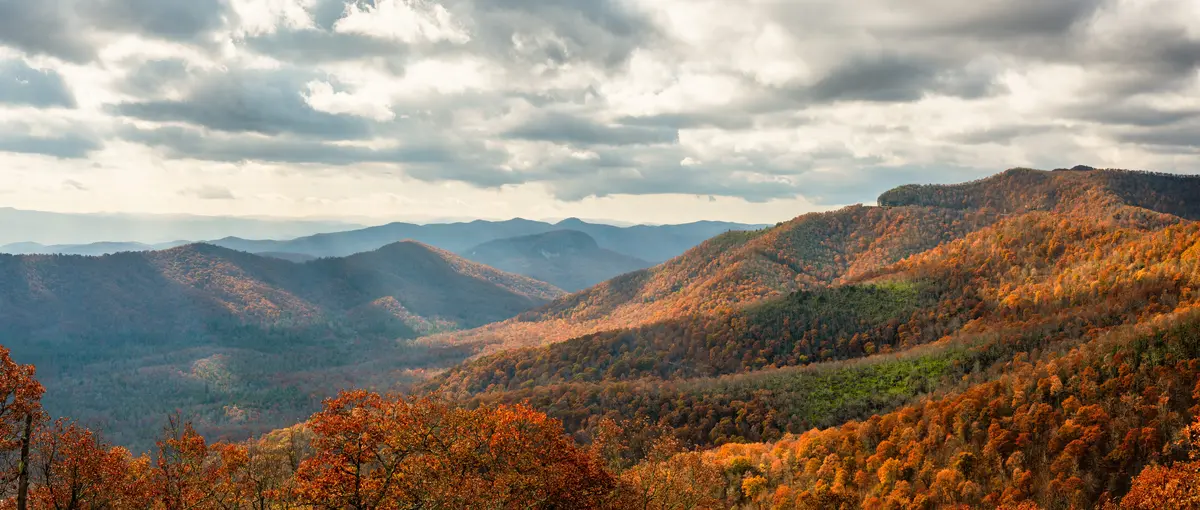
Fall is when many residents say Cookeville's outdoors genuinely peak. The deciduous canopy on the plateau turns hard — reds and oranges that read as vivid even by regional standards — and the waterfall parks become even more rewarding without summer crowds. The Cummins Falls gorge in October is one of those local experiences that doesn't photograph the way it looks in person.
Winter is the surprise for newcomers from warmer climates. The plateau gets ice storms that can close trails and occasionally freeze the lake edges at Center Hill. It's not severe by northern standards, but a Tennessee winter is not what people from Georgia or Florida expect, and Cane Creek can be impassable for a week at a time after an ice event.
Weekends and Local Favorites
Beyond the parks and lakes, the city's social infrastructure around outdoor life runs through a handful of anchors worth knowing. The Cookeville Farmer's Market runs through the warm months and draws a genuine cross-section of the community. For post-hike food and coffee, the city's independent café scene along the downtown corridor — including Poet's Coffee, Vertical Coffee Company, Soul Craft Coffee, and Jamie's Eats and Sweets — gives the outdoor crowd a natural landing spot. When the appetite runs to something more substantial, Crawdaddy's, Father Tom's Pub, Savor Cookeville, CH Steak Lounge, and Spankies cover the range from casual to sit-down. The Cookeville Red, White & BOOM celebration each July 4th draws the whole city to a free event that includes a waterslide through downtown, a patriotic parade, live concerts, and what organizers call the second-largest fireworks show in Tennessee — it's one of those events that makes Cookeville feel bigger than 38,212 people for a weekend.
For buyers still comparing neighborhoods and what's near each one, the neighborhoods page covers proximity to parks by district.
Local Expert Takeaway: Cookeville's outdoor profile is genuinely out of proportion to its size. An 800-acre city park with a mountain bike network and a fishing lake, two waterfall state parks within fifteen minutes, and Center Hill Lake thirty minutes away — that combination doesn't exist at this price point in many places. The catch is that summer heat compresses the best outdoor hours into early morning and evening, and Cummins Falls requires advance planning if you want gorge access on a summer weekend — permits fill well before the weekend arrives. New residents consistently say they underestimated how much of their social life would organize itself around Cane Creek, the Dogwood Park concert series, and the occasional long day at Center Hill.
Quick Takeaways & FAQs
✅ Cane Creek Park's 800-acre footprint, 56-acre fishing lake, and mountain bike trail network make it one of the most complete municipal parks in the Upper Cumberland region.
⚠️ Cummins Falls gorge access requires an advance online permit and fills quickly on summer weekends — show up without one and you will be turned away from the gorge.
📍 The Caney Fork River below Center Hill Dam is recognized as one of Tennessee's top trout fisheries, a fact most people outside the region don't know before moving here.
Is Cane Creek Park free to use?
Do I need a permit to visit Burgess Falls State Park?
How do I get a permit for Cummins Falls gorge access?
What can you do at Center Hill Lake from Cookeville?
What is the Red, White & BOOM event in Cookeville?
Moving to Tennessee?
Tell us what you need help with and we'll connect you with local resources.
