
Most people relocating to the Treasure Valley research Eagle and Meridian first, then stumble onto Star when they realize their budget goes further here. But the first question that follows isn't about the commute or the schools — it's almost always: is it actually safe? Star sits along the Boise River in western Ada County, connected to Boise via Highway 44, and its rapid growth from a sleepy agricultural town into a 25,000-person suburb has left a lot of prospective residents wondering whether that growth brought crime with it.
The short answer, backed by 2024 FBI data, is that Star is among the safer small cities in a state that already leads the nation on crime metrics. The city's violent crime rate comes in at 2.2 per 1,000 residents — measurably below the Idaho state average and well below the U.S. average. Property crime sits at 10 per 1,000, roughly in line with the statewide figure and nearly half the national rate. CrimeGrade.org assigns Star an overall 'A' grade, placing it in the 91st percentile nationally. Those aren't marketing numbers; they're drawn from FBI Uniform Crime Report data released in fall 2025.
Context matters here. Idaho ranked first in the nation for lowest property crime rate in 2024, and the state's total crime rate dropped 35.2% between 2019 and 2024. Star's numbers reflect a city that benefits from both that statewide trend and its own community character: established neighborhood associations, a law enforcement presence backed by the full resources of Ada County, and a predominantly residential growth pattern that hasn't produced the commercial-corridor crime spikes seen in some faster-urbanizing suburbs. That combination doesn't guarantee anything, but it shapes the baseline in ways that raw population growth alone doesn't erase.
Whether you're narrowing down neighborhoods or weighing Star against Eagle or Middleton, the sections below break down the city's crime figures in detail, compare them to meaningful benchmarks, explain how policing actually works here, walk through neighborhood-level safety considerations, and offer practical guidance on what to look into before settling on a specific area.
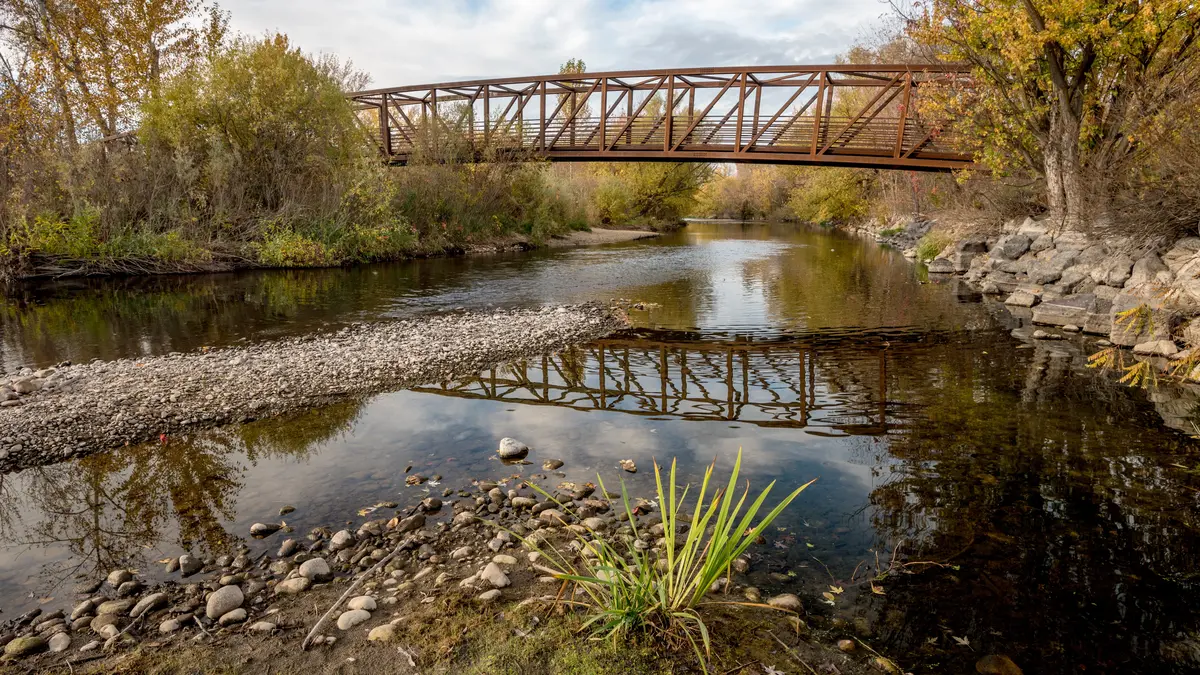
Star's Crime Numbers in Plain English
Two figures define Star's safety profile: a violent crime rate of 2.2 per 1,000 residents and a property crime rate of 10 per 1,000. Both come from 2024 FBI NIBRS data released in fall 2025, and both are the same figures used in the city fact sheet — so you're not looking at an interpolated estimate.
What the Numbers Actually Mean
At 2.2 violent crimes per 1,000 residents, roughly 56 violent incidents were reported across the entire city in a given year — spread across a population of about 25,660. That's not a city living with chronic violence; it's a rate that reflects occasional incidents rather than patterns.
Property crime at 10 per 1,000 translates to approximately 257 incidents annually. Most of that category is theft — vehicles left unlocked overnight, packages taken from porches, and opportunistic crimes of convenience rather than targeted break-ins. That framing matters when you're deciding whether to install a security camera or whether to worry about your kids walking to the park.
The Combined Picture
Add those two rates together and Star's combined crime rate sits at roughly 12.2 per 1,000 — lower than 78% of American communities of all sizes, according to NeighborhoodScout's analysis of the same 2024 FBI data. Within Idaho specifically, Star's rate is lower than nearly 70% of the state's cities and towns.
| Crime Type | Star (per 1,000) | Idaho Avg (per 1,000) | U.S. Avg (per 1,000) |
|---|---|---|---|
| Violent Crime | 2.2 | 2.4–2.54 | 3.6–4.0 |
| Property Crime | 10.0 | ~9.67 | 17.6–19.6 |
| Combined | ~12.2 | ~12.1–12.2 | ~21.2–23.6 |
Star's violent crime rate runs noticeably below the national average; property crime is roughly half the U.S. rate. On violent crime, the gap with Idaho's state average is narrow — Star is slightly better, but they're in the same range. On property crime, Star tracks almost exactly with a state that happens to have the lowest property crime rate in the country.
How Star Compares to Nearby Treasure Valley Cities
Raw figures only tell you so much. What most people really want to know is: compared to Eagle, or Meridian, or Nampa — how does Star actually stack up? The honest answer is that Star competes well with the more established suburbs to its east while sitting in a different category from Nampa and Caldwell to its west.
The Treasure Valley Safety Spectrum
Nampa and Caldwell carry meaningfully higher crime rates than Star — both on violent and property crime — driven by larger populations, older commercial corridors, and greater economic diversity. Eagle, which borders Star to the east, has historically had similar or slightly lower crime figures, largely because it shares the same demographic and income profile. Meridian is bigger and has more commercial density, which tends to push property crime numbers up relative to purely residential communities like Star.
Star's position on that spectrum is closer to Eagle than to Nampa. That's not a knock on any of those cities — it's just the realistic picture of where Star sits in the valley's safety landscape.
The Cost-of-Crime Metric
CrimeGrade.org estimates Star's annual cost of crime per resident at approximately $215 — about $250 less than the national average and about $115 less than Idaho's state average. The violent crime component alone accounts for roughly $131 per resident per year, which is $127 below the national figure. These aren't out-of-pocket costs you'll pay; they're actuarial estimates of economic impact, used to compare communities on a common scale. The takeaway is simply that Star's crime burden, however you measure it, runs well below what most American cities carry.
What Six Months Here Teaches You
People who move to Star from larger metros often expect to feel more anxious in a fast-growing suburb than they do. The reality most describe after six months is the opposite: the quiet streets around Freedom Park and the neighborhoods backing up to the Boise River feel genuinely unhurried in a way that doesn't match their preconceptions about suburban sprawl. The surprise isn't that Star is safe — it's how ordinarily safe it feels day to day.

How Policing Works in Star
Star doesn't run a standalone municipal police department. Instead, the city operates under a contract policing model with the Ada County Sheriff's Office — a setup that's worth understanding before you form opinions about police response or community visibility.
What the Contract Model Means in Practice
Eleven commissioned officers and one professional staff member are assigned full-time to the City of Star under this arrangement. They patrol Star specifically — not spread across Ada County at large — but they carry the badge, training standards, and dispatch infrastructure of the largest law enforcement agency in Idaho. For a city of roughly 25,000, that officer-to-resident ratio is reasonable, and the backend resources (specialized units, investigations, forensics) are far larger than any city this size could fund independently.
The practical effect: response times in Star are generally consistent with suburban expectations, and the department's accountability runs through Ada County rather than a standalone city council. Some residents find that reassuring — the oversight structure is larger and better-resourced. Others prefer the direct accountability of a municipal force. Either way, it's the model Star has chosen, and the crime numbers suggest it's working.
Neighborhood Watch Infrastructure
Star residents can organize Neighborhood Watch groups through the Ada County Sheriff's Office Community Relations unit. Deputies attend meetings directly, and the program distributes new-neighbor safety packets — a practical touch that matters more in a fast-growing city where a significant share of residents moved in within the last three years and don't yet know their block. If you're settling into a newer development in Crystal Springs or Star Crossing, checking whether your neighborhood has an active Watch group is one of the more useful things you can do before deciding on a specific street.
The Riverwalk and Freedom Park area see the most foot traffic in the city, and that visibility tends to be self-reinforcing — more people out walking means more informal eyes on shared spaces. That dynamic doesn't show up in crime statistics, but long-term Star residents consistently mention it as part of why the parks feel safe even after dark.
Looking to buy in Star? Estimate your payment.
Enter your numbers to see an estimated monthly mortgage payment.
Estimate only. Excludes HOA fees and mortgage insurance. The interest rate above is a starting point, not a quoted rate — replace it with your own to see real numbers. Insurance is a flat placeholder, not a Star quote.
Neighborhood Safety Considerations in Star
Star doesn't have a defined high-crime district the way larger cities do. At 25,000 people spread across a mix of newer subdivisions and older agricultural land, the crime picture is relatively uniform — but that doesn't mean every corner of the city feels identical.
The Newer Subdivisions
Areas like Crystal Springs, Blake Haven, Pavilion Park, and Star Crossing are almost entirely residential, built within the last decade, and carry the crime profile you'd expect from newer construction neighborhoods: very low. These streets see almost no foot traffic from non-residents, lighting is generally good, and the HOA infrastructure that comes with newer developments tends to keep common areas maintained and monitored. Residents here are more likely to encounter opportunistic property nuisances — an unlocked car rifled through, a package taken — than anything more serious.
Hunter's Creek is one of the more established residential areas in the city, centered around the Hunter's Creek Sports Complex, and its mix of owner-occupied single-family homes gives it a stable, watched-over quality. The same applies to the Freedom Park area and Rivercreek Landing along the river, where the walking trail and park access keep residents consistently active in shared spaces. For a full breakdown of which areas suit which buyer profiles, see the best neighborhoods in Star guide.
American Star and the Highway 44 Corridor
The Highway 44 corridor through central Star carries the city's commercial traffic — gas stations, fast food, convenience retail — and with it the incidental property crime that clusters around commercial nodes in most Treasure Valley cities. This is the stretch you want to understand if you're considering a home within a few blocks of State Street. Nothing alarming; just the realistic baseline that comes with proximity to a busy arterial with 24-hour businesses. If you're specifically prioritizing the quietest possible residential environment, the subdivisions set back from the corridor are the better fit.
What You Would NOT Do
If low property crime is a priority, parking an unlocked vehicle — or leaving anything visible inside a locked one — along the State Street commercial zone overnight is the one behavior most likely to produce a bad outcome. It's not about this being a dangerous stretch; it's just where the opportunistic incidents that do occur in Star tend to cluster. That's true of every Treasure Valley city with a commercial corridor, and Star's version is notably mild by regional standards.
The Honest Caveat About Neighborhood-Level Data
Star is small enough that neighborhood-level crime statistics shift meaningfully from year to year based on a handful of incidents. A block that looks elevated in one year's dataset may simply reflect two or three incidents rather than a structural pattern. Treat any neighborhood-specific crime map as a directional signal, not a verdict — and cross-reference it with a drive-through at different times of day.
The Long-Term Safety Trend — and What It Means for Newcomers
Star's current numbers don't exist in a vacuum. They're the product of a state and national trend that's been moving in one direction for years.
The Macro Backdrop
Nationally, violent crime fell 4.5% in 2024 and property crime dropped 8.1% — both reaching their lowest recorded rates since 1969 and 1961, respectively, per analysis of FBI data published in August 2025. Idaho's trajectory has been even steeper: the state's total crime rate fell 35.2% between 2019 and 2024, dropping from 1,925 to 1,248 per 100,000 residents. Star's figures reflect a city riding a genuinely favorable long-term current, not a snapshot that's likely to reverse sharply.
Growth and What It Usually Does to Crime
The concern most newcomers raise is intuitive: Star's population has grown fast, and rapid growth often strains the infrastructure — including law enforcement — that keeps crime in check. That's a fair worry to carry into your research. The counterargument is that Star's growth has been largely residential, drawing a community profile that tends to correlate with lower crime rates across the Treasure Valley. Nampa's growth story is different from Star's growth story, and conflating them would be a mistake.
The downside risk worth watching is commercial development along Highway 44. As the corridor fills in with more retail and hospitality, property crime typically rises modestly with the increased foot traffic. That's not alarmism — it's what every maturing suburb in the valley has experienced — and Star's contract policing model means the response capacity scales with Ada County's resources rather than being capped by what a small-city budget can sustain.
What to Actually Research Before Choosing a Neighborhood
The most useful tool available to anyone researching a specific street in Star is the Ada County Sheriff's Office crime mapping portal, which publishes incident data at the address level. CrimeGrade.org's block-level heat maps are a reasonable secondary check. Neither will tell you that one neighborhood is dangerous — they'll help you confirm that the quieter residential areas north of the river look as calm on paper as they do on a Saturday morning walk. That's the research routine worth doing before settling on a specific block, and it takes about twenty minutes.
The big-picture answer to whether Star is safe is a clear yes by any honest measure. The city-wide 'A' grade and the 91st-percentile national ranking from CrimeGrade.org aren't marketing — they're consistent with what the FBI data shows and what people who live here describe when asked. The more useful question, once you've cleared that bar, is which specific part of Star matches what you're looking for — and that's a neighborhood research question, not a safety red flag.
Local Expert Takeaway: Star earns an 'A' overall crime grade and sits in the 91st percentile nationally — that's not spin, it's where 2024 FBI data places it. The practical reality on the ground matches the numbers: residents walking the Star Riverwalk in the evening or letting kids ride bikes to the Hunter's Creek Sports Complex don't think much about crime, because they don't have much reason to. The one habit worth building early is locking your car and keeping the interior clear — especially anywhere near State Street — since the small slice of property crime that does occur in Star concentrates around the commercial corridor rather than the residential neighborhoods.
Quick Takeaways & FAQs
✅ Star's violent crime rate of 2.2 per 1,000 is below both the Idaho state average and the U.S. average, earning the city an 'A' grade and 91st-percentile national ranking from CrimeGrade.org.
⚠️ Property crime at 10 per 1,000 — though well below the national average — means opportunistic theft near the State Street commercial corridor is the most realistic concern for most residents.
📍 Star's policing is handled by 11 dedicated Ada County Sheriff's Office officers under a contract model, giving a city of 25,000 access to the largest law enforcement agency in Idaho.
What is Star, Idaho's crime rate?
How does Star, Idaho compare to Eagle or Meridian for safety?
Does Star, Idaho have its own police department?
Is Star, Idaho safe for families with kids?
Is crime getting worse in Star as the city grows?
Moving to Idaho?
Tell us what you need help with and we'll connect you with local resources.
