
If you've been researching North Idaho towns and Spirit Lake keeps coming up, here's the number that tends to stop people mid-scroll: a violent crime rate of 1.2 per 1,000 residents. In a country where the national average runs nearly four times higher, that figure deserves a closer look — not to oversell it, but to understand what it actually reflects about daily life in a town of roughly 2,479 people tucked into the Kootenai County foothills, about 36 minutes north of Coeur d'Alene on US-41.
Small-town crime statistics always carry an asterisk. A single incident in a city this size can swing annual totals dramatically, which is why trend data matters more than any single year's snapshot. What the multi-year record shows here is a city where both violent and property crime have been moving in the right direction — downward — over the past five years. That trajectory, more than any single data point, is what residents and researchers cite when they describe Spirit Lake as genuinely safe rather than just statistically quiet.
Context matters just as much as the raw numbers. Spirit Lake sits inside Idaho, which recorded the lowest property crime rate of any state in the country in 2024 and posted statewide violent crime well below the national average — the first time in at least 20 years that Idaho's total annual offenses dropped below 100,000. Spirit Lake's own figures land comfortably below even those already-favorable state benchmarks, which gives the city's safety profile two layers of favorable comparison to work with.
Whether you're weighing Spirit Lake against Rathdrum or Athol, or just trying to understand what the crime statistics mean for a neighborhood near Spirit Lake City Park or along the Lakeshore area, the sections below break down the numbers by category, put them in state and national context, explain what the local police presence actually looks like, and flag what residents say they worry about most — which turns out to be something far more mundane than violent crime.
Spirit Lake Crime Rates at a Glance
The two numbers that define Spirit Lake's safety profile are 1.2 violent crimes per 1,000 residents and 2.1 property crimes per 1,000 residents (FBI UCR basis, 2026 city fact sheet). Put those side by side with national and state figures and the picture clarifies quickly.
| Geography | Violent Crime (per 1,000) | Property Crime (per 1,000) |
|---|---|---|
| Spirit Lake, ID | 1.2 | 2.1 |
| Idaho statewide | 2.54 | 9.67 |
| U.S. national average | 4.43 | ~19.6 (est.) |
| BestPlaces index (Spirit Lake)* | 11.6 / 100 | 20.5 / 100 |
| BestPlaces index (U.S. avg)* | 22.7 / 100 | 35.4 / 100 |
| City-Data composite index | 5 (U.S. avg ≈ 228) | |
* BestPlaces uses a proprietary 1–100 index where higher = more crime; these are index scores, not per-1,000 rates.
On every comparison axis — against the state, against the country, against the BestPlaces index — Spirit Lake lands in the lower tier of crime prevalence. The City-Data composite score of 5 against a U.S. average of roughly 228 is the most striking single figure, though that index uses its own weighting methodology and should be read as directional rather than precise. What all three measurement systems agree on: Spirit Lake is not a statistical outlier by accident.
The AreaVibes analysis of FBI 2024 calendar-year data (released September 2025) translates the city's violent crime rate to approximately 116 incidents per 100,000 residents — roughly 68% below the national average. Property crime converts to approximately 776 per 100,000, roughly 60% below the national average. These per-100,000 figures use a different denominator than the per-1,000 figures in the fact sheet but point in exactly the same direction.
Violent Crime: What the Numbers Actually Mean Here
A violent crime rate of 1.2 per 1,000 sounds reassuring on paper. In a city of 2,479 people, it translates to roughly three reported violent incidents in a typical year. That's not a rounding error — it's a reflection of the kind of community Spirit Lake actually is.
Idaho's statewide violent crime rate of 2.54 per 1,000 is already well below the national average of 4.43 per 1,000. Spirit Lake's rate sits at less than half of that already-low state figure. You're not just comparing favorably to Chicago or Phoenix; you're comparing favorably to the quieter corners of one of the safer states in the country.
The five-year trend matters here. City-Data's longitudinal tracking shows both violent and property crime decreasing over the past five years in Spirit Lake — not holding steady, actually declining. In a town this small, a single year's count can be heavily influenced by one or two incidents. A multi-year downward trend is a more durable signal that something structural, not just lucky, is keeping those numbers low.
What kinds of incidents make up that violent crime total? In small North Idaho towns, the category typically includes domestic incidents and assaults rather than stranger-danger scenarios. Nothing in the available data suggests Spirit Lake has a pattern of predatory or random violence. That distinction matters when you're thinking about where kids walk to school or whether you'd feel comfortable at Spirit Lake City Park after dark.
The Small-City Caveat
Population size creates statistical sensitivity that larger cities don't face. If Spirit Lake's violent incident count goes from three to six in a given year, the per-1,000 rate doubles — even though six incidents is still an exceptionally low absolute number. Readers comparing year-over-year snapshots without accounting for this can mistake normal variation for a trend. The five-year direction, not any single annual figure, is the more reliable guide.

Property Crime: Theft, Vandalism, and What to Watch For
Property crime is the category most people encounter in everyday life — vehicle break-ins, porch theft, vandalism. Spirit Lake's rate of 2.1 per 1,000 puts it in genuinely low territory, even measured against a state that already claims the nation's lowest property crime rate.
Idaho's statewide property crime figure of approximately 9.67 per 1,000 is the best in the country. Spirit Lake's 2.1 per 1,000 is less than a quarter of that figure. For practical purposes, this means the petty-theft anxiety that follows residents of larger cities — locking everything in the car, never leaving a package on the porch — tends to be noticeably lower here.
Nextdoor community data reinforces this on a ground-level basis. When Spirit Lake residents post about safety concerns, the dominant topics are neighbor disputes and loose dogs in residential streets — not break-ins, not catalytic converter theft, not package porch pirates. That community signal is worth weighting alongside the FBI data: it reflects what people actually experience versus what the official categories capture.
Where Property Crime Risk Concentrates
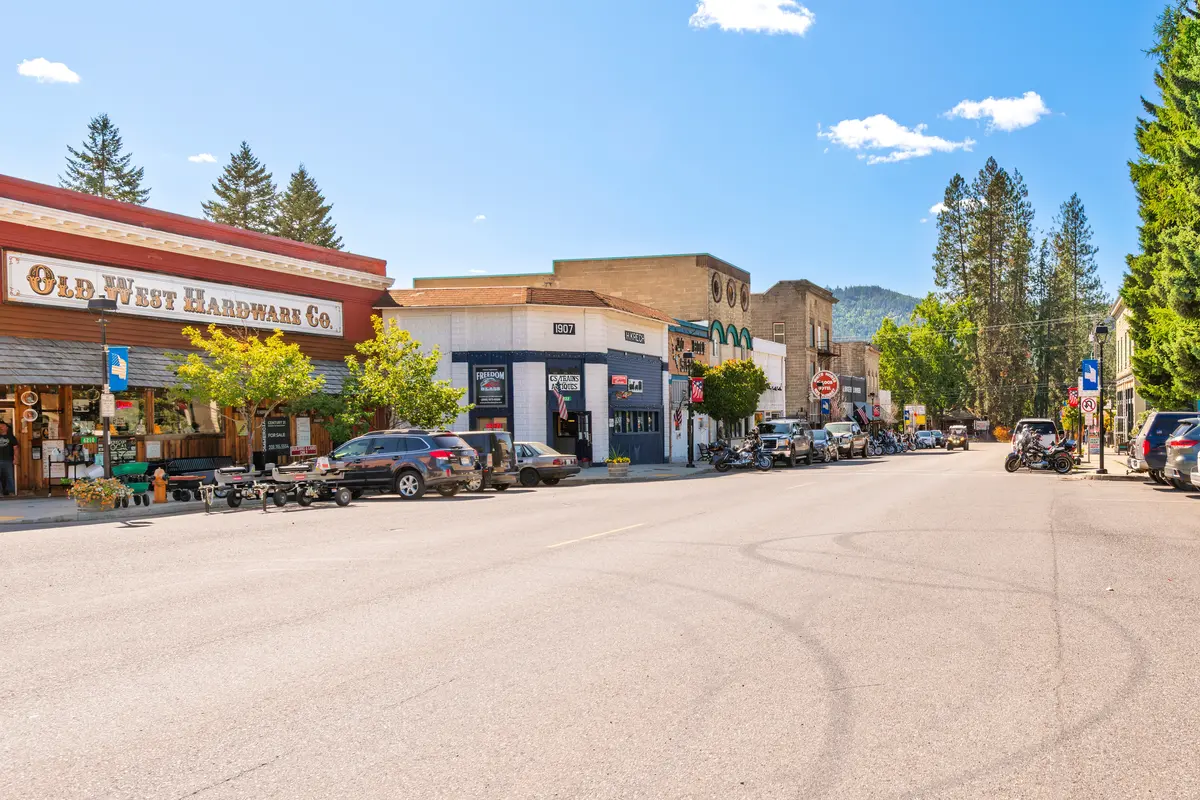
Even in low-crime small towns, risk isn't perfectly distributed. Commercial corridors — in Spirit Lake's case, the Maine Street Historic District and the area around W Maine St where most retail and dining sits — tend to see a higher share of property incidents than residential neighborhoods like Edgemere Estate or Treeport. This isn't alarming; it's the universal pattern in any town with a commercial center.
The Railroad Avenue corridor and areas adjacent to US-41 see heavier traffic volume, which historically correlates with marginally higher property incident rates compared to quieter residential pockets. If you're choosing between neighborhoods, the full neighborhood breakdown covers the character differences in more detail. From a safety-research standpoint, proximity to the commercial strip is the single variable most worth considering.
| Area / Corridor | Property Crime Exposure | Notes |
|---|---|---|
| Maine Street Historic District | Moderate | Commercial activity; higher foot traffic |
| Railroad Avenue | Moderate | US-41 adjacency; higher through-traffic |
| Lakeshore / Spirit Lake waterfront | Low–Moderate | Seasonal visitors; boat/gear theft risk in summer |
| Edgemere Estate | Low | Residential; lower traffic volume |
| Treeport | Low | Quiet residential pocket |
| Spirit Lake Village / Downtown | Low–Moderate | Central; mixed residential and small commercial |
| Blackwell Area / East Spirit Lake | Low | More rural character; lower density |
One area-specific note: the Lakeshore neighborhood sees a seasonal uptick in summer, when vacation traffic to the lake itself brings more unfamiliar vehicles through. Seasonal awareness — not alarm, just habit — is the right posture.
Looking to buy in Spirit Lake? Estimate your payment.
Enter your numbers to see an estimated monthly mortgage payment.
Estimate only. Excludes HOA fees and mortgage insurance. The interest rate above is a starting point, not a quoted rate — replace it with your own to see real numbers. Insurance is a flat placeholder, not a Spirit Lake quote.
Local Law Enforcement and Community Safety Infrastructure
Spirit Lake fields nine full-time law enforcement employees, including eight sworn officers, for a population of approximately 2,479 (City-Data, 2026). That works out to roughly one officer per 310 residents — a ratio that gives the city meaningful patrol presence relative to its size.
For comparison, many small Idaho cities of similar population are served exclusively by the county sheriff's department without a dedicated municipal force. Spirit Lake maintains its own police department, which means response is locally based rather than dispatched from a county facility that might be significantly farther away. In practical terms: if you call 911 for a property incident at 2 a.m., the response comes from officers stationed in town, not routed from a Kootenai County sheriff's unit positioned elsewhere in the county.
What the Community Actually Worries About
Six months after moving to Spirit Lake, most residents will tell you the same thing: the safety concern nobody warned them about is something entirely mundane. Nextdoor posts about speeding on residential streets and loose dogs outnumber crime-related posts by a wide margin — a telling signal about the gap between people's pre-move fears and their post-move reality.
This isn't a knock on Spirit Lake — it's the reality of any small town navigating growth. The point for anyone researching safety before a move: your actual daily risk calculus here is more likely to involve neighborly frustrations than crime avoidance. That's a good problem to have.
How Spirit Lake's Safety Profile Compares — and What to Research Before You Decide
Spirit Lake doesn't just look safe relative to urban benchmarks. It looks safe relative to the already-favorable North Idaho context. Nearby Rathdrum and Athol have similar small-town profiles, but Spirit Lake's multi-year downward trend and its BestPlaces index scores — 11.6 for violent crime and 20.5 for property crime against U.S. averages of 22.7 and 35.4, respectively — put it in the quieter tier even within that peer group.
Coeur d'Alene, about 36 minutes south, is a noticeably larger city with correspondingly higher absolute incident counts. That's not a reason to avoid Coeur d'Alene — it's a function of population — but it does mean Spirit Lake's size itself is part of its safety story.
| City | Violent Crime (per 1,000) | Property Crime (per 1,000) | Population (approx.) |
|---|---|---|---|
| Spirit Lake, ID | 1.2 | 2.1 | 2,479 |
| Idaho statewide avg | 2.54 | 9.67 | — |
| U.S. national average | 4.43 | ~19.6 | — |
Specific neighboring-city crime figures for Athol, Rathdrum, and Blanchard were not available from the verified sources used for this piece; the Idaho statewide figures serve as the most reliable regional benchmark for comparison.
What to Look Into Before Choosing a Neighborhood
The aggregate city figures tell you Spirit Lake is safe. They don't tell you whether a specific block on Railroad Avenue or a cul-de-sac in Edgemere Estate is the right fit for your household. A few targeted research steps are worth taking before settling on a specific area.
First, check the Kootenai County Sheriff's online incident log, which covers the broader county and can surface call patterns for specific addresses or street segments. Second, spend time in the neighborhood at different times of day — the stretch of W Maine St that hosts local restaurants and cafés feels very different at a busy Friday lunch versus a quiet Tuesday morning, and that texture matters. Third, talk to neighbors. In a town of 2,479, the people already living on your target street are the most current crime data source available.
Spirit Lake's overall numbers are genuinely favorable. The five-year trend is moving in the right direction. The community's own stated safety concerns center on quality-of-life matters, not violence. For most people considering a move to North Idaho, Spirit Lake will comfortably clear the safety threshold — the remaining question is which neighborhood fits everything else you're looking for.
Local Expert Takeaway: Spirit Lake's violent crime rate of 1.2 per 1,000 and property crime rate of 2.1 per 1,000 are among the lowest you'll find in Kootenai County — and both have been trending downward over the past five years. What actually drives safety conversations on local Nextdoor threads isn't break-ins; it's loose dogs in the Treeport neighborhood and the occasional speeding complaint on residential side streets. The Maine Street Historic District and the waterfront near City Park feel quiet and low-key on an ordinary evening. The data supports what you'd sense on the ground: this is a town where the crime statistics are a genuine selling point, not a marketing spin.
Quick Takeaways & FAQs
✅ Spirit Lake's violent crime rate of 1.2 per 1,000 residents is less than half of Idaho's already-low statewide average — making it one of the quieter small cities in North Idaho by this measure.
⚠️ Both violent and property crime have been declining over the past five years, but the city's small population means a single bad year can make annual comparisons look dramatic — the trend matters more than any one snapshot.
📍 Residents' top safety complaints on Nextdoor center on loose dogs and speeding on residential streets, not crime — a signal that day-to-day life here is about as low-risk as the statistics suggest.
What is Spirit Lake, Idaho's violent crime rate?
Is Spirit Lake safer than other cities in North Idaho?
What are the most common crimes in Spirit Lake, Idaho?
How many police officers does Spirit Lake have?
Which neighborhoods in Spirit Lake are considered safest?
Moving to Idaho?
Tell us what you need help with and we'll connect you with local resources.
