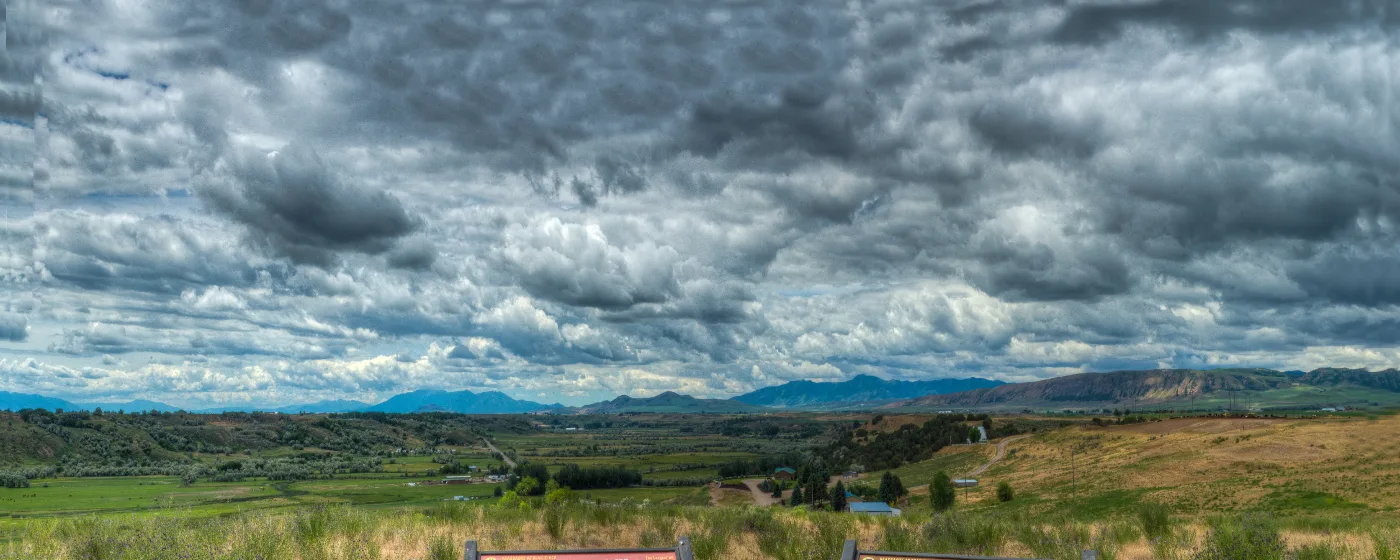
Maybe your Bay Area rent just crossed a threshold that made you type "small town Idaho" into a search bar. Maybe you've already got family in Cache Valley and the commute from Logan to Preston sounds manageable. Whatever brought you here, the first thing Californians discover about Preston — usually within a few weeks of arrival — is that it runs on a completely different clock. This is a city of 6,427 people in Franklin County, tucked into the Bear River Valley just 27 minutes north of Logan, Utah, and surrounded by farmland that hasn't changed much in a century. The pace is not a marketing pitch. It's structural.
Preston's economic backbone is public-sector employment — the Preston Joint School District 201, Franklin County government — plus agriculture and small retail. The median household income of $61,039 reflects that mix honestly; this is not a tech-transplant boomtown. What it is, is a stable community with deep LDS cultural roots, a genuine small-town social fabric, and enough regional infrastructure through Logan to cover the gaps. Preston High School is probably the most famous building in town, though for a reason nobody in the film industry planned: the 2004 cult film Napoleon Dynamite was shot here, and locals have made peace with the fact that their city will always share a name with Napoleon's llama.
Cost of living here scores 95.1 on the BestPlaces index — roughly 4.9% below the national average, and noticeably below what most Californians are used to paying. The cost of living page has the full breakdown on groceries, utilities, and transportation. On the housing side, the median sale price was $470,000 in March 2026 — a figure that will stop most Californians mid-sentence, regardless of which market they're leaving.
Whether you're seriously considering a move or just running the numbers, the sections below cover what Californians specifically need to know about Preston: the home price and tax comparison, the lifestyle shift, what the neighborhood landscape actually looks like, what surprises people after they arrive, and the honest reasons some people eventually leave.
Home Prices: What the California Dollar Buys Here
The median sale price in Preston was $470,000 in March 2026. That's the number you should build your budget around — not the outliers, not the wishful thinking from a year-old listing.
To put that in California terms: the median sale price across California hovered around $900,000 in early 2026. Even in the Inland Empire — one of California's more affordable corridors — medians ran substantially higher than what you'll find in Preston. What $470,000 buys in Preston is typically a four-bedroom single-family home on a full lot, often with a garage, often with mountain views, and often without a bidding war.
Entry-level homes — older construction, smaller footprint — start in the low-to-mid $300,000s. The upper end of the market, newer builds or larger properties with acreage, moves into the $600,000-plus range. Neither bracket requires the financial gymnastics most California buyers have been performing for the last decade.
The Property Tax Math
Preston's effective property tax rate is 0.64% — below California's effective rate of 0.70% and well below the national median of 0.89%. On a $470,000 home, that rate is materially lower than what most California homeowners have been paying, especially those who bought recently and don't have Proposition 13 protecting a lower assessed value.
The catch Californians sometimes miss: Preston home prices, while dramatically lower than coastal California, are not as far below the Idaho state average as you might expect. You're not buying into a distressed market — you're buying into a small, stable city where demand has been real and inventory stays tight. Don't expect to time a crash.
Idaho also has no estate tax and no inheritance tax, which matters to buyers thinking about multi-generational wealth transfer. For the full picture on property tax figures, effective rates, and how Idaho's homeowner's exemption works, see the cost of living page.
The Tax Comparison: Idaho vs. California
This is where the financial case for leaving California becomes concrete. The income tax shift alone can be worth tens of thousands of dollars a year, depending on your bracket.
| Tax Type | California | Preston / Idaho |
|---|---|---|
| State Income Tax Structure | Progressive, 1% – 12.3% | Flat rate, 5.3% |
| Top Marginal Rate (incl. surcharge) | 13.3% (income over $1M) | 5.3% — no surcharge |
| State Sales Tax Rate | 7.25% (highest in the U.S.) | 6.00% |
| Average Combined Sales Tax | 8.99% | 6.03% |
| Effective Property Tax Rate | 0.70% | 0.64% |
| Estate / Inheritance Tax | None (state level) | None |
What the Income Tax Shift Actually Means
Idaho moved to a flat 5.3% state income tax rate on January 1, 2025, when Governor Brad Little signed HB 40. For someone earning $120,000 in California, the state income tax burden under California's progressive structure can run to 9–10% of income at that level — a substantial gap above Idaho's flat 5.3%.
The sales tax shift is smaller but adds up daily. California's average combined rate of 8.99% — the state base alone is the highest in the country at 7.25% — compares to Idaho's combined average of 6.03%. That's nearly three percentage points off every transaction, every week.
What Doesn't Change
If you work remotely and your employer is a California company, California may still claim the right to tax your income even after you move — particularly if you make regular trips back for work. This is the "California source income" question, and it catches remote workers off guard more than any other tax issue. Get a CPA who knows Idaho-California residency rules before you close on a house.
Federal taxes follow you anywhere. And Idaho does tax retirement income — Social Security benefits are partially taxable at the state level, though deductions exist. The full tax picture for Preston residents is on the cost of living page.
The Lifestyle Shift: What California Doesn't Prepare You For
Six months in, most Californians say some version of the same thing: "I didn't realize how much I was carrying." The commute, the noise, the cost anxiety that runs in the background of every financial decision — Preston doesn't just lower those things. It removes them structurally.
The Geographic Reality
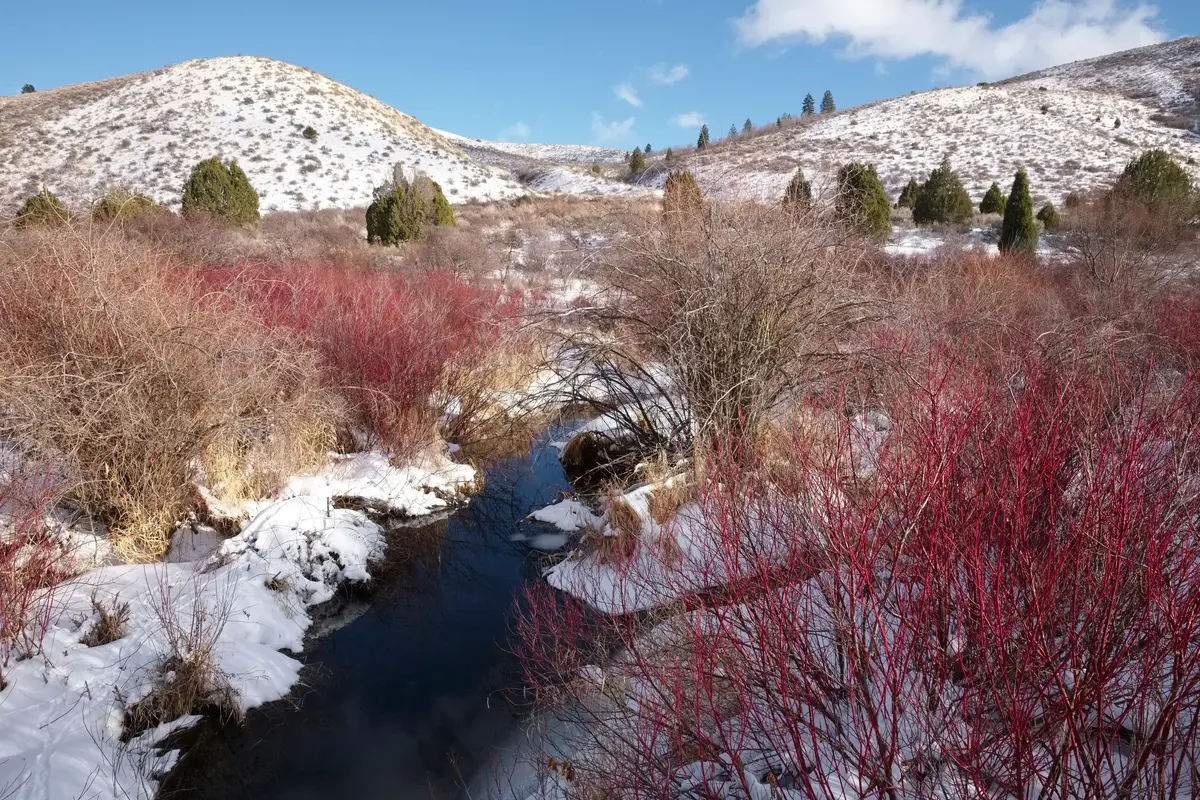
Preston sits in a valley. The Wasatch Range runs along the eastern horizon. The Bear River moves through farmland to the west. There is no urban core within a short drive — Logan, Utah is 27 minutes south and handles most of the regional needs: bigger-box retail, a genuine restaurant district, and a university's cultural calendar. The regional city functions as Preston's amenity layer.
What Preston itself offers is the Worm Creek Opera House for live performances, the Franklin County Fairgrounds for community events through summer and fall, and the Bear River Massacre National Historic Landmark for anyone who takes Idaho history seriously. That landmark — the site of a January 1863 attack that remains one of the deadliest massacres of Indigenous people in U.S. history — is not a tourist attraction in the breezy sense. It is a place that asks something of visitors.
What Locals Know
The social center of Preston is more decentralized than California transplants expect. People gather at the fairgrounds, at school events, at church — Preston has a pronounced LDS cultural presence that shapes the social calendar in ways that are quiet but pervasive. You don't have to be a member of the Church of Jesus Christ of Latter-day Saints to feel welcome, but you'll understand the community's rhythm faster if you understand that context.
King's Kôfē on S 4th Street East is the drive-thru coffee spot where a good portion of the town starts its morning. Tattles Bar & Grill on W Oneida Street handles the breakfast and lunch crowd that wants table service. A handful of family-owned Mexican restaurants round out the local dining options. These are small-town institutions, not restaurant-row destinations — and that distinction is the whole point.
For outdoor access, the Cache National Forest is close enough to be a regular Tuesday evening option, not a weekend expedition. That accessibility is something Californians from the Bay Area or Los Angeles genuinely underestimate until they're living it.
Looking to buy in Preston? Estimate your payment.
Enter your numbers to see an estimated monthly mortgage payment.
Estimate only. Excludes HOA fees and mortgage insurance. The interest rate above is a starting point, not a quoted rate — replace it with your own to see real numbers. Insurance is a flat placeholder, not a Preston quote.
Neighborhoods: What to Know Before You Drive the Streets
Preston's eight recognized neighborhoods are small enough that a California buyer used to sprawling suburban zones needs to recalibrate expectations. These aren't master-planned communities with HOA gates — they're organic, walkable-ish pockets of a small city where character differences are measured in street feel and lot size, not commute distance.
| Neighborhood | Character | Best For |
|---|---|---|
| Downtown Preston | Historic commercial core; the Worm Creek Opera House and Oneida Stake Academy anchor the civic identity; older homes on compact lots | Walkable First-Time |
| North Preston | Established residential streets; mix of mid-century and newer construction; close to schools | Families School |
| South Preston | Quieter, more spread out; larger lots; some agricultural character at the edges | Quiet Nature |
| East Bench | Elevated position with valley views; newer builds common; the most sought-after terrain for buyers coming from scenic-view markets | Views Luxury |
| West Side | Workaday residential; more affordable entry points; straightforward access to US-91 | Value Commuter |
| Oakwood | Tree-lined streets; established neighborhood feel; popular with families who want sidewalks and a walkable neighborhood vibe | Families Walkable |
| Pioneer Area | Deep residential character; older homes with established landscaping; Preston's closest equivalent to a historic district feel | Quiet First-Time |
| Whitney | Semi-rural on the outskirts; larger parcels; more privacy; the choice for buyers who want acreage without losing the city address | Privacy Nature |
East Bench draws the most interest from California buyers who are used to paying premiums for elevation and sight lines — and it delivers on both. Whitney is the neighborhood that surprises people who assumed they'd have to go rural-rural to get space.
For a deeper look at each area's street-level character and what to watch for, the neighborhoods page has the full breakdown.
Honest Tradeoffs: Why Some Californians Stay, and Why Some Leave
Why People Stay
The financial argument is real and durable. Lower home prices relative to where they're coming from, a flat 5.3% state income tax versus California's top bracket of 13.3%, a sales tax rate nearly three points below what Californians pay daily — these aren't abstract savings. They show up in bank accounts every month. For remote workers earning California salaries while living on Preston prices, the financial gap is genuinely life-changing.
The safety picture reinforces the quality-of-life case. Violent crime runs at 0.64 per 1,000 residents — an environment where kids actually do ride bikes in the neighborhood, where people leave cars unlocked, and where the concern level most California parents carry as background noise simply dissipates. See the safety page for the full crime context.
The school district — Preston Joint School District 201 — runs with the engagement level you'd expect from a community where teachers live next door to their students. The schools page has ratings and specifics.
Why People Leave
Preston's median household income is $61,039 — noticeably below Idaho's statewide median. If your income depends on local employment rather than remote work, the job market here is limited to education, government, agriculture, and small retail. That's the honest ceiling. Ambition that requires a specific industry — tech, finance, entertainment, biotech — has nowhere to go without a commute to the regional city at minimum, or a relocation back to a metro.
The cultural narrowness is the other honest answer. Preston's social life is organized around a specific religious and agricultural heritage. If you moved from a California city specifically for its cultural diversity, international food scene, or arts programming, Preston will feel thin in those categories. The Worm Creek Opera House runs a genuine season, and the regional university scene fills some gaps, but this is not a trade that works for everyone.
The traffic chokepoint most locals know: US-91 southbound through town during the agricultural harvest windows — late summer into fall — when equipment and truck traffic backs up through the main corridor between roughly 7 and 9 a.m. It's not an LA situation, but it's the one time Preston's roads actually make you wait. The back-road alternative is cutting east toward Clifton on local roads, which shaves a few minutes and avoids the worst of it.
The people who stay long-term are the ones who moved here for the specific thing Preston actually offers: financial breathing room, physical safety, outdoor proximity, and a community that runs on relationship rather than transaction. The people who leave are usually the ones who hoped it would feel more like a smaller California — it doesn't, and it isn't trying to.
Local Expert Takeaway: Preston rewards Californians who move here for the right reasons — lower home prices relative to where they're coming from, a flat 5.3% state income tax that represents real monthly savings for most earners, and a small-city rhythm that's genuinely different from suburban California rather than a diluted version of it. The morning coffee run to King's Kôfē on S 4th Street East, the weekend crowd at Tattles Bar & Grill on W Oneida, the fall fair at the Franklin County Fairgrounds — these are the social structures of Preston. If that sounds like enough, it usually is. If it sounds thin, trust that instinct before you close.
Quick Takeaways & FAQs
✅ Preston's median sale price of $470,000 (March 2026) represents a dramatic drop from most California markets, and Idaho's flat 5.3% income tax rate is roughly half of California's top bracket.
⚠️ Preston's local job market is anchored in education, government, and agriculture — remote workers thrive here, but career changers looking for private-sector tech or finance roles will find the options limited without commuting to the regional city.
📍 US-91 southbound through town backs up during late-summer and fall harvest season — cut east toward Clifton on local roads to avoid the worst of it on weekday mornings.
How much cheaper are homes in Preston, Idaho compared to California?
What is Idaho's income tax rate compared to California's?
Can California still tax my income after I move to Preston, Idaho?
What is the property tax rate in Preston, Idaho?
What do most Californians find hardest about adjusting to Preston?
Moving to Idaho?
Tell us what you need help with and we'll connect you with local resources.
