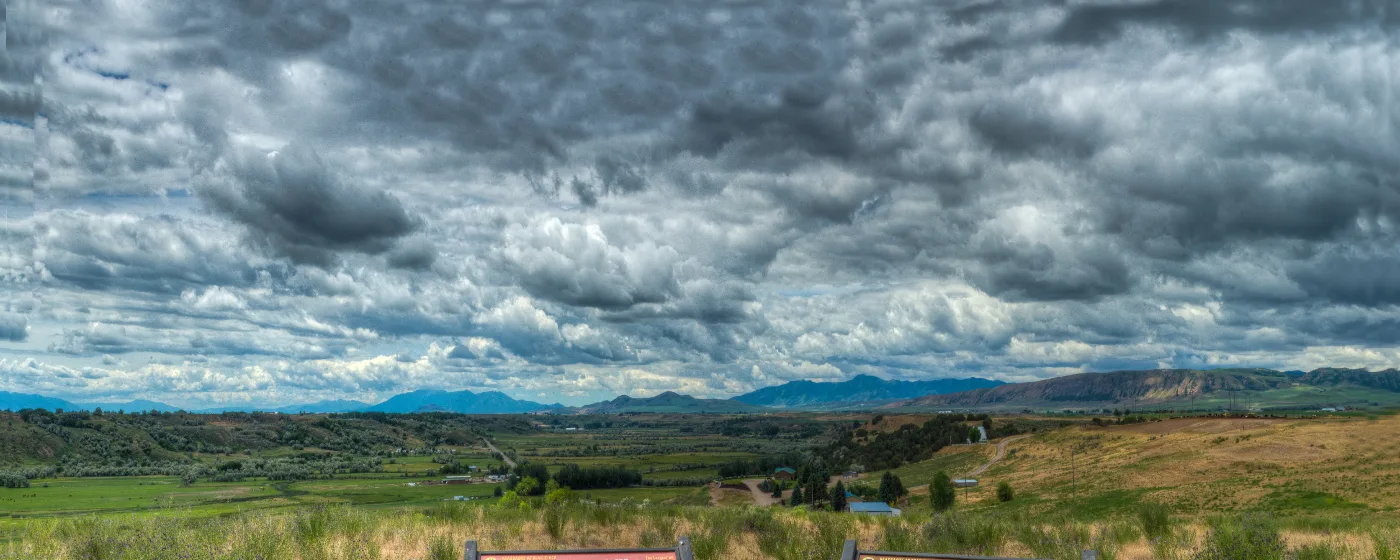
Preston surprises people who do the math. On paper, it's a small agricultural town in Franklin County — population just over 6,400, anchored by farmland, the Bear River bottom, and a tight-knit community most locals know by name. But its cost of living doesn't behave like a remote rural town anymore. The median household income here sits at $61,039, and the median home price has climbed well above what that income can comfortably absorb at conventional ratios. The honest tension in Preston's cost story is that its day-to-day expenses are genuinely below the national average, while its housing market has repriced sharply over the past few years — driven partly by its position inside the Logan, Utah–Idaho Metropolitan Statistical Area and partly by buyers fleeing higher-cost communities to the south.
What keeps Preston livable for most residents is everything outside the mortgage. Rocky Mountain Power delivers electricity at rates noticeably below the national average. Groceries run well under what you'd pay in a mid-size city. There's no local income tax layer on top of Idaho's flat rate, and the property tax effective rate is among the lowest in the region. Preston's location also opens up Logan, Utah — a broader job market and fuller range of services — without requiring you to pay Logan prices to live there.
The comparison that matters most for most relocating buyers is Preston versus Logan and the surrounding Cache Valley communities. Preston is generally more affordable on the buy side than comparable Cache Valley towns, though the gap has narrowed. Against the Treasure Valley or larger Intermountain West metros, Preston is a different market entirely — both in price and in what you're buying into. The BestPlaces index puts Preston's overall cost of living at approximately 95.1 against a U.S. average of 100, meaning total costs run about 4.9% below the national average — but that headline number obscures the housing pressure underneath it.
Whether you're comparing Preston to Franklin or Richmond a few miles away, or deciding between Idaho small-town life and something closer to a metro, the sections below break down Preston's housing costs, rent and buy dynamics, everyday expenses, nearby-city comparisons, and the full Idaho tax picture so you can build a realistic monthly budget.

What It Really Costs to Live in Preston
Preston's cost of living is below the national average on almost every line item except one: the price of buying a home. The median sale price as of March 2026 is $470,000 — a figure that would have seemed improbable for a Franklin County farming town a decade ago, and one that now produces a home-price-to-income ratio of roughly 7.7x against the local median household income. That ratio is elevated relative to historical norms and reflects a wave of rural Idaho appreciation that hit small towns across the region.
On every other measure, Preston is genuinely affordable. Food costs run far below the national average, utilities are among the lowest in the country, and the tax structure is straightforward and comparatively light. If you're renting or you're bringing equity from a higher-cost market, Preston's overall cost posture feels like relief. If you're a first-time buyer earning the local median, the math is harder than the BestPlaces headline suggests.
Compared to Logan, Utah — the commercial and employment hub roughly 27 miles south — Preston is noticeably less expensive to buy into, though the lifestyle trade-offs are real. Compared to the small Idaho communities immediately surrounding it, like Franklin and Clifton, Preston is the largest market and carries the highest prices. What drives the number here is not a booming local economy; it's location — positioned between Idaho's wide-open spaces and Utah's Cache Valley, with a rural-small-town feel that remote workers and retirees have increasingly priced in.
Housing: Rent vs Buy in Preston
The Buy Side
The city-wide median sold price of $470,000 (Homes.com, March 2026) is your anchor. Entry-level homes — older construction, smaller square footage, sometimes with deferred maintenance — start in the low-to-mid $300,000s. Above the median, you're typically looking at newer builds, larger lots, or properties with mountain views. Preston doesn't have a luxury tier in the conventional sense; the top of the market here reflects land and acreage more than amenities.
The effective property tax rate is approximately 0.64% — meaningfully below the national median rate of 0.89% and well below what you'd pay in most Western states. For a home at the city-wide median, that translates to a property tax bill that is among the more manageable in the region. Use the mortgage calculator below to model your full monthly housing cost at your specific price point and down payment.
The Rent Side
Rental inventory in Preston is thin. This is a buyer-dominant market in a small town, and most landlords are individual property owners rather than property management companies. Expect to pay roughly $900–$1,200 per month for a two-bedroom unit in reasonable condition; nicer or newer rentals push toward $1,400. Availability is the bigger challenge — when a unit comes up, it tends to move quickly through word of mouth rather than through listing platforms.
When Renting Makes Sense
If you're relocating to the area but haven't committed yet, renting in Preston for a year before buying is a reasonable approach — you'll learn the town, understand which parts of the market appreciate fastest, and avoid a rushed purchase in a thin-inventory environment. The catch is that rentals are genuinely scarce, so line one up before you arrive rather than assuming you'll find something after moving in.

Everyday Costs Beyond Housing in Preston
Outside of housing, Preston is one of the more affordable small towns in the region. Rocky Mountain Power, the local electric utility, delivers power at approximately 12.35 cents per kWh — well below the national average of 18.44 cents per kWh. A typical Idaho residential electric bill runs around $119 per month compared to the national average of $179. In Preston's high-desert climate with cold winters, you'll also carry a natural gas or propane bill for heating; budget an additional $80–$150 per month during December through February. Total utilities for a two-bedroom home typically land in the $160–$240 range depending on season.
Groceries in Preston run far below what most people moving from urban areas are used to. Food costs for a single person come in at roughly $276 per month based on current cost-of-living data — well below what you'd spend in Logan, Salt Lake City, or any Treasure Valley market. The local options are limited to smaller grocery and convenience stores; for a full selection at warehouse prices, most residents make a weekly or bi-weekly run to Logan. That drive is part of the lifestyle here, not an inconvenience — most Preston households factor it into their routines automatically. Local services follow the same pattern: what's available in town covers everyday needs, and anything more specialized means a trip south.
| Category | Typical Monthly Cost | Notes |
|---|---|---|
| Housing (2BR rent) | $900–$1,400 | Rental inventory is thin; owners should use the mortgage calculator above for a purchase estimate |
| Utilities (electric, gas, water) | $160–$240 | Rocky Mountain Power rates are well below national average; gas heating adds cost in winter |
| Groceries | $276–$450 | Single-person estimate ~$276/mo; family costs higher. Budget a Logan run for full selection |
| Transportation & Gas | $150–$280 | Car is essential; gas prices track Idaho averages. Budget extra if driving to Logan regularly |
| Phone & Internet | $80–$150 | Internet options are more limited than in larger cities; fiber not universally available |
| Misc / Discretionary | $100–$300 | Dining at local restaurants and pizza spots on the main corridor; coffee at independent cafés downtown |
These are estimates for planning purposes; individual costs vary by household size, lifestyle, and how often you make the run to Logan.
Looking to buy in Preston? Estimate your payment.
Enter your numbers to see an estimated monthly mortgage payment.
Estimate only. Excludes HOA fees and mortgage insurance. The interest rate above is a starting point, not a quoted rate — replace it with your own to see real numbers. Insurance is a flat placeholder, not a Preston quote.
Preston vs Nearby Cities: Cost Comparison
| City | Median Home Price | Typical 2BR Rent | Cost vs Preston |
|---|---|---|---|
| Preston, ID | $470,000 (Mar 2026) | $900–$1,400/mo | — Baseline — |
| Franklin, ID | ~$380,000–$420,000 (approx.) | $750–$1,100/mo | Noticeably cheaper to buy; very limited inventory |
| Dayton, ID | ~$300,000–$380,000 (approx.) | $700–$1,000/mo | Cheaper, but minimal services and amenities |
| Richmond, UT | ~$420,000–$480,000 (approx.) | $950–$1,350/mo | About the same; Utah property taxes slightly higher |
| Clifton, ID | ~$290,000–$360,000 (approx.) | $700–$950/mo | Cheaper; truly rural with very few services |
| Logan, UT | ~$400,000–$520,000 (approx.) | $1,100–$1,700/mo | Comparable to slightly higher on buy; rents noticeably higher |
The pattern is consistent: Preston sits near the top of its immediate peer group on home prices, reflecting its size and relative services, but it trades at a discount to Logan on the rental side — a meaningful distinction if you're a remote worker who wants to stretch your dollar.
Taxes & the Bottom Line for Preston
Idaho Income Tax
Idaho moved to a flat 5.3% individual income tax rate effective January 1, 2025, after Governor Brad Little signed HB 40 in March of that year — down from 5.695%. For most Preston households, that's a predictable and relatively moderate income tax burden. Idaho does not tax Social Security benefits, and certain military retirement pay qualifies for a deduction, making the state meaningfully attractive for retirees on fixed income.
Sales Tax
Idaho's state sales tax is 6.0%, and the combined state-and-local rate averages just 6.03% — one of the lowest combined rates in the country, according to the Tax Foundation. The one friction point: Idaho taxes groceries at the full 6% rate. The state partially offsets this with a grocery tax credit of $155 per person (increased from $120, effective 2025), claimed annually on your Idaho return. For a family of four, that's $620 back at tax time — not nothing, but not a full offset either.
Property Tax
Preston's effective property tax rate of approximately 0.64% is well below the national median. On a home at the city-wide median price discussed earlier, the annual property tax burden is one of the more manageable in the West — and well below what buyers pay in most Utah communities across the border.
The Bottom Line
Preston's overall cost structure fits households that own their home with significant equity, earn above the local median, or are downsizing from a higher-cost market. The grocery tax credit, low property tax rate, and below-average utility costs add up to real savings. The stretch comes for buyers trying to purchase near the median price on a local salary — that home-price-to-income ratio is elevated, and it doesn't disappear just because the rest of the cost of living is modest. If you're relocating with equity from California, Salt Lake City, or the Wasatch Front, Preston's tax environment and everyday costs will feel like a genuine improvement. If you're a first-time buyer earning the local median, model the mortgage carefully before committing.

Local Expert Takeaway: Preston's cost of living is genuinely below average on almost everything except the house itself. Rocky Mountain Power keeps electric bills far below what most newcomers expect, and a grocery run combined with a stop for a local meal costs less than it would anywhere in the Logan valley. The real budget pressure is the home-price-to-income ratio — at roughly 7.7x the local median household income, the $470,000 median demands either outside equity or a dual income. Run your full numbers before assuming 'small town Idaho' means affordable housing.
Quick Takeaways & FAQs
✅ Preston's overall cost of living scores about 4.9% below the national average, with utilities and groceries running well under what most relocating buyers are used to paying.
⚠️ The median home price of $470,000 produces a home-price-to-income ratio of roughly 7.7x against the local median household income — elevated for a town this size, and the biggest budget risk for buyers without outside equity.
📍 Preston sits inside the Logan, Utah–Idaho MSA: proximity to Logan gives residents access to a larger job market and full retail without paying Logan-area rental prices.
What is the median home price in Preston, Idaho?
What is the property tax rate in Preston, Idaho?
How much does it cost to rent in Preston, Idaho?
Does Idaho tax groceries, and how does that affect Preston residents?
Is Preston, Idaho cheaper to live in than Logan, Utah?
Moving to Idaho?
Tell us what you need help with and we'll connect you with local resources.
