Maybe you've been priced out of your Bay Area neighborhood, or your company went remote and you started wondering what a real housing budget could buy somewhere else. Maybe you drove US-95 once through north-central Idaho and the landscape stopped you cold. Whatever brought Grangeville onto your radar, the numbers here land differently than you're used to. The Zillow Home Value Index pegged Grangeville's typical home value at $314,000 in June 2026 — a figure that buys a full-size house with a yard, not a two-bedroom condo in a suburban corridor. That arithmetic is the main reason Californians keep showing up here.
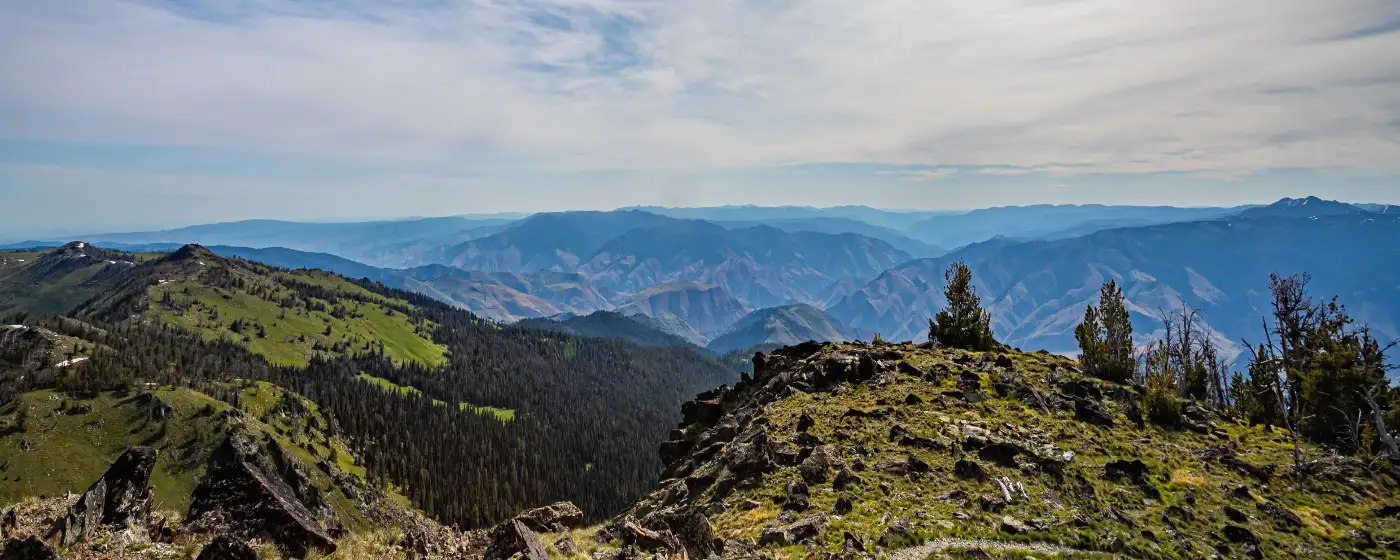
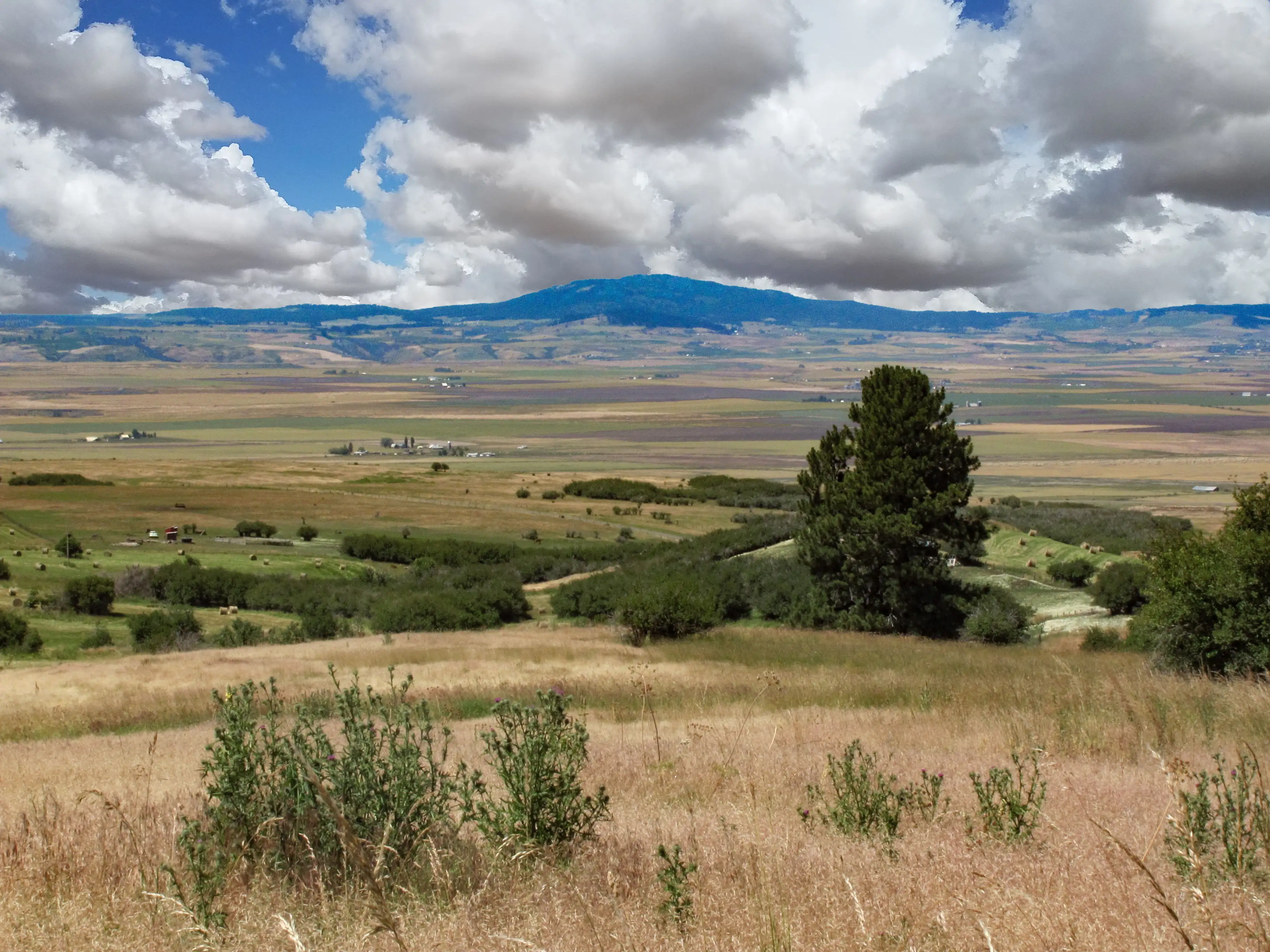
Grangeville sits at roughly 3,400 feet on a high prairie in north-central Idaho, anchored by US-95, which runs the spine of the state from Nevada to Canada. The city of about 3,625 people is Idaho County's seat, which means county government, courts, and services are all concentrated here. The largest employers are Mountain View School District #244, Idaho County government, and Idaho Forest Group — a labor market built around timber, education, and local services rather than tech or finance. If you're bringing remote income from California, that insulates you from the local wage structure and changes the calculus considerably.
The overall cost of living in Grangeville runs approximately 12–13% below the U.S. national average, with food costs roughly 17% below average and housing well below that benchmark too. What you give up is density and amenity. There is no Trader Joe's, no light rail, no airport hub. Lewiston — about 75 minutes north on US-95 — is the nearest mid-size city, and it's where you'll head for a broader retail selection and commercial air service. The compromise is a specific one: you are buying space, quiet, and access to Clearwater National Forest, the South Fork of the Clearwater River, and Nez Perce National Historical Park in exchange for accepting that some things will require a drive.
Whether you're seriously considering a move or still in the research phase, this guide covers the real California-to-Grangeville comparison on home prices and taxes, what daily life looks like after the U-Haul is unpacked, the lifestyle shifts that catch people off guard, and what kind of buyer this city genuinely suits.
The Home Price Gap: California vs. Grangeville
The single most dramatic number in this comparison is the home price. California's statewide median sits above $800,000. Grangeville's typical home value was $314,000 in June 2026, per the Zillow Home Value Index.
That gap doesn't just mean a lower mortgage payment. It means a down payment that's achievable without liquidating a retirement account. It means no bidding war where you waive every contingency. It means buying a 1,800-square-foot house on a real lot rather than competing for a starter condo.
| Factor | California (statewide) | Grangeville, ID |
|---|---|---|
| Typical home value | ~$800,000+ (mid-2026 median) | $314,000 (Zillow ZHVI, June 2026) |
| Effective property tax rate | ~1.0% baseline (Prop 13) | 0.35% |
| State income tax (flat/top rate) | Up to 13.3% | 5.3% flat (effective Jan 1, 2025) |
| State Disability Insurance (SDI) | 1.3% (2026, no wage cap) | None |
| Statewide sales tax | 7.25% base (often higher with local add-ons) | 6.0% flat, no local additions |
| Grocery tax credit | None | $155/person/year (refundable) |
| Cost of living vs. national avg. | Well above | ~12–13% below |
* ZHVI = Zillow Home Value Index.
At Grangeville's 0.35% effective property tax rate, the annual property tax on a $314,000 home works out to roughly $1,099. That figure is well below Idaho's own statewide median effective rate of 0.43%, and far below California's Proposition 13 baseline of 1% on assessed value — which, on a freshly purchased $800,000 home, would run closer to $8,000 annually before local assessments.
For a family arriving from coastal California, the psychological shift of not calculating whether you can afford the property tax bill on top of the mortgage is real. The property tax here is almost an afterthought.
What the Price Difference Actually Buys
In Grangeville, $314,000 is the middle of the market. For more detail on how the city's specific areas differ in character and price range, see the Grangeville neighborhoods guide.
California buyers often underestimate how different the buying process feels when inventory is less compressed and sellers aren't fielding fifteen offers. That doesn't mean every deal is easy — rural markets have their own quirks around inspections, well and septic systems, and rural lender familiarity — but the emotional tenor of purchasing here is fundamentally different from what Californians have experienced at home.
The Tax Picture: Idaho vs. California Side by Side
The home price gets the headlines, but the ongoing tax environment is what Californians feel every April — and in Grangeville, it's a genuine departure from what you've been paying.
Income Tax: The Flat Rate Advantage
Idaho moved to a flat 5.3% income tax rate effective January 1, 2025. There is no local income surtax in Grangeville, and Idaho has no equivalent of California's State Disability Insurance.
California's structure looks different at every income level. The top marginal rate reaches 13.3% (including the 1% Behavioral Health Services Tax on income over $1 million). Even mid-range earners in California face brackets in the 8–10% range before SDI at 1.3% — with no wage cap in 2026 — is added on top.
The crossover point matters if you're doing the math before your move: directional analysis suggests that at taxable income roughly below $81,000, California's progressive brackets can actually produce a lower bill than Idaho's flat 5.3%. Above that threshold, Idaho comes out ahead — and the gap widens meaningfully as income increases. If you're bringing a remote tech salary, a W-2 above six figures, or capital gains from a California home sale, the savings are real and compounding.
Sales Tax: Simpler, but Groceries Aren't Free
Idaho's statewide sales tax is 6%, and Grangeville adds nothing on top of it. The catch Californians don't expect: Idaho taxes groceries at the full 6% rate. The state offsets this with a refundable Grocery Tax Credit of $155 per person per year — raised from $120 in the 2025 legislative session — worth $620 annually for a family of four.
That credit doesn't fully erase the grocery tax for high-spending households, but it softens it. Budget-conscious families should factor it in rather than treating grocery tax as a pure loss.
Idaho's Overall Tax Competitiveness
The Tax Foundation ranked Idaho 9th overall on its 2026 State Tax Competitiveness Index, reflecting the flat income tax, moderate sales tax, and low property tax burden. For a California transplant accustomed to one of the country's highest state tax burdens, the shift is tangible — not just on paper but in take-home pay starting with the first Idaho paycheck.
For a full breakdown of what Idaho taxes look like across income and property scenarios, the Grangeville cost of living page goes deeper on the numbers.
Daily Life After the Move: What Changes and What Doesn't
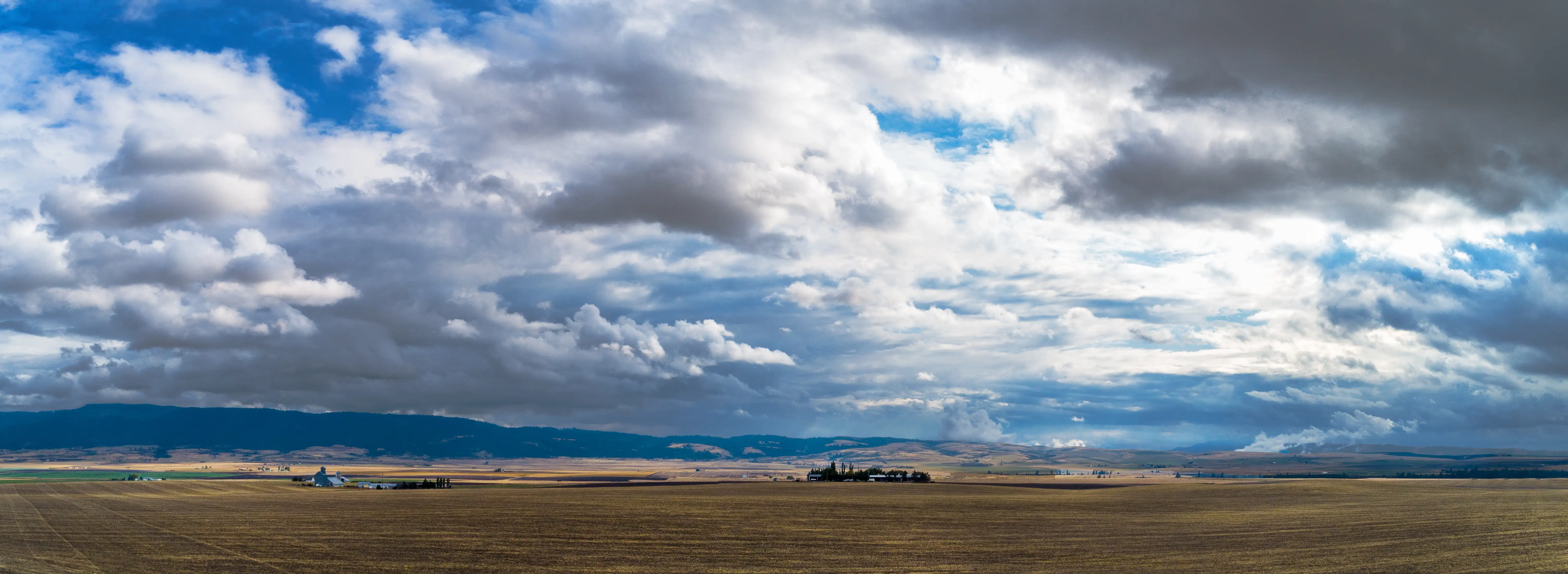
Six months in, most California transplants say the same thing: the silence took adjustment. Not a complaint — more of a recalibration. Grangeville has about 3,625 residents, one main commercial corridor along West Main Street, and a pace that bears no resemblance to the Bay Area, Los Angeles, or even Sacramento.
Getting Around
Roughly 87.6% of Grangeville workers drive to work. The average local commute is about 10–11 minutes. There is no public transit system of any kind — no bus route, no rideshare pool, no light rail option on a future ballot. Personal vehicle ownership isn't optional here; it's the infrastructure.
For Californians who leaned on BART, Caltrain, or metro rail systems, this is a genuine lifestyle shift that goes beyond inconvenience. You will own a car, and in winter, you will want one that handles snow. The upside: that 10-minute average commute is not ironic. Most people in town can reach their workplace without a freeway.
Lewiston is about 75 minutes north on US-95. That's where you'll find a broader retail selection and the Lewiston-Nez Perce County Regional Airport with commercial service to Boise and Seattle.
Food, Coffee, and Where People Actually Go
Main Street has more than you'd expect for a town this size. A full-service restaurant on West Main Street anchors sit-down dining — the kind of place where locals actually celebrate birthdays. An independent cafe on the same corridor draws the morning crowd that would otherwise be hunting for a decent espresso. Evening dining options are limited but genuine, with a handful of local spots that hold their own.
What you will not find: the density of dining and retail options that Californians take for granted in any suburb over 50,000 people. The nearest Costco is in Lewiston. The grocery anchor in town is a locally operated full-service store. Adapt your shopping habits and you'll be fine; resist adapting and you'll be making a lot of 75-minute round trips.
Outdoor Access as a Core Amenity
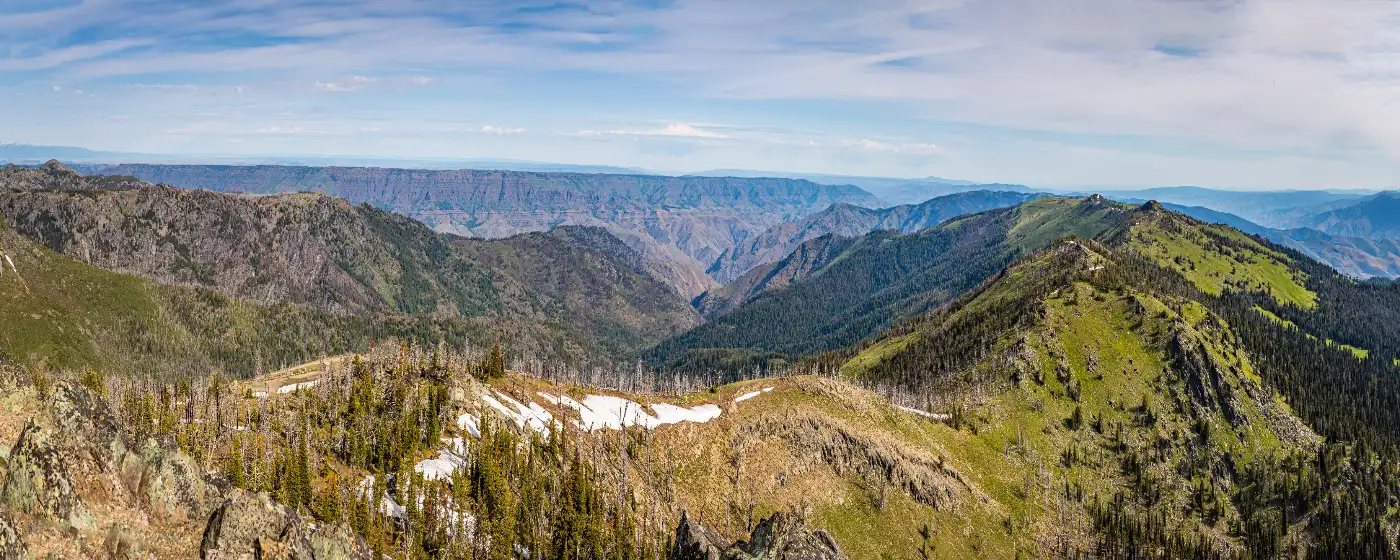
This is the part that surprises Californians most, in a good way. Clearwater National Forest, the South Fork of the Clearwater River, and Nez Perce National Historical Park are all within reach of Grangeville in a way that is genuinely uncommon — you do not drive two hours to a trailhead. Hunting, fishing, whitewater rafting on the Salmon River corridor, and snowmobiling in winter are not weekend bucket-list events here; they are how residents spend ordinary Saturdays. For families arriving from high-cost California metros, the proximity to this quality of public land — land they don't pay access fees to use — represents a real, if unquantifiable, addition to quality of life.
Looking to buy in Grangeville? Estimate your payment.
Enter your numbers to see an estimated monthly mortgage payment.
Estimate only. Excludes HOA fees and mortgage insurance. The interest rate above is a starting point, not a quoted rate — replace it with your own to see real numbers. Insurance is a flat placeholder, not a Grangeville quote.
What Nobody Tells You Before the Move
The Winters Are Serious
Grangeville sits at 3,400 feet on an exposed high prairie. Winters bring real snow, and the roads — including US-95 — can close or become treacherous. Californians from coastal climates routinely underestimate this in their first fall and overprepare in their second. All-wheel drive or four-wheel drive is not a luxury; it is a monthly operating expense you should budget for.
The Job Market Is Local
If you are bringing remote income, this paragraph doesn't apply to you. If you're planning to find work locally, the market is built around the school district, county government, and the timber industry through Idaho Forest Group. Professional-sector employment in finance, tech, or law does not exist here in any meaningful concentration. This is a feature for remote workers and a genuine constraint for everyone else.
The Social Geometry Is Different
People who move here from California often describe a version of the same friction: the social circles are established and generational, and it takes longer to enter them than it did in the more transient communities they came from. This is not hostility — Grangeville residents are, by most accounts, genuinely neighborly — but it is not the California suburb experience of meeting your neighbors at the HOA kickoff. Give it a year before you decide you haven't connected.
Why People Leave
The honest answer is usually one of three things: the isolation accumulates; teenagers reach high school and parents start worrying about post-graduation options without a college or city nearby; or a job change makes the Lewiston commute no longer workable. None of these are fatal flaws if you enter with clear eyes. They are genuine limits worth naming before you sign.
The Traffic Chokepoint That Matters
US-95 through downtown Grangeville — particularly the stretch around West Main Street near the Highway 13 junction — backs up during logging truck traffic in the early morning hours and again around afternoon shift changes. It is nothing compared to the 101 or the I-80 interchange, but it catches newcomers off guard because the town otherwise moves so freely. If you are commuting north toward Kooskia or south on US-95, leave ten minutes earlier than you think you need to in the 7–8 a.m. window.
Is Grangeville the Right Move for You?
The case for Grangeville is straightforward: home prices that are genuinely attainable, a tax environment noticeably more favorable than California's, a 10-minute commute, and outdoor access that most Californians would spend a weekend driving to reach from their current address. The case against it is shorter but worth reading before you make an offer.
| Buyer Type | Grangeville Fit | Key Consideration |
|---|---|---|
| Remote Workers | Strong | Bring your income; local wages won't replace a California salary |
| Families with Kids | Moderate–Strong | Mountain View SD #244 serves K-12; college options require leaving |
| Outdoor-Focused Buyers | Very Strong | Clearwater National Forest and Salmon River access is the real draw |
| First-Time Buyers | Strong on price | Entry-level inventory exists; budget for a vehicle and rural utilities |
| Lewiston Commuters | Moderate | 75 minutes each way on US-95; manageable but not trivial |
| Walkability-Focused Buyers | Weak | No transit; a car is required infrastructure |
| Privacy / Rural Lifestyle | Very Strong | Small-town social dynamics take time to navigate |
Remote workers arriving with California income and flexible schedules get the best version of this trade. They can afford the market comfortably, access Lewiston when needed, and use the outdoor access that defines why locals stay.
The buyers who tend to be disappointed are those who arrive expecting a smaller version of a California suburb — walkable retail, a diverse restaurant scene, and urban-level convenience. Those things exist in Lewiston and Boise, not in Grangeville. If you want the density, you're looking at the wrong city.
The Financial Summary
A California household selling at the state median and buying at Grangeville's $314,000 typical home value will find the property tax environment — at 0.35% effective — dramatically lighter than what they left behind. The income tax shift to Idaho's flat 5.3% rate produces real savings for most earners above the directional crossover point of approximately $81,000 in taxable income. And the overall cost of living running 12–13% below the national average means the savings compound across groceries, energy, and everyday spending.
For buyers evaluating the broader relocation picture — including what the schools look like for kids and what the day-to-day employment and commute reality means for your household — those pages go deeper on the specifics that a tax comparison alone can't answer.
Local Expert Takeaway: Grangeville rewards Californians who come in with clear expectations rather than wishful ones. The home price and tax savings are real — $314,000 buys a full house, not a compromise, and Idaho's flat 5.3% income tax is a genuine departure from California's top-end 13.3%. The adjustment is not financial; it's logistical and social. You will drive everywhere, you will do a Costco run in Lewiston periodically, and you will spend your first winter learning which stretch of US-95 ices first. Give the community a full year before you assess whether you belong here. Most people who stay know by month eight.
Quick Takeaways & FAQs
✅ Grangeville's typical home value of $314,000 (Zillow ZHVI, June 2026) represents one of the most dramatic affordability departures available to Californians relocating within the Western U.S.
⚠️ There is no public transit of any kind in Grangeville — every errand, every commute, and every Lewiston run requires a personal vehicle, which is a real lifestyle shift for Californians from transit-served metros.
📍 Idaho's flat 5.3% income tax (effective January 2025) and 0.35% effective property tax rate in Grangeville are measurably lower than California equivalents, but the income-tax advantage is most pronounced for earners above roughly $81,000 in taxable income.
How much cheaper is buying a home in Grangeville compared to California?
Will my California income be taxed differently if I move to Idaho?
Is there public transportation in Grangeville?
How does Idaho's grocery tax work compared to California?
What is Grangeville like for families moving from California?
Moving to Idaho?
Tell us what you need help with and we'll connect you with local resources.
