
If you're looking at Emmett from a Bay Area or Southern California zip code, the numbers are disorienting — in the best possible way. A place 35 minutes from Boise, with a main street lined with fruit trees and a river running through its edge, where a detached home costs a fraction of what a condo in Sacramento runs. The disorienting part isn't the price; it's realizing the price is real. Emmett sits in Gem County at the northern edge of the Treasure Valley, connected to Boise via Highway 16 and Highway 52 through Freezeout Hill. What drives daily life here is not a suburb's rhythm but an agricultural town's — cherry harvest season, the Payette River in summer, and a pace that doesn't apologize for being slow.
Emmett's economic backbone is modest and local. Valor Health anchors healthcare employment, Emmett Independent School District 221 is one of the larger employers in Gem County, and fruit packing operations tied to the Payette River valley orchards run seasonally. Most of the households that have relocated here in the past four years are remote workers or hybrid commuters who discovered that Boise's job market is accessible without paying Boise's prices. The families who move here from the Bay Area or Inland Empire tend to stay; the ones who leave usually do so because the trade-off between small-town amenities and cost savings eventually tips the wrong way for them — more on that below.
Emmett's overall cost-of-living index lands between approximately 86 and 93 depending on the model, against a national average of 100. California's comparable index sits near 142. Housing drives the gap: Emmett's housing sub-index is approximately 64, meaning homes cost about a third less than the national norm, not just less than California. Utilities track similarly low. The full cost-of-living breakdown covers groceries, utilities, and transportation in detail, but the short version is that the affordability is structural, not a temporary market anomaly.
Whether you're seriously shopping or still running the numbers, the sections below walk through the California-to-Emmett price and tax comparison, what the transition actually feels like on the ground, the cultural adjustment most Californians don't anticipate, and the honest reasons some people reverse course after a year.
The Home Price Reality: What Your California Equity Buys Here
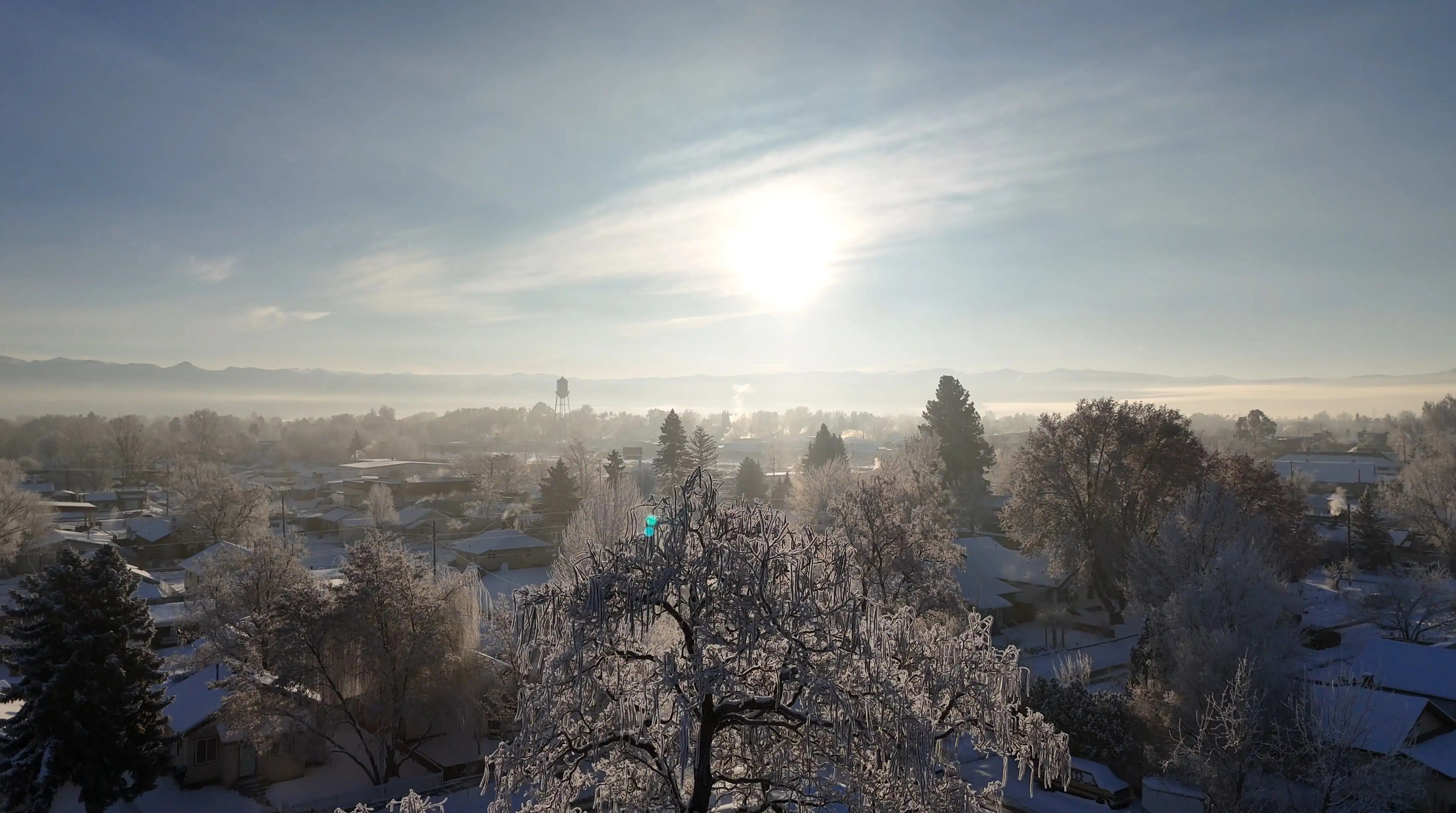
Emmett's typical home value is $428,059 (Zillow Home Value Index, April 2026). California's statewide median sits at approximately $776,000. That gap is large enough to change the financial architecture of a move entirely.
For most California sellers arriving with significant equity, Emmett's price point allows a substantially smaller loan or, in some cases, an outright cash purchase. The math looks different depending on where in California you're coming from, but the directional shift is meaningful across the board.
What the Price Gap Actually Buys
At Emmett's typical price point, buyers are looking at three- and four-bedroom homes on lots with actual yard space — not townhomes, not zero-lot-line builds. Many properties in areas like Highland and Harvest Valley come with room for a shop, a garden, or simply enough separation from neighbors to feel rural without being remote.
Entry-level inventory — older construction, smaller footprint — starts well below the city median, which means first-time buyers or downsizers have options that don't require stretching. The neighborhoods guide breaks down the character of each part of town, but broadly speaking: the closer you get to downtown, the older the housing stock; newer builds push toward the edges.
The Property Tax Equation
Emmett's effective property tax rate is 0.28% — not a typo. Idaho's statewide effective rate on owner-occupied housing runs approximately 0.50%, itself well below the national average. California's typical effective rate lands around 0.70%, and that's before Mello-Roos or special assessments that appear on many newer California subdivisions.
On a home at Emmett's $428,059 typical value, that 0.28% rate means annual property tax carrying costs that will genuinely surprise buyers coming from California. The engine's calculator on this page will show you the exact figure based on your purchase price — but the directional point is: the rate difference compounds over time in Emmett's favor.
Idaho also has no estate tax and no inheritance tax. For Californians moving significant assets or planning intergenerational wealth transfers, that distinction is worth a conversation with an estate attorney before you close.
| Metric | Emmett, ID | California (Statewide) |
|---|---|---|
| Typical home value | $428,059 (Zillow Home Value Index, April 2026) | ~$776,000 (2026 median) |
| Effective property tax rate | 0.28% | ~0.70% |
| State income tax rate | 5.3% (flat) | 1%–13.3% (graduated) |
| State sales tax (base) | 6.00% | 7.25% |
| SDI / payroll deduction | None | 1.3% on all wages (no cap) |
| Estate / inheritance tax | None | None (but CA capital gains apply) |
| Cost-of-living index | ~86–93 (nat'l avg = 100) | ~142.2 |
Every row in that table moves in the same direction. The cumulative effect for a household earning $100,000–$150,000 is meaningful — not a rounding error.
The Tax Picture: Idaho vs. California, Line by Line
California's income tax is the one that lands hardest for most people doing the comparison. The state runs a graduated scale that reaches 9.3% at $66,295 of taxable income for single filers (2026), climbs to 10.3% and 11.3% above that, and peaks at 13.3% on income over $1 million. Idaho replaced its own graduated structure with a flat 5.3% rate — enacted by House Bill 40 in March 2025 and made retroactive to tax year 2024.
For a dual-income household earning $180,000 combined, the difference between paying California's effective rate and Idaho's flat 5.3% is significant enough that many buyers factor it into their offer math before they've even toured a house. That's rational.
The SDI Line Item Most People Forget
California's State Disability Insurance, or SDI, runs at 1.3% on all wage income in 2026 with no wage cap — meaning it applies to the entire paycheck, not just the first $X. Idaho has no equivalent payroll deduction. For a W-2 employee earning $120,000, that's a recurring annual line item that disappears the day Idaho becomes your state of domicile.
Sales Tax: Smaller Gap, Still Real
Idaho's state sales tax is 6.00%, with a combined state-and-local average of 6.03%. California's base rate is 7.25%, and local add-ons in major metros push the effective rate higher — Los Angeles County runs 10.25% in many jurisdictions. Grocery staples are largely exempt from Idaho sales tax, which matters more in a small town where the grocery store is one of the main retail venues.
What Idaho's Rank Means in Practice
The Tax Foundation ranks Idaho's overall tax system 9th in the country on its 2026 State Tax Competitiveness Index. That ranking reflects the combination of a competitive income tax rate, no estate tax, and a relatively clean sales tax structure. It doesn't mean Idaho is perfect — property tax levy rates vary by county, and Gem County's 0.28% effective rate is notably lower than some neighboring counties. The cost-of-living page covers the full tax picture for Emmett specifically.
The honest version: if you're a salaried remote worker or a retiree with investment income, the tax shift from California to Idaho is one of the more concrete financial improvements a move can produce. If you run a business with significant California-sourced income, consult a CPA familiar with California's sourcing rules before assuming you can simply close your California tax account on moving day.
The Culture Gap Nobody Puts in the Spreadsheet
Most Californians who move to Emmett say the financial transition is easy. The cultural one takes longer.
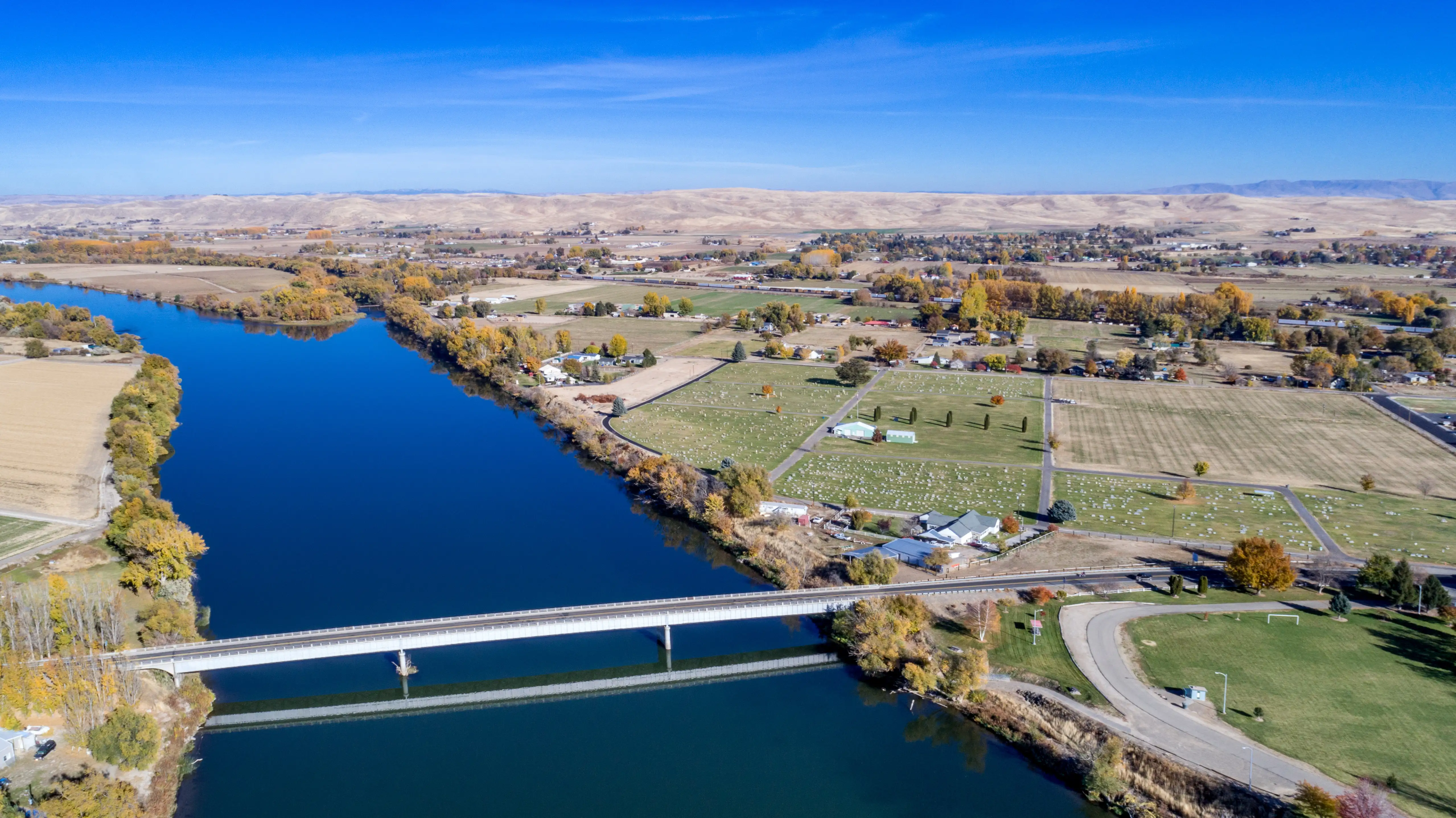
Emmett is an agricultural town of roughly 8,275 people. The Gem County Museum sits on the main corridor. Cowboys Chophouse on East Main is a family-owned steakhouse that functions partly as a community gathering point. Tom's Cabin Cafe out on West Highway 52 is the kind of diner where the same tables fill up the same way every Saturday morning, and you will recognize faces within a month. That intimacy is real — and it cuts both ways.
What Locals Know That You Won't at First
The Emmett Cherry Festival each June is not a small-town afterthought — it's legitimately one of the more attended events in Gem County, and the orchards along the Payette River actually produce the cherries being celebrated. If you move here in late spring, that festival is the fastest way to meet people and understand what the town is proud of.
Emmett City Park fills up on summer evenings with a cross-section of the town that you won't see anywhere else. It's where you'll figure out quickly whether the pace of life here is a feature or a frustration for your household.
The Adjustment Most Californians Don't Anticipate
The thing people don't expect after six months: the absence of anonymity. In a city of eight thousand, your business becomes town business faster than it did in a California suburb of sixty thousand. That's not a complaint from most people who stay — it's something to be honest with yourself about before you sign.
Emmett also has limited restaurant variety compared to what most California households treat as baseline. La Costa on North Washington Avenue covers Mexican food well. For everything else — sushi, Thai, a proper wine bar, weekend brunch options beyond diners — Boise is 35 minutes away. That commute is manageable if you're used to Bay Area distances, but it requires a mental adjustment if your previous life had a dozen dinner options within a mile.
Why People Move Out
The buyers who leave Emmett within two years typically cite one of two things: the lack of walkable amenities wears them down, or a partner who was reluctant from the start never fully adjusted. The financial case for staying is usually strong enough that people don't leave for money reasons — they leave because the town's scale doesn't match their social needs. That's not a flaw in Emmett; it's a genuine fit question worth answering before you're unpacking boxes.
For a full read on who Emmett tends to suit and who tends to struggle, the living in Emmett guide covers buyer types honestly.
Looking to buy in Emmett? Estimate your payment.
Enter your numbers to see an estimated monthly mortgage payment.
Estimate only. Excludes HOA fees and mortgage insurance. The interest rate above is a starting point, not a quoted rate — replace it with your own to see real numbers. Insurance is a flat placeholder, not a Emmett quote.
The Commute, the Geography, and the Traffic Nobody Warns You About
The 35-minute commute to downtown Boise is real under the right conditions. Under the wrong ones, it isn't.
Freezeout Hill is the geographic chokepoint between Emmett and the Boise metro. The stretch of Highway 16 that climbs and descends the hill is two lanes in most sections, with limited passing opportunities and significant freight and agricultural truck traffic. On a clear weekday morning leaving Emmett before 7 a.m., you'll hit Boise in 35 minutes. On a snowy January morning, or if you're behind a loaded truck on the hill, add 20 minutes and some patience.
The Commute Hack Locals Actually Use
Leaving Emmett by 6:40 a.m. gets you ahead of the school run and the industrial shift traffic that stacks up between 7:15 and 8:30. Coming back, leaving Boise between 4:00 and 4:30 p.m. avoids the worst of the Eagle Road corridor backup that feeds Highway 16. The difference between a 35-minute return trip and a 55-minute one is almost entirely timing.
What the Geography Means for Daily Life
Emmett is not connected to the Boise metro by a quick surface street grid. It is intentionally separate — Squaw Butte rises to the east, the Payette River defines the valley, and Black Canyon Dam sits to the northwest. That geographic separation is part of what keeps Emmett from feeling like a Boise suburb, and it's part of what makes the commute feel longer psychologically than the miles suggest.
For remote workers who go into Boise once or twice a week, the commute is a reasonable trade for what they're getting on housing. For five-days-a-week in-office workers, do the math on cumulative time and fuel before you commit to the far side of Freezeout Hill.
Neighborhood character and the specific geographic divides within Emmett itself are covered in detail on the neighborhoods page — particularly useful if you're choosing between properties near downtown versus further east or north.
Making the Move: What to Do Before You Close
California has been the largest single source of net out-migration in the U.S. for four consecutive tax years. IRS data for tax years 2022–2023 shows California losing approximately 100,397 net tax filers and $11.9 billion in adjusted gross income to other states — with Idaho consistently among the top per-capita receiving states. Emmett has seen its share of that inflow, which means local agents and lenders have worked with California buyers enough to know the friction points.
Establish Domicile Cleanly
California's state tax authority is aggressive about partial-year residency and about income that has California sources even after you move. If you're a remote worker for a California-based employer, your income may still be subject to California taxation depending on your employer's structure and whether they have California nexus. That question has a specific answer for your situation — get it from a CPA before you move, not after your first Idaho return.
The practical steps — Idaho driver's license, vehicle registration, voter registration — should happen within 90 days of establishing residency, and sooner is better for documenting your domicile change. Keep records of the move date, your Idaho utility connection date, and lease or purchase close date.
The Financing Transition
Idaho lenders are familiar with California buyers arriving with substantial equity and smaller-than-expected local price tags. The first-time homebuyer page covers Idaho-specific loan programs and down payment considerations in detail — worth reading even if you're not a first-time buyer, because some programs have income limits that California wages can push past in ways that Idaho wages don't.
What to Inspect That California Didn't Require
Emmett's older housing stock — particularly anything built before the 1980s near downtown — may have irrigation water rights attached to the property. Those water rights are an asset, but they come with maintenance obligations and annual assessments. Ask specifically about irrigation district membership and any outstanding assessments before you close. California real estate transactions don't routinely surface this issue; Idaho rural ones do.
Septic systems also appear more frequently on Emmett properties than you'd encounter in most California suburban markets. A standard sewer inspection isn't sufficient — budget for a septic inspection separately, and verify that the system has been pumped within the past three to four years.
The Things That Will Pleasantly Surprise You
Closing costs in Idaho tend to run lower than California. The pace of transactions is faster — inventory at Emmett's price point moves, but the bidding wars that defined California markets in 2021–2022 are not a feature of small-town Idaho in the same way. And the first time you pay your property tax bill at Emmett's 0.28% effective rate, you will think the bill was printed incorrectly. It wasn't.

Local Expert Takeaway: Emmett is not a California suburb with cheaper prices grafted onto the front. It's a working agricultural town in Gem County where the cherry orchards are real, Freezeout Hill is a genuine weather variable in winter, and the neighbors at Cowboys Chophouse on East Main will know your name before you've finished your first month. The financial case for the move — lower home prices, a flat 5.3% Idaho income tax replacing California's graduated scale, a 0.28% property tax rate — is among the strongest of any small city in the Treasure Valley. The case for staying long-term depends on whether your household can genuinely make peace with a 35-minute drive to a sushi restaurant.
Quick Takeaways & FAQs
✅ Emmett's typical home value of $428,059 (Zillow Home Value Index, April 2026) sits noticeably below California's statewide median, and the 0.28% effective property tax rate is among the lowest you'll find anywhere in the western U.S.
⚠️ Freezeout Hill on Highway 16 is a genuine winter variable — the 35-minute Boise commute can stretch significantly on icy mornings, and five-days-a-week in-office workers should drive the route in January before committing.
📍 Cherry harvest season runs June through early July along the Payette River valley, and the annual Emmett Cherry Festival is the single fastest way for a newcomer to meet the town — plan your move date accordingly if you can.
How much cheaper are homes in Emmett compared to California?
What is Idaho's income tax rate compared to California's?
Is the commute from Emmett to Boise actually 35 minutes?
Do I need to worry about California taxing me after I move to Idaho?
What should California buyers inspect that they wouldn't think to check?
Moving to Idaho?
Tell us what you need help with and we'll connect you with local resources.
