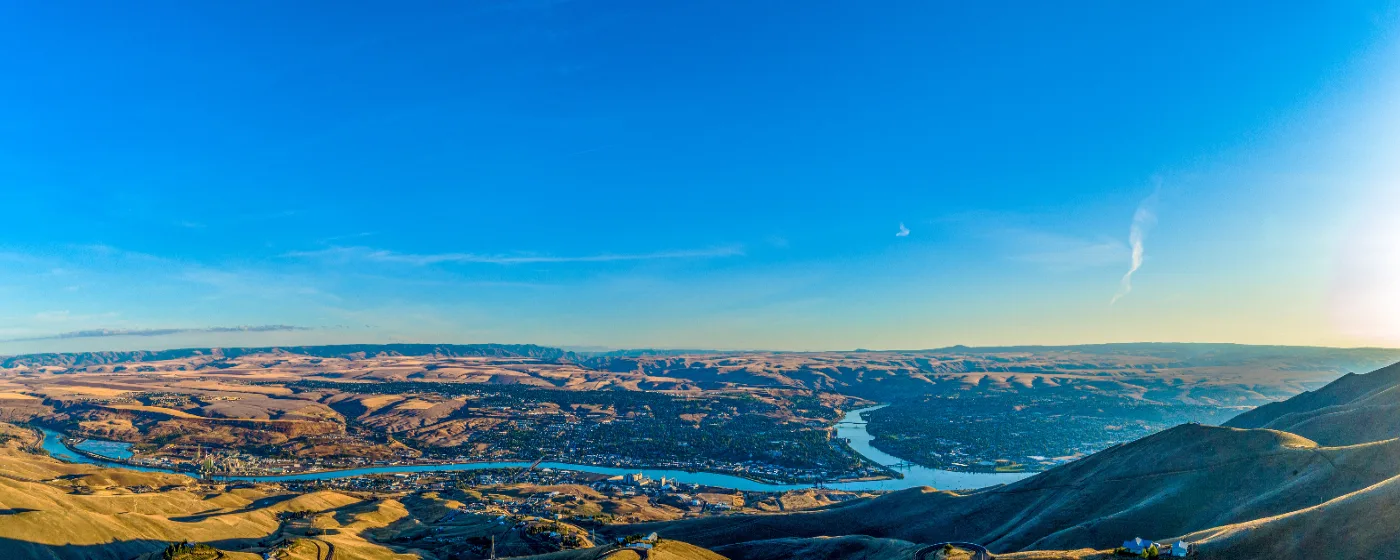
Most Californians who end up in Lewiston didn't have it on their radar — someone in a Facebook group mentioned it, or they ran the numbers after being priced out of their current neighborhood, or a remote-work arrangement finally made it possible to leave. What stops them cold, every time, is the home price. The Zillow Home Value Index put Lewiston's typical home value at $360,841 as of May 2026. The California statewide median sale price for Q1 2026 was $843,390. That gap is not a rounding error — it's the difference between a starter condo with an HOA and a three-bedroom house with a yard, a garage, and a river view. Lewiston sits at the confluence of the Snake and Clearwater Rivers in North Central Idaho, at roughly 745 feet of elevation in a canyon that the surrounding plateau towers over by about 2,000 feet. That geography shapes everything: the mild winters, the semi-arid climate, and the sense that you've dropped into a river town that runs at its own pace.
The economic backbone here is real and specific. Clearwater Paper Corporation operates a major manufacturing facility. CCI/Speer, an ammunition manufacturer, employs a significant local workforce. Lewis-Clark State College brings a university presence without a university-town price tag. The Port of Lewiston — the farthest inland port on the West Coast, 465 miles from the Pacific Ocean — handles roughly 24 million bushels of wheat annually and ties this small city into a global commodity chain most residents barely think about. For Californians used to tech campuses and entertainment industry payrolls, the employer mix is industrial and institutional, and that's not a criticism — it means the local economy doesn't collapse when a startup pivots. Lewiston Independent School District #1 holds a B- rating, according to Niche, which is worth reading in detail before you assume it maps to your California district's strengths or gaps.
Idaho's combined cost-of-living index sits at 97.7 against California's 142.2 (national average = 100), making the state roughly 31% less expensive across the board. In Lewiston specifically, that shows up in groceries, utilities, and the absence of California's layered local taxes. The city runs on Pacific Time — the same as California — so remote workers don't lose a single meeting to a time-zone adjustment. Lewiston gets approximately 169 sunny days per year and only about 13 inches of snow annually, which surprises Californians who picture Idaho as a tundra. Summers are hot and dry in the canyon. Winters are genuinely mild by Inland Northwest standards, though the surrounding plateau gets far more snow than the city floor does. The Snake River Levee Recreation Trail and Hells Gate State Park give outdoor access without driving hours to find it.
Whether you're seriously considering the move or just running scenarios, the sections below break down Lewiston's tax picture, the home-price reality, the lifestyle shift, what remote workers need to know, and the honest friction points that don't show up in cost-of-living calculators.
The Tax Picture: What You Actually Save Leaving California
The income tax difference is the number most Californians lead with — and for good reason. California's top marginal state income tax rate is 13.3%. Idaho's rate, as of January 1, 2025, is a flat 5.3% on all taxable income. That's an 8-percentage-point gap at the top bracket, but the flat structure matters even for middle-income earners: Idaho taxes every dollar of taxable income at 5.3%, so there's no phase-in and no bracket to plan around.
One piece Californians often miss: California imposes a State Disability Insurance (SDI) payroll deduction of 1.3% in 2026 with no wage cap. Idaho has no equivalent deduction. A California worker earning $150,000 is paying $1,950 annually in SDI alone before the income tax difference even enters the picture.
Sales Tax: Simpler, but Not Always Cheaper at the Grocery Store
Lewiston's total sales tax rate is 6% — the Idaho state rate, with no city, county, or special district additions on top. California's base rate is 7.25%, but local add-ons routinely push combined rates to 9–10.25% in major California cities. On a $50,000 car purchase, the difference between 6% and 10% is $2,000 at the register.
The catch: Idaho taxes groceries at the full 6% rate. California exempts most unprepared food from sales tax entirely. Idaho partially addresses this through a refundable Grocery (Food) Tax Credit of $155 per person per year, raised from $120 by legislation signed in March 2025. Residents can also submit food receipts for an additional credit up to $250. For a household of four, the combined credit offsets a meaningful chunk of annual grocery tax — but it doesn't eliminate the line item, and it requires filing or submitting receipts to capture it.
| Tax Category | California | Lewiston, Idaho |
|---|---|---|
| Top marginal income tax rate | 13.3% | 5.3% (flat) |
| SDI payroll deduction (2026) | 1.3%, no wage cap | None |
| Combined sales tax (typical) | 9–10.25% (varies by city) | 6.0% (state only) |
| Grocery sales tax | Exempt (most unprepared food) | 6% (with partial credit offset) |
| Effective property tax rate | ~0.7% (effective, but on far higher values) | 0.78% (Lewiston, city-level) |
| Capital gains tax | Taxed as ordinary income, up to 13.3% | Taxed as ordinary income, 5.3% flat |
| Estate / inheritance tax | None at state level | None at state level |
Property tax deserves a specific note for California homeowners protected by Proposition 13. Lewiston's effective rate of 0.78% is slightly above California's effective average of approximately 0.7% — but that California figure applies to assessed values locked in years or decades ago. If you're buying in Lewiston at $360,841, your annual property tax obligation is a fraction of what a comparable California purchase would carry on a current assessed value. For a full breakdown of Lewiston's cost of living including utilities and groceries, see the dedicated page.
The Home Price Reality: What Your California Equity Buys Here
The Zillow Home Value Index put Lewiston's typical home value at $360,841 in May 2026. California's statewide median sale price was $843,390 in Q1 2026. Those are two different metrics — Lewiston's is an index figure, California's is a median sale price — but the directional gap is real and large regardless of methodology.
For a California seller who bought more than a few years ago, arriving in Lewiston with equity from a Bay Area or Southern California sale is genuinely transformative. Buyers who cash out a high-value Bay Area property can often purchase in Lewiston outright or with a very small loan. That's not hypothetical — it's the pattern local agents see repeatedly.
What the Price Range Actually Gets You
At the lower end of Lewiston's market, older ranch-style homes and smaller bungalows start well below the city median. The mid-range gets you updated three- and four-bedroom homes with garages and reasonable lots. For a closer look at how Lewiston's neighborhoods compare by character and location, the neighborhood guide breaks down who each area suits.
The Prop 13 Adjustment
Californians selling homes they've owned for 15 or 20 years will face a jarring reassessment reality in Idaho: there is no Proposition 13 equivalent. In Idaho, your home is assessed at current market value, and that assessment can rise annually. If you buy at the current market and values climb, so does your assessed value. Plan for that in your long-range budget — it's not a dealbreaker, but it surprises buyers who've been insulated from it for years.
One structural advantage: because Idaho has no transfer tax on real estate, you won't lose a percentage point of your California sale proceeds to the state at closing the way you would in some markets.
Lifestyle Shift: What Changes and What Doesn't
Lewiston's climate is the first thing that catches California transplants off guard — in a good way. The city sits in a river canyon at roughly 745 feet, dramatically below the surrounding plateau, which creates a micro-climate that's genuinely mild by Idaho standards. About 169 sunny days per year, 16 inches of annual rainfall, and only 13 inches of snow. If your California mental image of Idaho involves months of frozen misery, Lewiston rewrites that assumption.
Summers in the canyon run hot — regularly into the mid-90s — which is familiar to anyone from the Central Valley or Inland Empire. The Snake River and Clearwater River provide cooling in the literal sense: the Snake River Levee Recreation Trail along the waterfront is where you'll see cyclists and runners on summer mornings before the heat settles in.
Where People Actually Gather
Main Street in downtown Lewiston is the social spine of the city. Effie's Tavern at 1120 Main is a long-established local institution — burgers, cold beer, and a crowd that skews toward people who actually live here rather than tourists. BoJack's Broiler Pit draws regulars for the kind of American steakhouse meal that would run $90 per person in California for $40 here. Hells Gate State Park at the edge of the city — where the canyon opens up and the Snake River bends — is where families spend weekend mornings and where Lewiston's outdoor identity is most visible.
The trade-off is real: Lewiston is a small city of about 35,000 people. There's no Trader Joe's — the nearest one is in Spokane. Concert tours don't stop here. The restaurant scene is genuine but not vast, and the independent café culture that Californians take for granted along any commercial corridor is thinner here. You will drive to Spokane (about 100 miles north on US-95) or to Pullman (30 miles away, home of Washington State University) for some of what you used to have around the corner.
The Six-Month Moment
Most California transplants hit the same inflection point around month six: they stop missing what they left and start noticing what they have. The commute — often under 15 minutes across the city, with the Lewiston-Clarkston bridge being the main chokepoint during the 7:45–8:30 a.m. window — no longer registers as a commute in any California sense of the word. The space. The absence of freeway noise at night. The fact that Hells Gate is a 10-minute drive rather than a two-hour weekend expedition.
What people miss most, honestly, is proximity to a major airport. Lewiston-Nez Perce County Airport serves the region but with limited direct routes. Spokane International is the practical gateway for most travel, and factoring in a 100-mile drive for flights becomes part of the mental calculus of living here.
Looking to buy in Lewiston? Estimate your payment.
Enter your numbers to see an estimated monthly mortgage payment.
Estimate only. Excludes HOA fees and mortgage insurance. The interest rate above is a starting point, not a quoted rate — replace it with your own to see real numbers. Insurance is a flat placeholder, not a Lewiston quote.
Remote Workers and Career Changers: The Practical Logistics
Remote workers from California have a structural advantage in Lewiston that not every destination city offers: Pacific Time. Lewiston operates on the same time zone as California, so your 9 a.m. Zoom with the Bay Area team is still a 9 a.m. Zoom. No waking up at 5 a.m. to catch East Coast clients, no overlap issues with California managers. For remote workers, this is quietly significant.
The internet infrastructure supports remote work. Fiber and cable broadband are available across most of the city, including in established residential neighborhoods. The canyon geography creates some gaps at the edges of town, so verifying connectivity at a specific address before signing a lease or making an offer is worth the 10-minute phone call.
If You're Not Remote
If you're looking for local employment, the major employers are specific and institutional: Clearwater Paper, CCI/Speer, Lewis-Clark State College, and the Lewiston Independent School District. Manufacturing workers, educators, and skilled tradespeople are the dominant workforce categories. Tech, finance, entertainment, and the creative industries that employ large swaths of California's workforce are largely absent as local employers.
That's not a minor point. Californians who leave remote positions or whose remote arrangements end face a genuinely different job market here. Moscow, Idaho — home of the University of Idaho and about 30 miles south — broadens the professional options somewhat, but this is not a metro area with an interchangeable job pool. The first-time homebuyer page covers financing approaches for buyers navigating a career or income transition alongside the move.
The Commute Hack
If you're working in Clarkston, Washington — directly across the Snake River — the commute is approximately 5 minutes. The bridge crossing US-12 is the chokepoint, and the 7:45–8:30 a.m. window is when it backs up most reliably. Leave before 7:30 or after 8:45 and you'll barely notice it. By California standards, this is not a commute problem — it registers as a scheduling observation.
For anyone driving to Pullman or to Washington State University frequently, US-195 heading north is the straightforward route. The road is well-maintained and the drive takes about 30 minutes in normal conditions. Keep an eye on it in January — the plateau gets considerably more snow than the canyon floor does, and the elevation change between Lewiston and the Palouse is abrupt.
The Honest Trade-offs: What Californians Should Know Before They Commit
People move out of Lewiston for identifiable reasons. The most common: career ceilings. If you're mid-career in a field that requires a large professional ecosystem — law, specialized medicine, film, finance, tech — Lewiston will eventually feel limiting. The city's professional community is close-knit, which is a feature until it becomes a constraint. A second common reason is family proximity. People move here for affordability, build a life, and then move back toward California when aging parents need support and cross-country travel becomes exhausting.
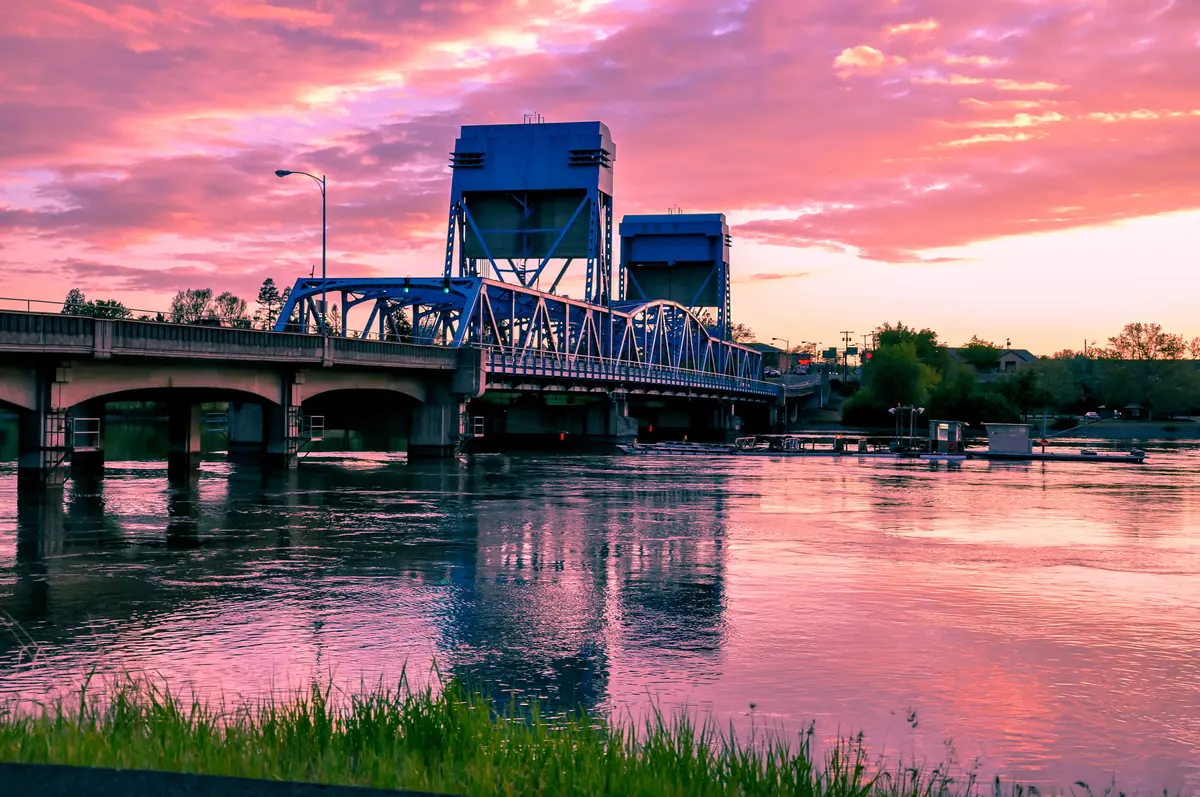
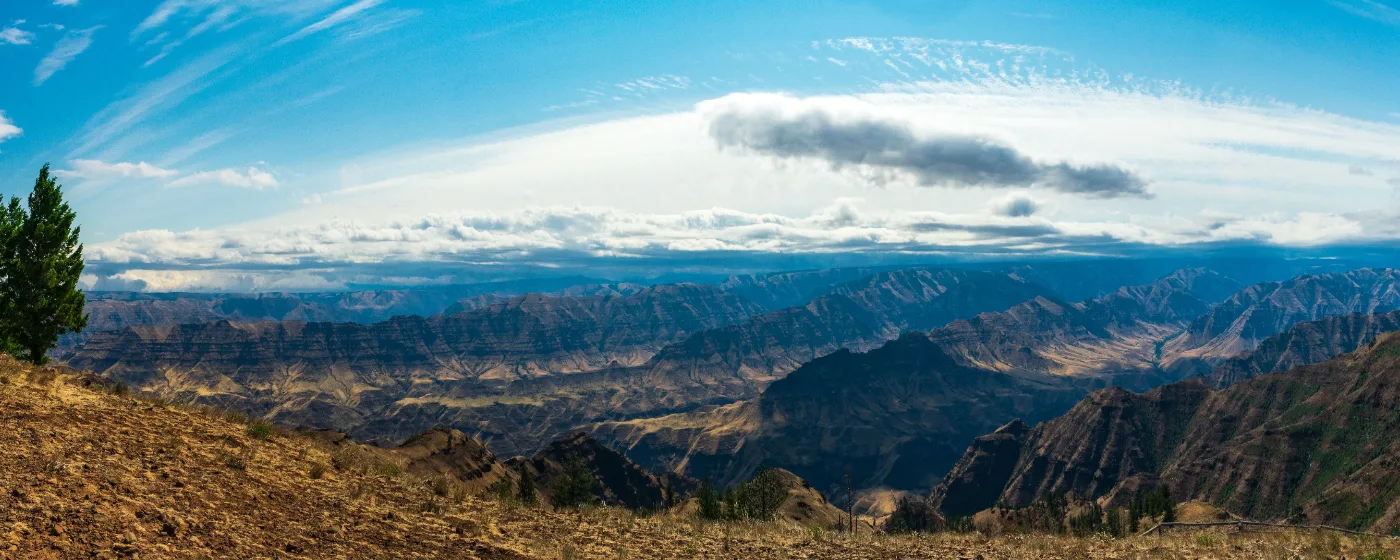
The third reason is the one most people don't anticipate: the terrain is dramatic but also constraining. Lewiston is in a canyon. The plateau above it is accessed by a handful of steep grades — Lewiston Hill on US-95 being the main one, a 2,000-foot elevation gain in a few miles with a switchback known locally as the Spiral Highway. If you're used to the open geography of California's coast or valleys, the canyon can feel enclosed by year three in a way it didn't in month three.
What You Would Not Do
Don't buy on the industrial end of Snake River Avenue without driving it at multiple times of day first. The Port of Lewiston's barge and freight operations create truck traffic on the riverside corridor that doesn't show up in a Saturday afternoon drive-by. It's not unlivable — but it's not the serene river-view lifestyle that photos suggest.
Don't assume the surrounding plateau's weather matches the city. The canyon floor can be green and mild while the plateau above is under a foot of snow. If you're buying land or property outside the canyon bottom, research the elevation carefully — the micro-climate difference is significant enough to matter for gardening, road conditions, and daily quality of life.
The Safety and Schools Reality Check
Lewiston is worth reading in detail on the safety page before drawing conclusions from a single statistic — crime rates vary meaningfully by area within the city, and city-level averages don't tell the full story. Similarly, the district's rating is a starting point, not a conclusion — the schools page breaks down individual campuses and what the rating reflects. Californians moving from districts with higher ratings should go in with realistic expectations and ask specific questions about programs, class sizes, and extracurriculars during any school tour.
The outdoor access is genuinely exceptional and under-marketed. Hells Gate State Park and the recreation trail system along the Snake River Levee give Lewiston a day-to-day outdoor life that most California cities its size can't match. That's not a sales pitch — it's the thing California transplants most consistently cite when asked what they didn't expect to love about living here.
Local Expert Takeaway: Californians who make the move to Lewiston and stick with it long-term tend to share one trait: they locked in their housing before they needed to. The price gap between a California sale and a Lewiston purchase is real, and buyers who arrive with California equity and move decisively find themselves in a genuinely different financial position within 18 months. What separates the transplants who stay from the ones who leave in year two is usually not the city itself — it's whether they had a realistic picture of the job market, the canyon geography, and the airport logistics before they signed. Effie's Tavern on Main Street is full of people who figured it out. Go there on a Friday evening before you make any decisions.
Quick Takeaways & FAQs
✅ Lewiston sits on Pacific Time — the same as California — so remote workers face zero time-zone friction when relocating from any California city.
⚠️ The canyon can feel enclosed after a few years, and the plateau above Lewiston Hill gets dramatically more snow than the canyon floor — buy based on where you'll actually live, not just the view from US-12.
📍 Idaho's Grocery Tax Credit ($155 per person per year, raised in March 2025) partially offsets the 6% sales tax on food, but you have to file or submit receipts to capture it — it's not automatic.
How much cheaper are homes in Lewiston compared to California?
What is Idaho's income tax rate compared to California's?
Does Idaho tax groceries, and how does that compare to California?
Is Lewiston on Pacific Time or Mountain Time?
What do California transplants miss most about moving to Lewiston?
Moving to Idaho?
Tell us what you need help with and we'll connect you with local resources.
