
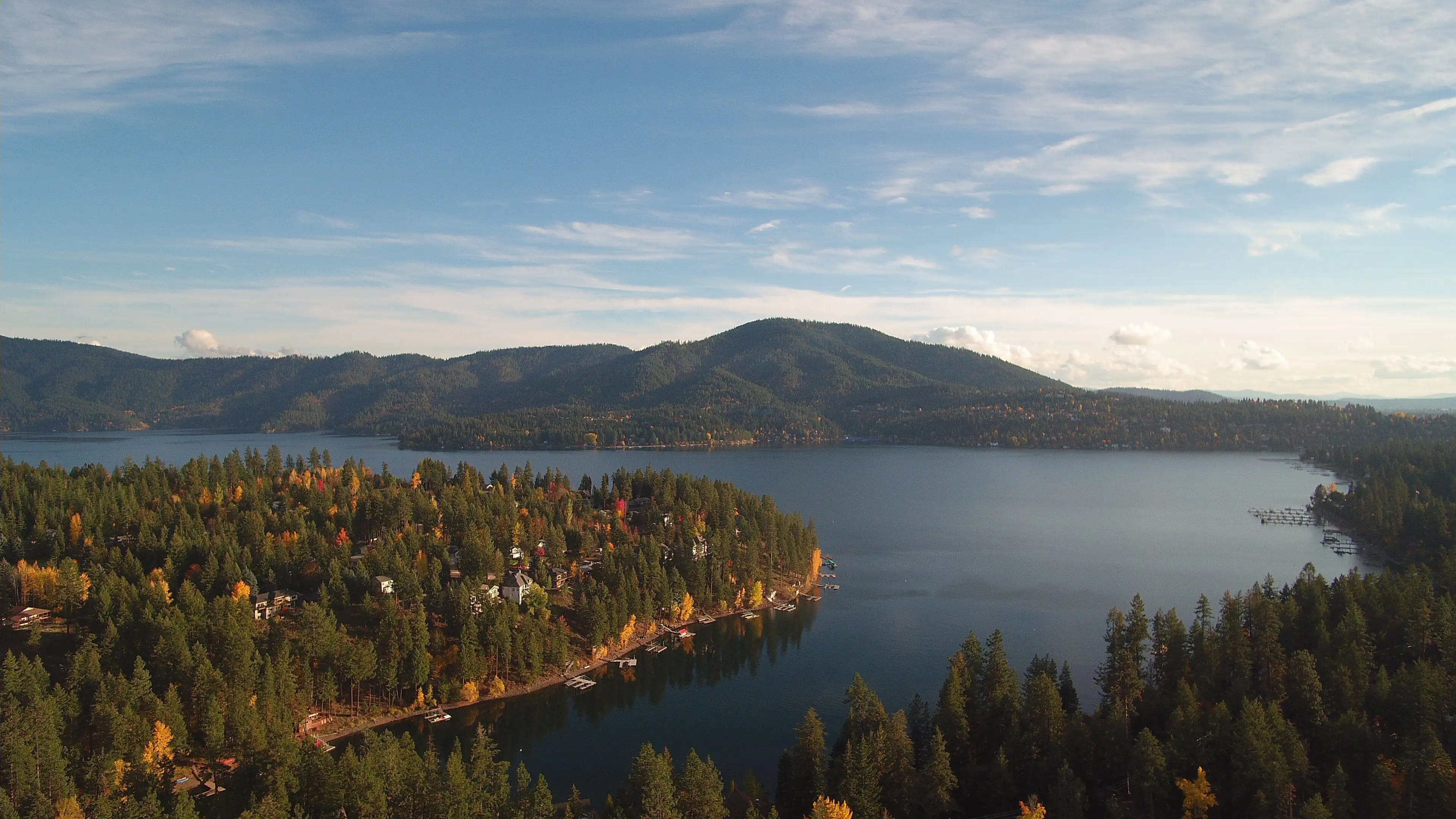
You've probably done the spreadsheet. Hayden checks the boxes — lower home prices, no crowded freeways, a lake you can actually use — but when California transplants get here, the thing that surprises them most isn't the savings. It's the quiet. Hayden sits in Kootenai County in North Idaho, roughly 12 minutes north of Coeur d'Alene along the main highway corridor and a short drive from the Montana border. Daily life orbits around Hayden Lake and its shoreline rather than a traditional downtown core, and the pace that results from that geography is the central thing you either fall in love with or find disorienting after a decade in the Bay Area or Southern California.
The city's population sits around 17,690, which makes it feel more like a well-organized suburb than a small town — there's a Costco Wholesale, the Coeur d'Alene School District holds a B+ rating, according to Niche, and serves students here, and employers like Hayden Beverage Company and Transtector Systems provide a manufacturing and distribution base. What draws most California families is a combination of price relief, tax relief, and outdoor access that no suburb of Sacramento or San Diego can match. Kootenai County was one of Idaho's fastest-growing areas between 2020 and 2025, with the county contributing to roughly 60% of the state's total population gain over that period — and a significant portion of those arrivals came directly from California. For a deeper look at who the city suits and how its economy holds up, see the living in Hayden overview.
Cost of living here is noticeably lower than the major California metros most relocating buyers are leaving. The Zillow Home Value Index pegs Hayden's typical home value at $569,143 (2026), which is meaningfully below California's statewide median of approximately $776,000. Property taxes run at an effective rate of approximately 0.37% — about half the California statewide average — and Idaho's flat 5.3% income tax rate replaces whatever graduated bracket you've been paying into Sacramento. The full breakdown of utilities, groceries, and cost-of-living comparisons lives on the Hayden cost of living page, but the headline is that most California transplants find their monthly overhead drops in almost every category simultaneously.
Whether you're being relocated, escaping a lease renewal that felt like a ransom note, or simply done negotiating your commute, the sections below break down what moving from California to Hayden actually involves — the tax math, the climate adjustment, the cultural shift, the housing market mechanics, and the day-to-day details that don't show up on any comparison calculator.
The Tax Reality: What California Rates Look Like from Idaho
The income tax swing is real, and it's larger than most people expect until they sit down with a pay stub. Idaho now imposes a flat 5.3% individual income tax rate — effective January 1, 2025, under House Bill 40 — replacing its old progressive bracket system. There is no additional city income tax in Hayden.
California's structure runs from 1% at the low end to 12.3%, with a 1% surcharge on income above $1 million that pushes the effective top rate to 13.3%. For a high-earning household that was sitting in California's upper brackets, Idaho's flat 5.3% represents a top-bracket differential of up to 8 percentage points. That's not a rounding error — on a $250,000 household income, the difference runs into five figures annually.
Sales tax is a smaller but still meaningful line item. California's base state rate is 7.25%, and most counties and cities layer additional percentages on top of that — a Bay Area household often ends up paying 9% to 10.25% on everyday purchases. Hayden's combined rate is 6.0%, Idaho's flat statewide figure, with no county or city add-on.
The Property Tax Picture
Hayden's effective property tax rate of 0.37% is the number that consistently catches California buyers off guard — in a good way. It's roughly half the California statewide average of approximately 0.7% and well below the national median effective rate of around 0.89%.
One important difference from California: Idaho does not operate under a Proposition 13-style assessment freeze. Your assessed value adjusts to market over time, which means the low rate doesn't come with a locked-in basis the way California homeowners are accustomed to. Budget accordingly as values rise.
| Tax Category | California | Hayden, Idaho |
|---|---|---|
| Top state income tax rate | 13.3% (9 brackets, 1%–12.3% + 1% surcharge) | 5.3% flat (no brackets, no city tax) |
| State sales tax (base) | 7.25% (local add-ons common; often 9–10.25%) | 6.0% combined (no county or city add-on) |
| Effective property tax rate | ~0.7% statewide average | 0.37% |
| Estate / inheritance tax | None | None |
| Local city income tax | Varies by city | None |
| Assessment freeze (like Prop 13) | Yes — assessed value locked at purchase | No — adjusts to market over time |
The absence of an Idaho estate or inheritance tax is worth flagging for anyone relocating with significant assets or a complex estate. Federal thresholds apply in both states, but there's no state-level death tax to plan around in Idaho.
Home Prices: What Your California Equity Buys Here
Hayden's typical home value is $569,143 (Zillow Home Value Index, 2026). California's statewide median sits at approximately $776,000. That gap is substantial — and in the coastal metros where most transplants are actually coming from, the divergence is even wider.
What that means in practice: a buyer selling a median San Jose or Los Angeles home often arrives in Hayden with enough equity to purchase without financing the full price — or to buy substantially above the Hayden median and still come out ahead. The psychological shift that comes with owning something outright, or carrying a fraction of a prior mortgage, is something locals who've made the move consistently describe as the biggest lifestyle upgrade they didn't anticipate.
What the Market Feels Like Right Now
Hayden is not a buyer's market in the traditional sense. Inventory has stayed tight through the growth wave Kootenai County absorbed after 2020, and competition for well-located properties near Hayden Lake or with mountain views remains real. Entry-level inventory skews toward older construction or lots farther from the lakefront. For neighborhood-by-neighborhood character and where specific areas land in the market, the Hayden neighborhoods guide covers the distinctions that matter most to relocating buyers.
First-time buyers — including Californians who've been renters and are now using out-of-state equity from a parent's home sale to buy — will find more accessible options here than in any comparable California suburb. A detailed look at the buying process in Idaho, including down payment ranges and loan program options relevant to transplants, lives on the first-time homebuyer page.
The Equity Math That Drives the Move
California has been the largest single source of net domestic out-migration in the United States for four consecutive tax years. Idaho has been a top per-capita destination across that same period. A meaningful share of those buyers aren't moving because they want to — they're moving because their California equity funds a debt-free or near-debt-free life somewhere else, and Hayden is where that math closes.
The caution: don't assume that gap is permanent. Hayden prices have moved substantially since 2020, and the same equity-fueled demand that made the move attractive to you has already repriced much of the market. Buy for the lifestyle and the tax structure, not on speculation that the gap will widen further.

The Climate Adjustment: Four Seasons After California
Hayden averages approximately 174 sunny days per year, 26 inches of annual rainfall, and roughly 42 inches of snowfall. If you're coming from coastal California, that snowfall number is the one that deserves your full attention before you sign anything.
Most California transplants underestimate winter here in month one and overestimate it by month three. The snow is real — Hayden gets more accumulation than Spokane, roughly 45 miles to the west — but winters are milder than what you'd find in Montana or the mountain towns farther east. Roads are maintained, schools stay open through most snowfall events, and you'll spend January weekends skiing at Schweitzer Mountain Resort rather than sitting indoors.
What Summer Actually Delivers
July average highs run around 86°F (30°C), with very little precipitation in July and August. Hayden Lake becomes the functional center of social life during those months — boating, swimming off Honeysuckle Beach, and fishing for kokanee, rainbow trout, and northern pike are not weekend drives away. They are ten minutes from most neighborhoods in Hayden.
The summer climate is the part that surprises Southern California transplants most favorably. They expected rugged mountain winters and discovered that the compromise is three months of warm, dry, genuinely pleasant lakeside living that rivals anything the California coast offered — without the crowds or the price.
The Adjustment No One Warns You About
It's November. The lake has gone quiet, the days are short, and the mountains you drove through on the way here are now the walls of a gray sky. This is the moment when the move either cements itself or starts to crack. Californians who move here and stay consistently say the same thing: they got into a winter activity — skiing, snowshoeing, ice fishing on the northeast arm of Hayden Lake — within the first season, and that made the difference. Californians who moved back almost universally didn't.
The outdoor recreation infrastructure in North Idaho is detailed on the Hayden parks and recreation page, but the practical advice is simple: budget for gear before you arrive, not after the first gray February.
Looking to buy in Hayden? Estimate your payment.
Enter your numbers to see an estimated monthly mortgage payment.
Estimate only. Excludes HOA fees and mortgage insurance. The interest rate above is a starting point, not a quoted rate — replace it with your own to see real numbers. Insurance is a flat placeholder, not a Hayden quote.
Culture Shock: What's Different About Daily Life in North Idaho
Nobody who has spent a decade in the Bay Area or Los Angeles moves to Hayden and finds the culture identical. That's obvious. What's less obvious is which differences actually affect daily life versus which ones you stop noticing after six weeks.
What You'll Notice Immediately
The highway corridor between Hayden and downtown Coeur d'Alene is the chokepoint that catches new arrivals off guard — specifically the 12-minute stretch that can double during the 7:30 to 8:30 a.m. weekday peak or during winter weather events. Locals who've mapped it know that Government Way runs parallel and can shave meaningful time during peak periods — it's the kind of route knowledge that takes one bad commute week to acquire.
The dining and retail scene is smaller than what California buyers are used to, and it requires recalibration. Cochinito Taqueria on N Government Way brings genuine tacos and a cocktail menu to Hayden itself, and Parallel 47 — confirmed open in Hayden as of mid-2026 — rounds out the local restaurant options for a sit-down evening. For anything approaching California-metro density of restaurant choices, Coeur d'Alene's downtown is 12 minutes away. The mindset shift is from "I'll go out on a whim" to "I planned this Tuesday."
What Locals Know That Transplants Take Time to Learn
McIntire Family Park — the city's own website calls it the "Gem of Hayden," and a master-planning process launched in November 2025 suggests the city is investing in expanding it — is where families with kids actually gather on weekend mornings. Croffoot Park fills a similar function for the quieter, trail-adjacent crowd. These aren't marketed destinations; they're where you recognize your neighbors after the first summer.
The political and social culture of North Idaho skews substantially more conservative than any major California metro. This is not a surprise to anyone who's done basic research, but the degree of it — in casual conversation, in local media, in city council dynamics — can still catch arriving Californians off guard. Most transplants find a community within the community quickly; the outdoor and lake culture creates natural social bridges. The adjustment is real but navigable.
What Sends People Back
The moves that don't stick share a pattern: the buyer prioritized price and tax savings without fully reckoning with the service and amenity gap, the winter light, and the distance from extended family. If your support network is rooted in California and you have young children or aging parents, the 900-plus-mile separation is something to plan for concretely, not abstractly. Flights from Spokane International Airport (45 minutes away) connect back to California, but they don't replace proximity. People who move back rarely cite taxes or home prices as the reason. They cite the distance.
Schools, Community, and What the Move Looks Like on Paper vs. Reality
Hayden students attend the Coeur d'Alene School District, which consistently performs in the upper tier of Idaho districts on statewide assessments — a meaningful step up from what many California transplants were working with in overcrowded suburban districts. Exact rankings vary year to year, but the district is well-regarded across North Idaho. For specific school performance data and named campuses, the Hayden schools page covers the details that matter for parents making enrollment decisions.
North Idaho College in nearby Coeur d'Alene offers associate degrees and workforce certificates, and both the University of Idaho and Lewis-Clark State College operate satellite campuses in the region — relevant for families thinking about higher education options without relocating again.
The Paper Version vs. The Reality
On paper, the move from California to Hayden looks almost too good. Lower home prices, lower income taxes, lower property taxes, lower sales tax, strong schools, more outdoor space. The paper version is accurate. The reality version adds the friction: smaller job market, longer distances to specialists and services, a social scene that you have to build rather than inherit, and winters that are genuinely not for everyone.
The buyers who thrive here — parents with school-age children who ski, remote workers whose income doesn't depend on being physically in California, retirees who've sold a California property and want to own something outright and still have equity left over — aren't pretending the trade-offs don't exist. They've decided the trade-offs are worth it for the specific life they want to live. That specificity is what makes the difference between a move that sticks and one that becomes an expensive detour.
The Safety Picture
Hayden's crime rates run well below the national average — for the full statistics and context, the Hayden safety page has the breakdown. The general impression that this is among the safer mid-sized Idaho communities holds up, and it's consistently cited by arriving California families as one of the factors that makes the adjustment easier for parents.
The honest summary is this: Hayden rewards the move for the right person, and it exposes the wrong assumptions for the person who moved primarily for financial arbitrage without considering what daily life at latitude 47°N actually involves. Do the tax math. Do it carefully. Then drive through in February before you make an offer — and if you still want to be there, you probably belong there.

Local Expert Takeaway: The California-to-Hayden move pencils out faster than most transplants expect — lower home prices, a 5.3% flat income tax replacing California's graduated brackets, a 0.37% property tax rate, and 6.0% sales tax with no local add-ons. What doesn't show up in that math is the January afternoon when Hayden Lake freezes over, the sun sets at 4 p.m., and the nearest California In-N-Out is a day's drive away. The buyers who stay long-term figured out their winter activity before they unpacked — skiing at Schweitzer, ice fishing the northeast arm of Hayden Lake, or snowshoeing out of Croffoot Park. The ones who moved back usually hadn't. If you can picture a specific Tuesday in February here and still want to be in Hayden, the numbers will take care of themselves.
Quick Takeaways & FAQs
✅ Idaho's flat 5.3% income tax and Hayden's 0.37% effective property tax rate mean most California transplants see their total tax bill drop substantially in year one.
⚠️ Hayden's winter — roughly 42 inches of snowfall and short December days — is the adjustment that sends some California transplants back; budget for gear and a winter activity before you arrive, not after.
📍 The highway corridor between Hayden and downtown Coeur d'Alene is the one named chokepoint locals navigate daily — Government Way runs parallel and can save meaningful time during the 7:30–8:30 a.m. peak.
How much cheaper are homes in Hayden compared to California?
What is Idaho's income tax rate for California transplants?
Does Idaho have Proposition 13-style property tax protection?
What's the hardest part of moving to Hayden from California?
Is Hayden a good place to move if I work remotely from California?
Moving to Idaho?
Tell us what you need help with and we'll connect you with local resources.
