
Most people drive through Manchester on I-24 and see a mid-sized Tennessee town without much obvious drama. They are wrong. Within a few miles of the city center, Manchester holds a 2,000-year-old Native American ceremonial earthwork, a National Natural Landmark with plant species found nowhere else in the state, a multi-tiered waterfall that doubles as a swimming hole, and the permanent home of one of America's most recognized music festivals. For a city of 13,776 residents, that is a disproportionate amount of outdoors to work with.
The outdoor character here is shaped by geography as much as investment. Manchester sits at the edge of the Highland Rim, where the terrain drops toward the Central Basin — a transition that carves the steep forested ravines at Short Springs Natural Area, exposes ancient Chattanooga shale along creek beds, and creates the kind of plant diversity that puts Coffee County among only three Tennessee counties with more than 50 rare plant species. None of that was built by a parks department. It was already here, waiting for someone to walk into it.
What the city and state have added is access: maintained trail networks, free admission at the archaeological park, riverside camping along the Duck River, and protected status for the grassland prairie that anchors the county's botanical distinction. Day-to-day, the outdoor options here cost very little — most are free — and most are within a short drive of any neighborhood in town. For a city where the typical home price sits at $322,469 (August 2026), that access is part of what makes Manchester an unusually strong value proposition for people who measure quality of life in trail miles and waterfall counts rather than restaurant density.
The sections below cover Manchester's signature parks and natural areas, its trail network, the seasonal quirks worth knowing before you move, and the one annual event that turns this quiet city into something else entirely for four days every June.
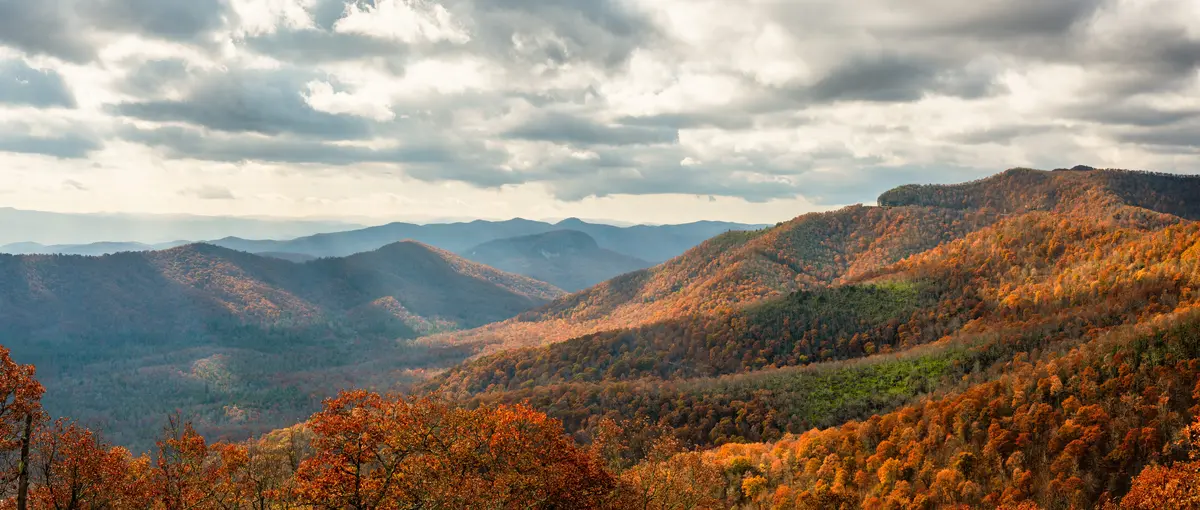
Old Stone Fort State Archaeological Park: The Anchor of Manchester's Outdoor Identity
Few cities this size have something as genuinely remarkable as Old Stone Fort sitting inside their limits. The park covers 782 acres along the Duck and Little Duck Rivers and is built around a Native American earthwork enclosure that is roughly 2,000 years old — a 50-acre promontory ringed by a 1.25-mile perimeter of wall-like mounds, constructed during the Middle Woodland period somewhere between 100 BCE and 500 CE. It served as a ceremonial gathering place, not a fort, and the original entrance was aligned with precision: it points to the exact spot on the horizon where the sun rises on the summer solstice.
That detail does something to the experience of being here. You are not looking at a reconstruction or an interpretive replica. These are the actual mounds, in their original positions, still doing something the people who built them intended.
The on-site museum puts the earthworks in context with artifacts and interpretive displays, and the trails are well-maintained and relatively flat — accessible enough that visitors with mobility needs can reach several overlooks. Big Falls, the largest single drop on the Big Duck River, and Blue Hole Falls are both reachable on foot without significant elevation gain. The park allows fishing and riverside camping along the Duck River, and pets are welcome on trails with restrictions. Admission is free.
One practical note for 2026: the park bridge was closed for construction activity as of mid-2026. Check trail access before you plan a route that depends on it.
What locals know: Old Stone Fort is the kind of place Manchester residents take for granted and visitors drive two hours to see. If you move here and don't walk it in your first month, you are making a mistake that is surprisingly easy to make.
Short Springs, Rutledge Falls, and May Prairie: Three Natural Areas Worth Knowing
Short Springs Natural Area
Short Springs is a 420-acre Class I Scenic-Recreational state natural area that most people outside Coffee County have never heard of. Its trail network totals roughly 5 miles of connected routes through steep forested ravines, including the Machine Falls Loop Trail, the Adams Falls Loop, the Bobo Creek/Busby Falls Trail, and the Laurel Bluff Trail. The signature attraction is Machine Falls, which drops more than 60 feet over a wide rocky ledge — the kind of waterfall that earns genuine gasps rather than polite appreciation.
The geology here is distinctive. The site sits at the boundary where the Highland Rim meets the Central Basin, exposing Chattanooga shale formations alongside the forested creek corridors. In spring, the same terrain produces rare wildflowers including the Tennessee milkvetch, Nestronia, and broad-leaved bunchflower — plants that are state-listed and not easy to find anywhere else. For new residents who walk trails rather than just look at them, Short Springs rewards repeated visits across seasons.
Rutledge Falls
Rutledge Falls sits off TN-55 between Manchester and Tullahoma — a multi-tiered cascade over rocky ledges into a pool that runs clear enough to swim in. The access trail is roughly 0.2 miles with less than 30 feet of elevation gain, which makes it approachable for nearly anyone. The falls are on private property whose owners allow access, and the site doubles as a genuine swimming hole through summer.
It gained wider name recognition after appearing in Hannah Montana: The Movie, which means it can draw a crowd on summer weekends. Early mornings or a weekday visit in late summer gives you something closer to the quiet version.
May Prairie State Natural Area
May Prairie is the least-known of the three and arguably the most scientifically significant. The 492-acre protected grassland has been designated a National Natural Landmark by the U.S. Department of the Interior — a distinction that reflects its 300-plus plant species, 25 of which are rare in Tennessee. The snowy orchid and coastal false-asphodel grow here and nowhere else in the state.
There are no developed trails. The site is open oak woodland and wetland that you simply walk into — leashed dogs are welcome, there is a parking area, and that is about the full infrastructure. Spring brings Indian paintbrush, false indigo, and bluets in floral succession. Late summer shifts to sunflower species and two varieties of Blazing Star. It is the kind of place that rewards knowing what you are looking at, and punishes the expectation of amenities.
| Natural Area | Size | Signature Feature | Trail Miles | Best For |
|---|---|---|---|---|
| Old Stone Fort State Archaeological Park | 782 acres | 2,000-year-old earthwork enclosure; Big Falls; Blue Hole Falls | Multiple, flat | Families Nature |
| Short Springs Natural Area | 420 acres | Machine Falls (60+ ft drop); 5-mile trail network | ~5 miles | Nature Views |
| Rutledge Falls | — | Multi-tiered waterfall; swimming hole | ~0.2 miles | Families Quiet |
| May Prairie State Natural Area | 492 acres | National Natural Landmark; 300+ plant species | No developed trails | Nature Privacy |

Great Stage Park and the Bonnaroo Effect
Manchester is the permanent home of the Bonnaroo Music and Arts Festival, which has taken place at Great Stage Park off I-24 every June since 2002. The festival runs four days across more than ten stages, drawing musicians across rock, hip-hop, folk, jazz, Americana, electronic, and nearly every other genre, alongside art installations, comedy, cinema, and on-site camping for tens of thousands of attendees. For those four days, Manchester becomes something it is not at any other point in the year.
Locals call the property simply The Farm. Outside of Bonnaroo and occasional other events, it functions as largely unused farmland. The annual transformation into a self-contained festival city is, by now, part of how Manchester thinks about itself — the city and the festival have a complicated, occasionally exhausted, but genuinely proud relationship.
What this means for residents is mostly positive and occasionally inconvenient. During festival week, traffic on US-41 and the I-24 interchange slows considerably. Grocery runs that week are worth timing around the crowd. But the economic activity matters to local businesses, and the calendar is predictable: you know when it's coming, you plan around it, and most of the year the grounds are quiet farmland you pass without a second thought.
For families with kids in neighborhoods near the US-41 corridor, the festival week noise can be audible depending on wind direction and distance. It is not a dealbreaker, but it is worth knowing before you buy rather than after.
Looking to buy in Manchester? Estimate your payment.
Enter your numbers to see an estimated monthly mortgage payment.
Estimate only. Excludes HOA fees and mortgage insurance. The interest rate above is a starting point, not a quoted rate — replace it with your own to see real numbers. Insurance is a flat placeholder, not a Manchester quote.
Beyond the Monthly Mortgage Payment — What to Factor In
- The property tax rate above — The 0.58% used in the estimate is the median effective rate — tax actually paid as a share of market value — published by Ownwell, 2026. Half of local homes pay more and half pay less: your own bill depends on that property's assessed value and any exemptions it qualifies for, which can differ a lot from its market price. Confirm with the Coffee County assessor before you budget.
- Total cost of ownership — Your monthly mortgage payment is just the baseline. Depending on the specific city, county, and service district, homeownership costs also include local utility fees, municipal surcharges, and special assessments (such as water, sewer, storm drainage, or local energy taxes) that vary by location.
- Independent due diligence — Because these recurring local costs and municipal fees change depending on the exact property address, buyers must research them independently during their transaction process.
Tax laws, local municipal fees, and utility costs change frequently and individual situations vary. This page is general information, not tax or legal advice — always consult a qualified tax professional, CPA, or local municipal offices for personalized guidance.
Seasonal Recreation and What to Expect Through the Year
Manchester gets 205 sunny days a year — roughly average for Middle Tennessee, but enough to make outdoor recreation genuinely year-round rather than seasonal-only. The climate is warm, humid, and occasionally wet; what it is not is extreme. Winter rarely closes trails for more than a day or two at a time. Summer heat is real but tempered by the shade in the ravines at Short Springs and the river corridors at Old Stone Fort.
Spring
Spring is the best season for wildflower enthusiasts. May Prairie's succession of Indian paintbrush, false indigo, and bluets peaks from late March through May. Short Springs trails produce Tennessee milkvetch and other state-listed species at the same time. The Duck River at Old Stone Fort runs full and photogenic. Locals who know the timing plan their visits for the weeks between the last frost and the first humid stretch — roughly late March through early May.
Summer
Summer brings Bonnaroo in June, then a quieter stretch through July and August when Rutledge Falls becomes the area's most-used swimming spot. The waterfall pool is the clearest cold-water option within a short drive of town, and it gets popular on weekends. Old Stone Fort's riverside camping fills up; book in advance if you plan to stay overnight rather than day-hike.
Fall and Winter
Fall color at Short Springs and Old Stone Fort is underrated. The steep ravine walls hold color longer than open terrain, and weekday visits in October can feel nearly private. May Prairie shifts to late-season Blazing Star and sunflowers. Winter is the honest off-season — trails stay mostly passable, but waterfall flow is the best it gets all year, and the leafless canopy opens views in the ravines that summer obscures entirely.
One thing that surprises newcomers about six months in: Manchester's outdoor resources are legitimately world-class by small-city standards, but the supporting infrastructure around them is minimal. There are no visitor centers with gear rental, no guided tour industry, and limited signage in a few areas. If you come from a city where the parks department has made everything easy to find and access, the learning curve here is real. The reward for figuring it out on your own is that most of these places feel remarkably uncrowded most of the time. The youth sports leagues and school-based activities round out organized recreation for families, but the wild-land options are the real distinguishing feature of this city's outdoor life.
Local Expert Takeaway: Manchester's outdoor identity is built on things that took two thousand years to make and cannot be replicated elsewhere — a solstice-aligned Native American earthwork, a National Natural Landmark prairie, and a waterfall corridor that sits on the geologic boundary between two Tennessee landforms. Old Stone Fort is free, Short Springs costs nothing to enter, May Prairie requires only curiosity and a good eye. Bonnaroo is the one week a year that puts Manchester on a national map, but the other fifty-one weeks are what make it worth living in. If you're moving here and you like being outside, you are going to be fine.
Quick Takeaways & FAQs
✅ Manchester holds four significant protected natural areas — Old Stone Fort, Short Springs, May Prairie, and Rutledge Falls — all within a short drive of any neighborhood in town, and most are free.
⚠️ Bonnaroo week in June means real traffic disruption on US-41 and around the I-24 corridor — plan grocery runs and errands around it rather than through it.
📍 May Prairie State Natural Area hosts 25 plant species found nowhere else in Tennessee, including the snowy orchid — but it has no developed trails, no restrooms, and no signage beyond the parking area, so bring a plant ID app and manage your expectations accordingly.
Is Old Stone Fort State Archaeological Park really free?
What is the Machine Falls Loop Trail like?
Can you swim at Rutledge Falls?
How does Bonnaroo affect daily life for Manchester residents?
What makes May Prairie worth visiting if there are no trails?
Moving to Tennessee?
Tell us what you need help with and we'll connect you with local resources.
