
Most people who move to Lookout Mountain, Tennessee think they understand what living on a mountain means: quiet streets, elevated views, a little separation from the city below. What they don't fully reckon with until they're actually here is that the mountain itself is the amenity. Your backyard isn't just scenery — it's a National Park Service battlefield, a 317-acre arboretum, the tallest underground waterfall in the country open to the public, and one of the most storied rock gardens in the South, all within a few minutes' drive of a neighborhood of 2,044 residents.
The outdoor identity here isn't bolted on. Point Park sits at the north end of the mountain, operated by the National Park Service as part of Chickamauga and Chattanooga National Military Park. The Cravens House Trail threads down the northern slope and links into the broader NPS network. Reflection Riding Arboretum & Nature Center anchors the base of the mountain with 15 miles of trails and a canoe put-in on Lookout Creek. Ruby Falls and Rock City Gardens are world-recognized attractions that happen to share a ridgeline with residential streets. Families with school-age children grow up hiking to Sunset Rock on a Tuesday afternoon like it's the most ordinary thing in the world — because here, it is.
The climate cooperates more than the region's humid reputation might suggest: 208 sunny days a year give the trails a long working season, with spring wildflowers at Reflection Riding and fall color along the Enchanted Trail at Rock City among the genuine seasonal highlights locals look forward to. Summers are warm and occasionally muggy at elevation, but the mountaintop runs several degrees cooler than the Chattanooga valley floor, which matters when you're deciding whether to drive to a trailhead or just step outside. Winter can bring ice on the upper trails — Point Park's stone paths require caution in January — and that's the one seasonal quirk newcomers tend to underestimate.
Whether you're deciding whether to move here or already making plans, the sections below cover Lookout Mountain's signature parks and natural landmarks, the trail network that connects them, water recreation, and how the recreation calendar plays out across the year.
Point Park & the NPS Battlefield Network
Point Park is where most newcomers start, and for good reason. The 10-acre National Park Service site preserves the high ground seized by Union soldiers during the 1863 Battle of Lookout Mountain — the engagement history recorded as the 'Battle Above the Clouds.' The northernmost promontory puts you 1,300 feet above the Tennessee River and downtown Chattanooga, a view that stops conversation every single time regardless of how many times you've made the short walk from the entrance gate.
The visitor center is worth your time before you step out onto the cliffs. It houses a 33-by-13-foot mural of the battle painted by James Walker, who witnessed the fighting firsthand — it reads less like a museum exhibit and more like a primary source rendered at enormous scale. Audio-visual presentations fill in the broader campaign for Chattanooga, and park rangers lead guided tours of the grounds.
A quarter-mile walk from the entrance brings you to the Ochs Museum & Overlook, a stone structure built right into the rocky cliff edge. It's included in the self-guided experience and tends to be where the views hit hardest — the drop is immediate and the sight line unobstructed. This is not a place to be distracted by your phone.
The Cravens House Trail Connection
Point Park doesn't end at its own gate. The Cravens House Trail runs down the northern slope and ties into the surrounding NPS trail network, passing the restored 1866 Cravens House — the site of some of the fiercest close-quarters fighting of the battle. The structure still stands and reads as genuinely historic rather than reconstructed.
From Cravens House, the route to Sunset Rock is the one more adventurous hikers come back to. It's a real climb with real elevation change, not a paved interpretive loop, and the payoff at Sunset Rock is the kind of view that earns its difficulty. The trail system here connects directly with Reflection Riding's network at the base of the mountain, which means a motivated hiker can link from the valley floor all the way to Point Park's overlook in a single route — a fact that remains underappreciated outside the local hiking community.
One honest note for families considering the move: Point Park charges an entry fee per visitor, and it is not waived for residents. The NPS annual interagency pass covers it and pays for itself quickly if you visit more than a few times, which most Lookout Mountain households do.
Ruby Falls, Rock City & the Scenic Highway Corridor
Two of the mountain's most famous attractions sit along the Scenic Highway corridor, and they're genuinely world-class by any standard — not just by regional ones. Living here means your out-of-town guests will always have somewhere to go, and you'll find yourself re-discovering both more often than you'd expect, partly because the seasonal programming keeps them from going stale.
Ruby Falls
Ruby Falls is the tallest underground waterfall open to the public in the United States — 145 feet of free-falling water more than 1,120 feet beneath the surface. Leo Lambert discovered it accidentally in 1928 while drilling for a different cave system, and it has been drawing visitors since 1929. All visits are guided tours; a glass-front elevator descends 260 feet into the cavern, and the route through the cave system is unlike anything at ground level on the mountain.
The above-ground component surprises people who come only for the cave. Ruby Falls also runs a seasonal zipline experience — the High Point ZIP Adventure — with lines that look out over the Cumberland Plateau and a 40-foot climbing tower. It runs select dates and gives families with older kids a reason to visit twice in the same season for entirely different reasons.
Rock City Gardens
Rock City Gardens spans 14 acres and has been drawing visitors since the 1920s and 1930s. The 4,100-foot Enchanted Trail winds through ancient sandstone formations, past over 500 plant species, through tunnels and caves, over suspension bridges and alongside waterfalls. Lover's Leap, the signature overlook, is billed as a vantage point from which seven states are visible on a clear day — and on a genuinely clear fall afternoon, the claim holds up.
Rock City's seasonal programming is what keeps it relevant year-round for residents rather than just tourists. A Birds of Prey show runs on select weekends between Memorial Day and Labor Day, bringing raptors close enough that children remember it for years. The Enchanted Garden of Lights, the region's longest-running holiday light tradition, takes over the gardens through November and December and draws visitors from across the Southeast.
One practical note: Rock City requires timed-entry reservations. For residents, this is mostly a non-issue on a Tuesday — but if you're planning a weekend visit with family over a holiday weekend, book ahead or you'll be turned away. It is genuinely that popular.
Also worth knowing: Rock City straddles the Tennessee-Georgia state line, with its official address on the Georgia side of the mountain. The experience is seamless — you won't notice the state line underfoot — but it's the kind of detail that comes up in trivia conversations at neighborhood gatherings and catches newcomers off guard.

Reflection Riding Arboretum & Nature Center
If Point Park and Ruby Falls are where visitors go, Reflection Riding is where residents go. The 317-acre nonprofit arboretum, botanical garden, and nature center sits at the base of Lookout Mountain and operates at a quieter register than the ticketed attractions above it — which is precisely why it becomes the default outdoor destination for families who live here.
The trail system alone is worth moving for. Fifteen miles of routes range from a flat, ADA-accessible boardwalk through wetlands to strenuous climbs toward the mountaintop. The three-mile gravel loop runs through hardwood forest, wildflower meadows, and creek-side bottomland — a genuinely varied landscape packed into a single property. Trails connect directly to the NPS network, with routes that reach Sunset Rock and Point Park, making Reflection Riding the logical starting point for a full mountain traverse.
Water Recreation on Lookout Creek
Reflection Riding's canoe and kayak put-in on Lookout Creek is one of the quieter pleasures on the mountain, and one of the most underutilized by newcomers who don't know it exists. Lookout Creek is a tributary of the Tennessee River, and the water here runs generally flat — more meditative float than whitewater, which makes it well-suited to families with younger paddlers. You can go upstream or downstream depending on how much time you have. Public canoe access requires advance reservation, so this isn't a spontaneous-afternoon option without planning, but it is a genuinely good one.
The Wildlife Sanctuary
The Animal Ambassadors sanctuary on the Reflection Riding grounds houses 29 species and nearly 40 individuals, all native to east Tennessee. The roster includes critically endangered red wolves — part of a national Species Survival Plan — alongside a bobcat, sandhill cranes, and an American Bald Eagle. For families with kids who grow up here, the wildlife sanctuary is often their first sustained encounter with native predators, and it leaves a mark. Guided programs bring visitors close to the animals in a way a zoo rarely does, and the conservation framing is substantive rather than decorative.
The broader point about Reflection Riding is this: it operates as the community's natural commons in a way that the ticketed attractions on the ridge above it cannot. It's where you walk the dog on a foggy November morning, where parents push strollers along the boardwalk, and where the spring wildflower bloom arrives a week or two before anything else on the mountain shows color.
Looking to buy in Lookout Mountain? Estimate your payment.
Enter your numbers to see an estimated monthly mortgage payment.
Estimate only. Excludes HOA fees and mortgage insurance. The interest rate above is a starting point, not a quoted rate — replace it with your own to see real numbers. Insurance is a flat placeholder, not a Lookout Mountain quote.
Beyond the Monthly Mortgage Payment — What to Factor In
- The property tax rate above — The 0.56% used in the estimate is the median effective rate — tax actually paid as a share of market value — published by Ownwell, 2026. Half of local homes pay more and half pay less: your own bill depends on that property's assessed value and any exemptions it qualifies for, which can differ a lot from its market price. Confirm with the Hamilton County assessor before you budget.
- Total cost of ownership — Your monthly mortgage payment is just the baseline. Depending on the specific city, county, and service district, homeownership costs also include local utility fees, municipal surcharges, and special assessments (such as water, sewer, storm drainage, or local energy taxes) that vary by location.
- Independent due diligence — Because these recurring local costs and municipal fees change depending on the exact property address, buyers must research them independently during their transaction process.
Tax laws, local municipal fees, and utility costs change frequently and individual situations vary. This page is general information, not tax or legal advice — always consult a qualified tax professional, CPA, or local municipal offices for personalized guidance.
Seasonal Recreation & What to Know Before You Move
Lookout Mountain's outdoor calendar runs long. With 208 sunny days a year and an elevation that moderates summer heat compared to the valley below, the shoulder seasons here are exceptional — March through May and September through November are when the trails are at their best and the light on the ridgeline is genuinely striking.
Spring and Fall: The Real Peak Seasons
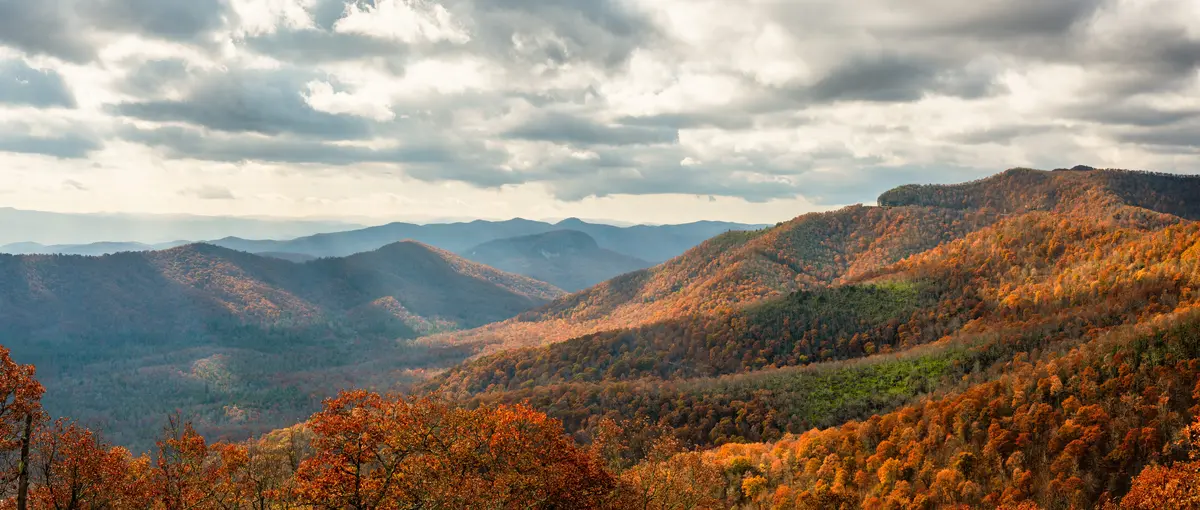
Spring brings wildflowers through Reflection Riding's meadow sections earlier than most of the surrounding region, and the NPS trails through the Cravens House area bloom hard in April. Rock City's garden paths are at their most photogenic when the native plantings are at full color. Fall reverses the sequence: the Enchanted Trail at Rock City and the hardwood canopy along the Reflection Riding loop turn in October, and the views from Point Park's overlook carry particular weight when the tree cover drops and the Tennessee River valley opens up below.
Summer: Elevation Helps, Humidity Doesn't
Summer on the mountain runs several degrees cooler than Chattanooga proper, which is real relief during July and August when the valley sits heavy with humidity. The underground environment at Ruby Falls maintains a constant cool temperature regardless of season, which makes it a genuine refuge on the hottest afternoons. Hikers on exposed sections of the NPS trails in midsummer should carry more water than they think they need — the upper trails have no shade cover near Point Park's cliff edge.
Winter: Ice Is the Variable
Winter is the seasonal quirk most newcomers don't see coming. The mountain's elevation means ice forms on the stone paths at Point Park and the upper trail sections when the valley below has nothing more than cold rain. Cravens House Trail can be impassable after an overnight freeze in a way that the flat Chattanooga greenway never is. This isn't a reason to avoid winter hiking — the views from Sunset Rock on a clear January day with bare trees are among the best the mountain offers — but traction devices for trail boots are a practical investment if you move here and plan to use the trails year-round.
The Incline Railway: An Important Caveat
The Lookout Mountain Incline Railway, whose upper station sits at the summit and has connected the mountaintop to the St. Elmo neighborhood in Chattanooga since 1895, was severely damaged by a wildfire on December 7, 2024. The railway is recognized as the world's steepest passenger railway, with a 72.7% grade near the top, and received Historic Mechanical Engineering Landmark status in 1991. Its operating status as of the time this guide was written remains uncertain — verify current conditions directly with the railway before planning a visit or factoring it into your transportation thinking. It's the kind of landmark that residents assume will always be there, and the fire was a genuine loss to the community.
For a full picture of what daily life looks like here — including the neighborhood character that shapes how residents access these outdoor spaces and the cost of living context that comes with a mountain address — those sections cover what this one doesn't.

Local Expert Takeaway: Lookout Mountain's outdoor amenities aren't supplemental — they're structural. Point Park, Reflection Riding, Ruby Falls, and Rock City aren't things you drive to on a weekend from somewhere else; they're within a few minutes of wherever you happen to live on the mountain. The practical implication for anyone considering a move is that outdoor recreation here doesn't require planning or a destination mindset. You step outside. The Cravens House Trail is there. Lookout Creek is there. The trail to Sunset Rock is there. For families who want that woven into ordinary life rather than reserved for vacation, this is one of the strongest cases any small Tennessee community can make.
Quick Takeaways & FAQs
✅ Point Park's NPS trail network, Reflection Riding's 15 miles of trails, and the Cravens House Trail all connect into a single linked system — you can hike from the valley floor to the mountaintop overlook without getting in a car.
⚠️ Winter ice on the upper trails — particularly near Point Park and on Cravens House Trail — is genuinely hazardous and catches newcomers off guard; traction devices are a practical necessity, not an accessory.
📍 The Lookout Mountain Incline Railway was severely damaged by a wildfire in December 2024 — verify its current operating status before planning a visit or recommending it to guests.
Is Point Park free to enter for Lookout Mountain residents?
Can you hike from Reflection Riding all the way up to Point Park?
What happened to the Lookout Mountain Incline Railway?
Is the canoeing at Reflection Riding open to the general public?
What's the best time of year to visit Rock City Gardens and Ruby Falls?
Moving to Tennessee?
Tell us what you need help with and we'll connect you with local resources.
